admin
admin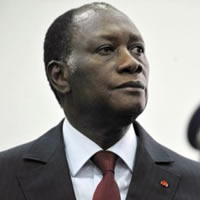
sending his captured rival Laurent Gbagbo to a secret location and restarting vital cocoa exports.
Seeking to heal a nation broken by a four-month crisis pitting him against his strongman predecessor Gbagbo, Ouattara also called on the International Criminal Court to probe massacres carried out in the west of the country.
Hundreds were killed in western Cote d’Ivoire after forces loyal to Ouattara swept through the country to Abidjan earlier this month to oust incumbent president Gbagbo who had refused to admit defeat in a November run-off vote.
Massacres were centred on the town of Duekoue and troops on both sides of the conflict accused of involvement.
“I will do everything for these condemnations to set an example, not only for Ivorians, but also for Africa and the entire world,” Ouattara said, expressing hope the probe could be wrapped up “as quickly as possible.”
A spokesman for the United Nations mission in Ivory Coast (UNOCI), which is safeguarding Gbagbo and his associates pending their trial for alleged crimes committed during the conflict, said he had been flown out of main city Abidjan.
“The helicopter transporting Laurent Gbagbo took off at 12:40pm heading to the north of the country,” Hamadoun Toure said, declining to elaborate on his exact desti-nation.
Ouattara said earlier that the former leader had been moved from a hotel in Abidjan where he had been held since being arrested by Ouattara’s forces in a bunker on Monday.
“As I speak to you, Laurent Gbagbo is no longer at the Golf Hotel, he is in Cote d’Ivoire, well secured,” Ouattara said.
“Laurent Gbagbo is a former head of state, he must be treated with consideration.”
With the formerly wealthy nation divided and broken by the conflict, Ouattara said he had ordered an immediate resumption of cocoa exports from the world’s number one producer which were frozen by sanctions slapped on Gbagbo.
Ouattara said he would move into the presidential palace, in a district that saw some of the fiercest battles during 10 days of fighting, “in the coming few days” despite insecurity still reigning in parts of Abidjan.
Rights group Amnesty International warned that Gbagbo’s supporters were at risk of violent reprisals, despite both Ouattara and Gbagbo having called for fighters to lay down arms.
Armed men, some wearing military uniforms, have been conducting house-to-house searches in neighbourhoods, including Yopougon and Koumassi, where supporters of Gbagbo are living, Amnesty said.
But a semblance of normal life appeared to return to large parts of the city, with traffic back on the streets and some shops reopening. – AFP.


 Online Reporter