admin
adminBeaven Tapureta Bookshelf
At the just-ended Zimbabwe International Book Fair I was touched by how our elderly writers are seemingly neglected when they are actually the trailblazers of our amazing literature, amazing storytelling, which our nation today enjoys.
Although renowned writer Charles Mungoshi’s unfortunate story can now be said to have been “over-written”, we hope the message has been sent “to whom it may concern”! After all, glory unto God, we are glad his phase of difficulties in terms of his health is passing.
Mungoshi, with other writers, launched the Shona novel into the limelight. According to some literary scholars, Mungoshi’s early novels “Ndiko Kupindana Kwamazuva” (1975) and “Kunyarara Hakusi Kutaura?” (1983) are two of the three best novels in Shona, with “Pafunge” (1972) being the third one. Even today, Mungoshi remains a celebrity as almost all his books are outstanding.
Yes, Mungoshi has been ill and the family will live to tell their story of how they came face to face with the demotivating forces inherent in the local book industry. Yet we cannot totally ignore the impact the forces have upon the new generation of writers.
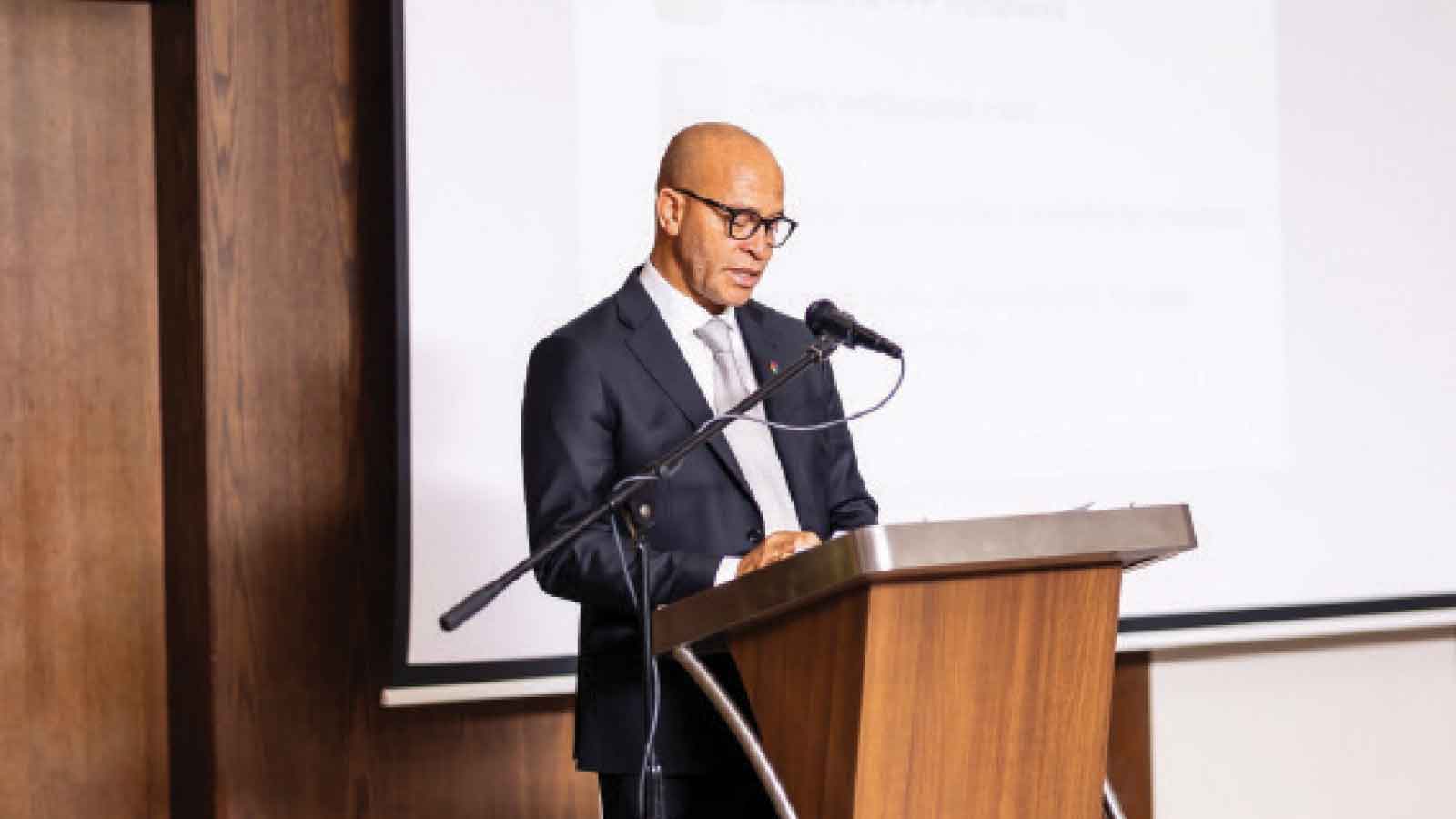
My affinity for Dr Thompson Tsodzo, the author of the Shona novel “Pafunge” has always been great, especially for his pioneering spirit in the local literary revolution in the 70s. I was happy to see him on certain days of the book fair because he is one of our elderly writers who hardly attend pubic writers’ meetings! Many budding writers who admire Dr Tsodzo still have a distant picture of this humorous legendary author.
Dr Tsodzo’s presence and presentation at the book fair made me remember the words another elderly writer, Musaemura Zimunya, said to me when we were together at the Nyaradzo funeral parlour in Harare from where friends and relatives had come to pay their last respects and would take Hove’s body for burial in his rural area.
It was after the service and body viewing, tears conspicuously jamming our eyes, that I asked Zimunya what it means for us young writers to lose older writers like Hove. His response was something like this: “Nhamo inemi vanyori vechidiki when the elders depart.” What did he mean?
Are new writers realising and utilising the presence of senior writers among them? Are we reading them? How do we become stars in our literature when we act like our literature has no history? How deep is our curiosity to hear our elders speak of those days when they were growing up as writers? How much have we done, as a sector, to honour and preserve our senior writers’ wisdom? Will the next generation of writers know about these groundbreakers that set the gates open for our imagination to wander as it does today?
These are some of the questions that came to my mind at the ZIBF Writers Workshop held on August 1, where Dr Tsodzo was among the presenters and his topic was titled “Challenges and Opportunities for the Elderly Writer in Zimbabwe”.
Dr Tsodzo is somehow a disappointed writer, old now as he is, to say the least. His voice when he spoke was tinged with a wish for a complete overhaul of the whole book industry!
“I am also in a similar situation as Charles Mungoshi,” he began his presentation. Farai Mungoshi, son of Charles Mungoshi, had delivered another touching experience of how he has fared as a son working with and within an artistic family in a challenging economy. As said before, I will not attempt to repeat the Mungoshi versus Publishers story for fear of writing misguided notes about it.
At the workshop, Dr Tsodzo said writing is a calling but the calling can take you to those painful ends where you then begin to think about things like royalties. Back in the days, as a boy, he said he played soccer and missed penalties! He knew then soccer was not his forte. His calling dwelt in writing.
Years later, he started writing but he started with non-fiction. He said he wrote textbooks such as the unforgettable “Rurimi Rwaamai” series. He joined the University of Zimbabwe and spent the period between 1966 and 1980 reading for the BA degree in Shona and English (1970), the Graduate Certificate in Education (1971) and for the BA (Special Honors) in Shona (1980).
He worked as a teacher, a profession that acquainted him with educationists such as Fay Chung, a stalwart in the Zimbabwean education sector before and after independence. Chung became a lecturer in the Department of Education at the University of Zimbabwe in the early 70s.
She rose to become a senior official in the Zimbabwe African National Union’s Information and Media Department responsible for implementing the liberation movement’s teacher training and curriculum development in refugee camps.
Dr Tsodzo said he used to develop and deliver learning material to these camps in Tete province, Mozambique, thus connecting with Chung in some way. It was a dangerous task because this was a time of the armed struggle but he had to do it for the love of his people.
While at the University of Zimbabwe, Thompson, the student, penned his first short story titled “Pafunge” which a few years later after he reworked it into a novel, became a Shona gem. Would we have known that the novel “Pafunge” started as a short story had the Book Fair not provided this meeting with our elders?
Shall we wait for the Book Fair next year to hear of some such story again? The person who advised him to expand the short story was the late Solomon Mutsvairo, author of the first published Shona novel “Feso” (1956). Mutsvairo’s legacy in arts and culture shall always be cherished.
True to say, young Tsodzo had caring elders the same way today’s young writers have him as one of the literary elders, caring and available for taking us down memory lane of our book industry. Some of the writers who were there for him include Paul Chidyausiku and Prof George Kahari, who would later write a literary criticism of his novel “Pafunge” in the rich book “The Rise of the Shona Novel” (1990, George Kahari).
With fellow writers like Musaemura Zimunya and Charles Mungoshi, Dr Tsodzo played an important role in the formation of the Zimbabwe Writers’ Union which he said did a lot to motivate him and his contemporaries.
Apart from “Pafunge”, Dr Tsodzo wrote various books in fiction and non-fiction but what mattered most in his presentation at the workshop was the problem of diminishing gains for writers in the book industry.
This, he said, was one of the reasons that pushed the late Chenjerai Hove to look for greener pastures. “His writing was not supporting him, this is one reason he left the country,” said Dr. Tsodzo. For this reason also, Dr Tsodzo said he embarked on textbook writing. It was easy for him as he already had intensively been involved in the education sector.
After his presentation at the workshop, no doubt many participants were left asking themselves various questions. What could be wrong with our book industry? Are publishers to blame? At the same workshop, writers had learnt from another presentation about the challenges publishers are facing. Is the economy the enemy? One of the challenges facing elderly writers, Dr Tsodzo said, is lack of sponsorship for our indigenous languages. What then this connects with is the last hope that the Ministry of Primary and Secondary Education has put in writers through its newly proposed curriculum review.
The review seeks, among other things, to introduce literature in indigenous languages as a separate syllabus.
Although he had grown much older, Dr Tsodzo said at some point in his writing journey he left the country to study drama and film in the Ohio University of School of Theatre in the United States of America. On coming back, his wish was to use the skills he learnt overseas to influence the film and creative writing industry but he could not see the opportunities and eventually he plunged back into the education sector. Until today, the situation, as he sees it, has not changed.
One can ask: If those who have been there tell us of fruitless adventures, what is there for the young ones then? Seriously, something needs to be done to honour our elders in order to save our literature. The passion with which they wrote their lifelong contributions must be passed on to the new generation and money matters must not be allowed to overtake the greatest gift that man has ever cherished – writing.
Born on May 8, 1947 at Mhandu village in Chikomba district, Dr Tsodzo did his primary education at Mudavanhu and Makumbe. He went to Fletcher High School in Gweru to do his secondary education. Later he proceeded to UZ. His books, apart from the textbooks, include the masterpiece “Pafunge”, “Tsano”, “Rugare” (1982), “Shanduko” (1983), “Tawanda, My Son” (1986), “Mudhuri Murefurefu” (1993), and “Babamunini Francis” (2013).



 Online Reporter