Online Reporter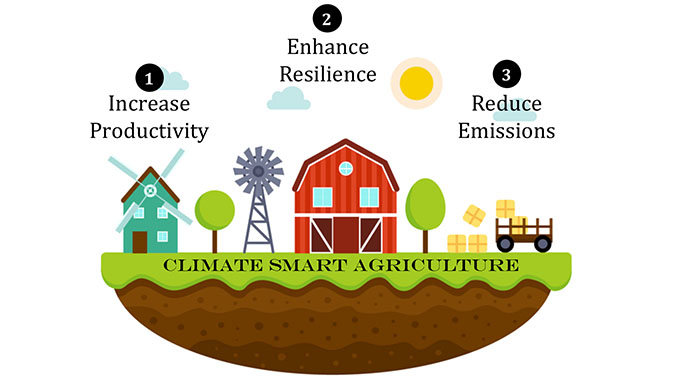
Word from the Market
Tina Nleya
AS Zimbabwe continues to climate-proof its agriculture, perhaps the most important question confronting farmers is not simply what can we grow?
It is what should we grow?
For many years, agricultural success was measured largely by how much land was put under cultivation, often with little regard for whether or not crops matched the natural conditions of the areas in which they were grown.
Today, climate change is challenging that approach.
More frequent droughts, rising temperatures and unpredictable rainfall patterns are forcing countries to rethink how they produce food. Zimbabwe is no exception.
The Government has consistently championed climate-smart agriculture, agroecological zoning and the principle of producing crops that are best suited to the country’s diverse natural regions.
This approach recognises that sustainable agricultural growth is achieved not by forcing nature to conform to our plans, but by aligning production with the comparative advantages that each ecological zone offers.
From a market perspective, this is also sound economics.
Economists describe this principle as comparative advantage, the ability of a country or region to produce certain goods more efficiently and at a lower opportunity cost than others. Countries that have successfully transformed their agriculture sectors have not attempted to produce everything.
Instead, they have invested in commodities that naturally perform well under their climatic conditions, built strong value chains around them and developed competitive domestic and export markets.
Russia’s rise as one of the world’s leading wheat exporters illustrates this principle.
Vast tracts of fertile land, favourable climatic conditions and sustained investment in research, mechanisation, storage and logistics have enabled the country to build a globally competitive wheat industry.
Its success did not come from producing every possible crop, but from maximising a natural comparative advantage.
Zimbabwe possesses its own comparative advantages.
Our diverse agroecological regions support a wide range of crops, many of which have sustained communities for generations.
Importantly, several indigenous and traditional crops are naturally adapted to the climatic conditions that are becoming increasingly common as rainfall patterns change.
These crops deserve renewed attention, not because they belong to the past, but because they are well-positioned to shape the future of Zimbabwean agriculture. Among them are sorghum, finger millet (rapoko), sesame (runinga), sweet potatoes, groundnuts, Bambara nuts (nyimo) and onions.
Many require less water than conventional cereals, perform well under relatively harsh conditions and often demand fewer external inputs, making them well-suited to climate-resilient production systems.
One crop that stands out is sesame.
For many rural communities, sesame has long been regarded as a hardy crop that thrives under low rainfall conditions.
Today, global demand continues to grow as sesame is used in edible oils, bakery products, confectionery, health foods and cosmetics.
According to the Food and Agriculture Organisation of the United Nations, world sesame consumption has steadily increased, driven largely by rising demand from Asia and the Middle East.
Zimbabwe has already demonstrated its potential in this crop, with sesame exports reaching international markets and earning valuable foreign currency.
The market already exists.
The challenge is expanding production while maintaining quality standards that meet export requirements. Sorghum presents another compelling opportunity. Although traditionally associated with brewing, sorghum has evolved into a versatile industrial crop.
Across the world, it is processed into flour, breakfast cereals, pasta, biscuits, gluten-free products and nutritious snacks.
As consumer demand for healthier and gluten-free foods continues to increase globally, sorghum is finding new commercial applications beyond traditional uses.
Zimbabwe already exports sorghum to regional markets, but significantly greater value could be realised through local processing and product development.
Value addition creates employment, supports agro-industries and retains more income within the domestic economy.
Sweet potatoes similarly represent an underutilised commercial opportunity.
Naturally tolerant to dry conditions and capable of producing good yields under relatively challenging environments, sweet potatoes are increasingly being processed into flour, starch, bread blends, breakfast cereals, baby food and industrial ingredients.
Their versatility offers opportunities for import substitution, while creating new products for domestic and export markets.
Groundnuts and Bambara nuts equally deserve greater commercial recognition.
As consumers increasingly seek plant-based proteins and healthier food options globally, these traditional legumes provide significant opportunities for value addition.
Groundnuts support industries that produce goods ranging from peanut butter and cooking oil to protein flour and plant-based beverages, while Bambara nuts remain highly nutritious, store well and perform relatively better than many crops under moisture-stressed conditions.
These are no longer simply household food crops. They are emerging commercial commodities with growing market potential.
Even onions, a crop consumed daily across Zimbabwe, demonstrate the importance of producing according to comparative advantage.
With suitable agroecological regions, expanding irrigation infrastructure and strong domestic demand, increased local onion production offers opportunities to reduce imports, while strengthening national food security and regional trade.
However, production alone does not transform agricultural markets. Markets respond to demand. Farmers ultimately produce what consumers are willing to buy, processors invest where demand exists and retailers stock products that move off their shelves.
Building competitive value chains, therefore, requires stimulating demand alongside production. Imagine supermarkets offering a wider range of locally processed sorghum cereals, sesame oil, rapoko flour and sweet potato products. Imagine bakeries incorporating composite flours into bread and confectionery.
Imagine restaurants proudly serving dishes prepared from Zimbabwe’s traditional grains.
Public institutions such as schools, hospitals and correctional facilities could also support local agriculture by increasing procurement of nutritious indigenous crops.
Such interventions would stimulate production, encourage investment in agro-processing and strengthen rural economies while improving national nutrition.
The market opportunities are significant, but they begin with recognising our strengths.
Climate-proofing agriculture is not simply about investing in irrigation, conservation agriculture or improved seed varieties.
It is about ensuring that the right crops are grown in the right places, consistent with Zimbabwe’s agroecological conditions and comparative advantages.
Tina Nleya is the Agricultural Marketing Authority (AMA)’s marketing and public relations manager. She can be contacted by email: [email protected]. Word From The Market is a column produced by AMA to promote market-driven production.