Online Reporter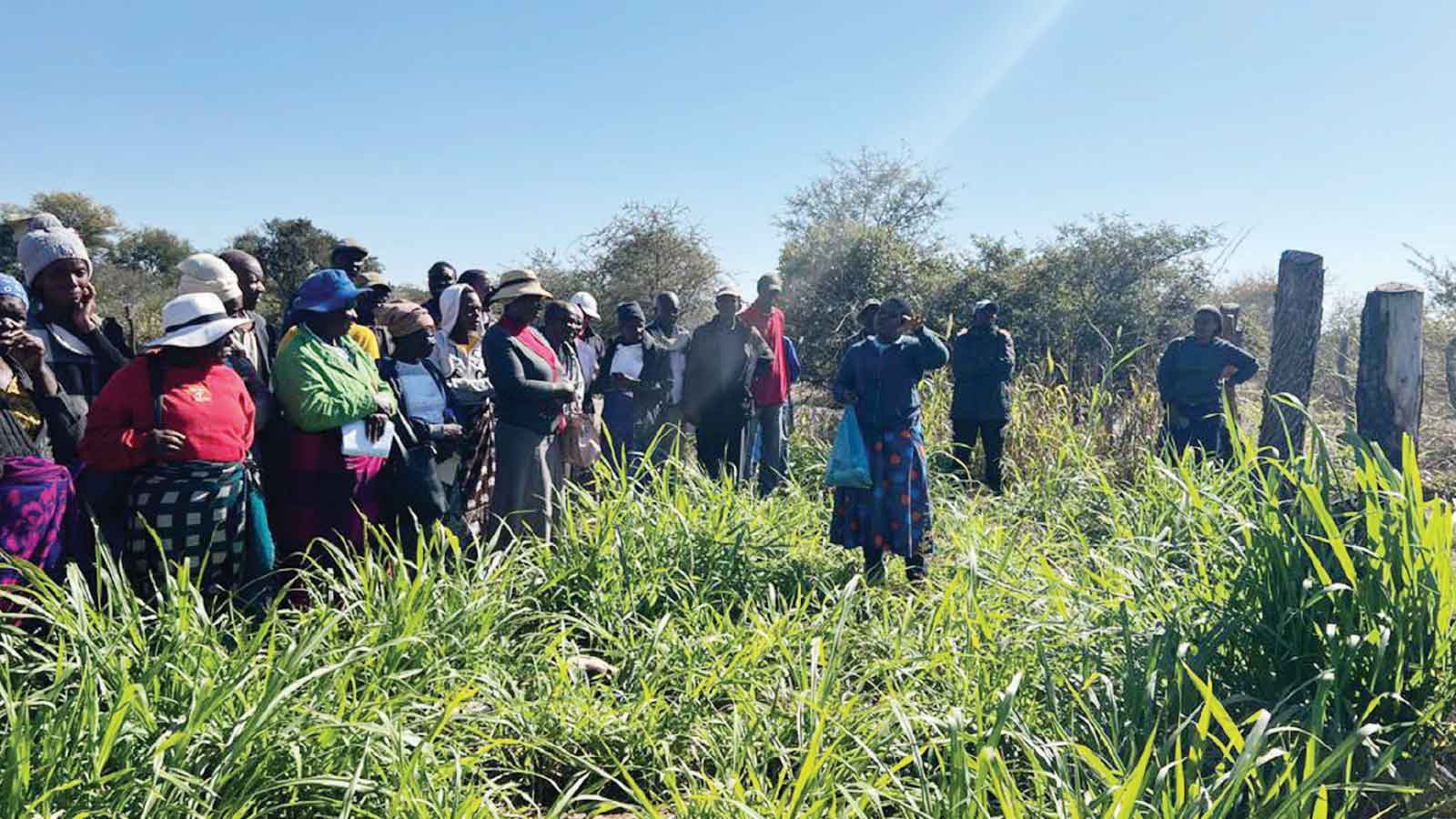
Sikhulekelani Moyo
LIVESTOCK farmers have been advised to start preparing for the forecast El Niño season, with fodder production training being intensified to capacitate them with knowledge on how to make feed at an affordable cost.
This comes as weather experts have indicated an 80 percent probability of El Niño conditions, increasing the likelihood of normal-to-below-normal rainfall during the forthcoming summer cropping season.
During a fodder training in Umguza on Tuesday, Mrs Rita Dube, of Friends in Fodder, said farmers in the Matabeleland regions particularly faced higher threats of livestock poverty, disease outbreaks and stock theft.
She said the Government previously urged farmers in the regions to destock during dry seasons.
Instead of destocking, she added, livestock farmers should start preparing their own feed, as fodder production is cheaper and helps maintain livestock numbers.
“As we speak, farmers in Matabeleland are being affected by livestock death due to hunger and diseases, and livestock theft,” she said.
“The Government used to tell us to destock when there was a drought or a disease outbreak.
“But we told ourselves we destock up to which level? We now work as Matabeleland North and Matabeleland South to guard against these issues, like the El Niño and disease outbreaks.
“Matabeleland is known for its good-quality livestock and quality meat, so we have to work hard to prevent diseases and livestock theft.”
Friends in Fodder, in partnership with the Zimbabwe Farmers Union, organised the training in Umguza, where farmers were taught how to prepare urea blocks.
Farmers in Matabeleland are heavily investing in fodder production to drought-proof their herds.
With erratic rainfall and prolonged dry spells, communal and commercial farmers are shifting from relying on natural grazing to growing and preserving nutritious fodder — such as lucerne, lablab, velvet bean and Bana grass — for silage and hay.
Experts continue to encourage communal farmers to leverage traditional trees like amawohlo, which have been identified as good feed for both cattle and goats.
To support fodder production initiatives, the Government is distributing legume seeds, forage sorghum and equipment like mowers and hay balers to communal irrigation schemes.
The authorities have launched a digital platform to help improve distribution of supplementary livestock feed across provinces.
In addition, commercial farmers in areas like Esigodini, Nyamandlovu and Shangani are establishing their own silage banks to shield their animals from climate shocks.
Mrs Dube said, as Friends and Fodder, they encourage farmers to have silos for food and animal feeds, saying livestock are a source of income, so they need to be safeguarded.
“With this focused El Niño, we are disseminating information to farmers, teaching them how to prepare feed with whatever is at their disposal,” she said.
“We know farmers don’t have money to keep buying feed from stockists, but they can harvest amawohlo, or have their own forage farms that can help reduce costs.
“However, farmers are faced with challenges like water shortages. We are, therefore, calling on the Government to help drill boreholes so that we get water for our forage farms and for our livestock.
“. . . as farmers, we need to be prepared. With the information we are getting from different trainings, we can prevent our livestock from dying of poverty.”
Mrs Dube urged the youth and women to participate in fodder production, saying even those who do not have cattle or goats can produce fodder and sell to others.
Livestock expert Ms Siphathisiwe Sibanda, from the Matopo Research Institute, said farmers can invest in local breeds like the Mashona and Tuli as they are resilient and cheap to maintain.
“We promote indigenous breeds that adapt well to climate. Let’s have Tuli, Mashona, Nguni and Nkone, and also indigenous chickens and goats,” said Ms Sibanda.
“This will help farmers to grow even if there is climate change. With the little we have, they can survive. The exotic breeds are expensive; they need proper feed, vaccines, etc.
“Let’s promote our own breeds for farmers to survive. That is why we are advising farmers to use what is available at their disposal to produce survival blocks and urea stover to be able to reach the next season.”