Online Reporter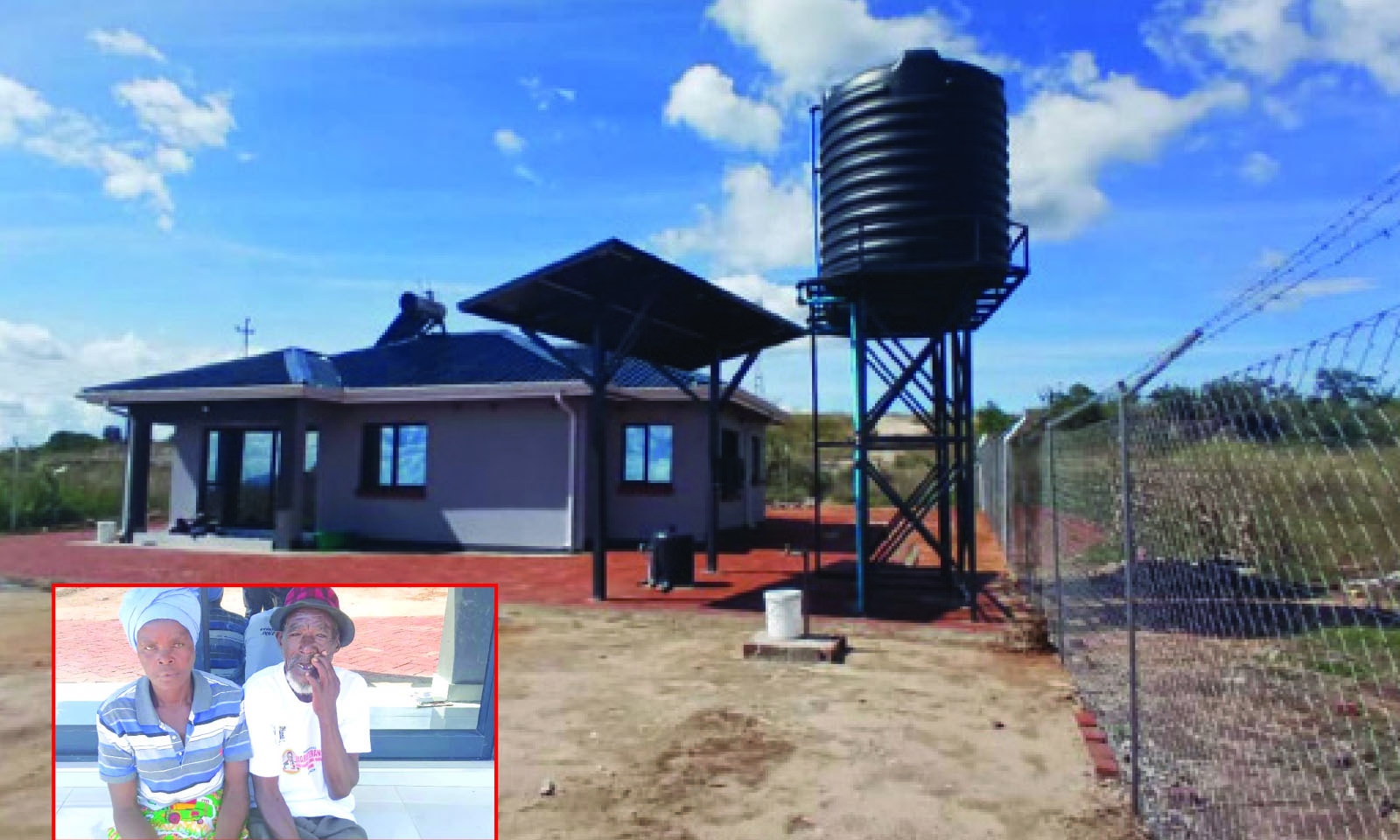
Victor Maphosa
Features Writer
It was just one of the days, an ordinary one for Mr and Mrs Mujuru of Uzumba Maramba Pfungwe District in Mashonaland East Province.
In June 1976, they woke up to find their precious lastborn son, Murambiwa Clepaton, who was then 21, missing.
During that time, the liberation struggle was at its peak. Naturally, as parents, they got worried.
As the days went by, and reality started to sink in, worry and anxiety took their toll on them.
The intensity of the struggle was unbearable, and their son was missing.
They waited anxiously as days turned into weeks, then into months, and agonisingly into years, yet no word of his whereabouts came.
Nonetheless, they waited — patiently, hopefully!
Unbeknown to them, their beloved son, Murambiwa Clepaton, had crossed into Mozambique for guerrilla warfare training.
The Sunday Mail recently interviewed the “lost” Mujuru son, a veteran freedom fighter from Mashonaland East Province, at his newly-built home in Murehwa.
Cde Mujuru shared how and why he joined the liberation struggle.
He was among the first batch of freedom fighters to benefit from President Mnangagwa’s Presidential War Veterans Borehole Drilling and Housing schemes, receiving a modern house and solar-powered borehole.
He expressed surprise and gratitude towards the President for the gesture, praising him for the initiative.
“I was so fed up with colonial rule that I would get angry at myself for not taking action. I could not take it anymore,” Cde Mujuru revealed. “I was working at a brick moulding company in the then Salisbury.”
One day, he revealed, he was visited by two anonymous people, who told him that his superior wanted to see him, although no name was given.
“They refused to tell me the actual name of the person, so I concluded that the Rhodesian army was targeting me and my parents because I was vocal, voicing my concern over the ill treatment of blacks in their motherland. I knew I was now targeted,” he said.
Cde Mujuru shared a pivotal moment in his life. After the mysterious visit, he returned home and confided in his parents about his experiences but kept his plan to go to Mozambique secret. He then confided in his best friend, who shared his desire to liberate Zimbabwe. Together, they made a sacrificial decision to pursue their mission.
“We only had one mission to accomplish; that of liberating Zimbabwe at all costs. Ours was a sacrifice,” he revealed.
After making arrangements for their planned journey, the two friends set off for Salisbury (Harare) where they boarded a Uzumba bus to Rushinga, in Mashonaland Central Province.
Upon arrival at Rushinga Business Centre, they encountered their first hurdle: a checkpoint manned by white security officers.
To avoid suspicion, they fabricated a story about attending a burial ceremony at a nearby farm, but the whites were sceptical. Just as they considered fleeing, a woman pretended to be one of their relatives, and began wailing loudly, distracting the whites, who allowed them to pass.
Since many young people were crossing into Mozambique, they then joined a nearby soccer game, taking turns to slip away into the bushes. Once in the bushes, they kept their guard on for the enemy was restless and watchful.
Cde Mujuru said they crossed into Mozambique following days of walking, where they met their “own trained military people”, who, after vetting them, led the way.
“We then walked for close to a week,” he said.
The group travelled at night, resting and eating along the way. They carried their own food and cooking utensils. The journey was long, painful, and dangerous, requiring them to be cautious and alert.
On June 9, 1976, they crossed into Mozambique and arrived at a base in Tete Province on June 25. After a few days, the 37 of them were taken to New Tembwe base for military training, which included politics, close combat, and gun handling.
“The training was vigorous. I was in what we called Company C. It was thrilling. We trained in all sorts of guns, how to assemble them, and how to load them,” said Cde Mujuru.
On completion of basic training, Cde Mujuru and his group underwent six months of intensive training in individual tactics and combat skills.
He specialised in using the Motor 60 gun, which they called kadehwe kaMbuya Nehanda.
He later pursued further training in Romania, where he learnt about field artillery and specialised in using the Motor 82 gun. This advanced training prepared him for more sophisticated warfare.
“We stayed in Romania for close to five months. I was now ready to fight,” he said
Cde Mujuru said the training was all aimed at equipping them to defeat the enemy and liberate the motherland.
However, during their return journey from Romania, they narrowly survived an air attack.
In 1977, Cde Mujuru and his group returned to Mozambique via Ethiopia, narrowly surviving an ambush attempt while in flight near Cairo, Egypt.
Upon arrival, they were stationed at Mavhonde base, a hub for trained personnel, launching operations into Rhodesia.
Describing their tactics, Cde Mujuru recounted: “We used to cross into Zimbabwe (Rhodesia) and attack the enemy then cross back into Mozambique.
“If ever one of the comrades’ bases in Zimbabwe (Rhodesia) was attacked and we got the information, we would travel to that area and also attack the enemy. We made sure we killed them.”
Cde Mujuru recounted a specific incident where their base was suddenly ambushed one morning, catching them off guard. The enemy launched a fierce attack with fighter helicopters, dropping soldiers and firing indiscriminately.
The guerrilla fighter witnessed his colleagues falling, their screams echoing as bullets pierced their bodies. The memories remain vivid, with the cries of the fallen still haunting him. Many perished, and blood was everywhere.
That day, death was brutal!
He lost many close comrades that day. The attack was unexpected, and no one knew how their location had been compromised.
“We managed to return fire at last. It became a full-fledged fight. It was a vicious one. The fight continued for four days,” he narrated.
“We shot a lot of helicopters down from the sky. We killed the enemy, and as they felt the pressure from our side, they retreated. Our base commander was Cde Josiah Tongogara.”
Cde Mujuru said although their side had the most casualties, they determinedly marched on.
“There was neither fear nor intention to surrender. A fearless spirit seemed to have engulfed us as we marched into Zimbabwe—fighting, killing, and conquering the enemy. It was evident that the spirits of Mbuya Nehanda and Sekuru Kaguvi had enveloped us,” he said.
He added: “Remember, we were fighting for no pay, ours was a sacrifice. We wanted to liberate ourselves and the entire nation. So back in Zimbabwe, we operated in areas like Zaka and Manama, until independence.”
After the ceasefire, Cde Mujuru returned to his rural home, forever changed by his experiences as a trained soldier.
He learnt of his father’s passing while in Romania. Upon his return, his mother initially failed to recognise him. It wasn’t until his cousin explained the situation that she realised who he was, and the reunion was emotional, with tears and hugs.
Nevertheless, Cde Mujuru struggled to adjust, finding it hard to sleep due to haunting memories of the war.
The aftermath of the war troubled him, as he felt like someone was watching him, making him unable to sleep in one room for more than a night. He would see flashbacks of the war and hear the screams of his fallen comrades, a haunting experience that still lingers.
However, as time passed, the freedom fighter settled down, got married, and benefited from the land reform programme, receiving six hectares of land. He expressed contentment, reflecting on the sacrifice they made during the war to liberate Zimbabwe.
He insisted, “Ours was a sacrifice, we went to war to liberate Zimbabwe and free everyone from colonial rule.”
Cde Mujuru found happiness and fulfilment in his new life, spending time with his family on his plot and even attending church.
He recounted a surprising and emotional moment when he discovered he was a beneficiary of President Mnangagwa’s War Veterans Borehole Drilling and Housing programme.
“I was at church last month when someone informed me that I was wanted at Murehwa Centre,” he said.
Initially unaware of the reason for being summoned to Murehwa Centre, he was shocked to find a crowd gathered, and was then told that the President had built a house for him.
“I was not expecting such a humble gesture from President Mnangagwa. It was like a dream. But when I heard Mr Paul Tungwarara, who is overseeing this programme, congratulating me, and telling me that the house was mine, I realised that it was, indeed, a reality,” he said.
Overwhelmed by emotions, Cde Mujuru cried, feeling humbled by the gesture. He reflected on their sacrifices during the liberation struggle, noting that while they didn’t fight for rewards, the President’s recognition meant a lot.
He expressed his deepest gratitude, saying, “Cde President, what you did for me and my colleagues is commendable. I am running short of words to thank you.”
Tears welling in his eyes, the freedom fighter added: “To Mr Tungwarara, please continue to work hard to uplift every war veteran’s livelihood as assigned by our President. We thank you for being in the right direction; don’t tire of doing good.”
Mr Tungwarara is the Presidential Investment Advisor.
Cde Mujuru revealed that he suffered a stroke in May 2016, which has impacted his health. He humbly requested assistance with funds for medication, calling it his last wish.
Mrs Mujuru expressed her joy upon learning about the house gifted to her husband by President Mnangagwa.
Disbelieving at first, she was convinced after multiple confirmations from family and friends. On seeing the house, she was overwhelmed and knelt down to thank God for guiding the country’s leaders.
She praised President Mnangagwa for the gesture and expressed pride in her husband’s role in Zimbabwe’s liberation struggle.
“Thank you, President Mnangagwa for this gift,” Mrs Mujuru said, her eyes glowing with delight.
During the house handover ceremony to Cde Mujuru, Mr Tungwarara stressed the President’s commitment to improving the livelihoods of war veterans.
He mentioned various initiatives, including drilling boreholes at individual veterans’ homes, rather than just in villages. He highlighted the President’s passion for prioritising war veterans’ welfare.
“Our President is a man of his words,” said Mr Tungwarara.
The announcement was met with loud cheers from the gathered freedom fighters. Additionally, Mr Tungwarara distributed bicycles and food hampers to the veterans of the liberation struggle.