admin
admin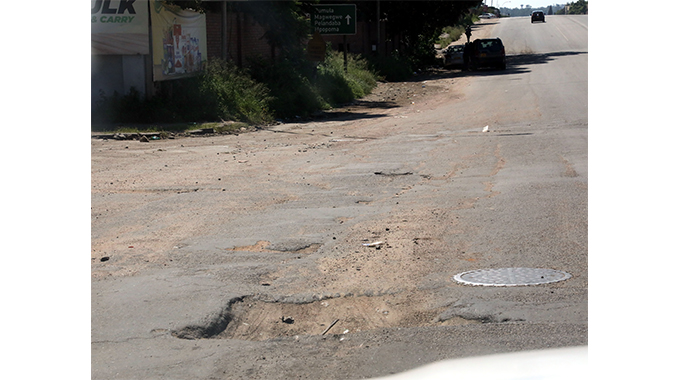
Rejoice Sibanda, Chronicle Reporter
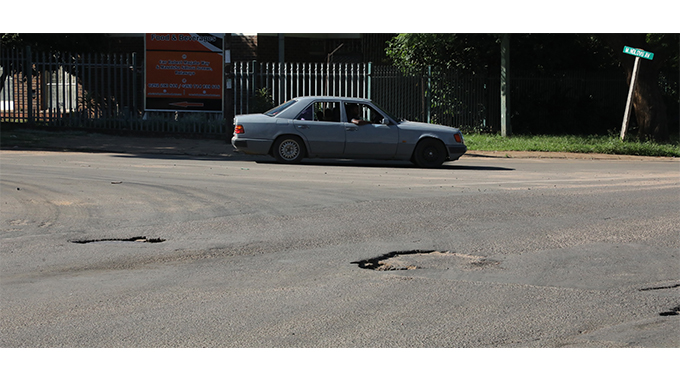
MOTORISTS and residents from Bulawayo have expressed concern over the poor state of roads including in the central business district (CBD), which they say are damaging vehicles and increasing the cost of repairs while exposing them to risks of accidents.
The onset of the rainy season has laid bare the dilapidated city’s road network with most of the roads being littered with potholes.
Motorists say they are constantly forced to fix their cars after driving through huge potholes and the cost burden is unsustainable.
In the past week, an unknown person had to place a city council bin on a big pothole at the corner of 11th Avenue and Robert Mugabe Way, just to alert motorists against driving through the ditch.
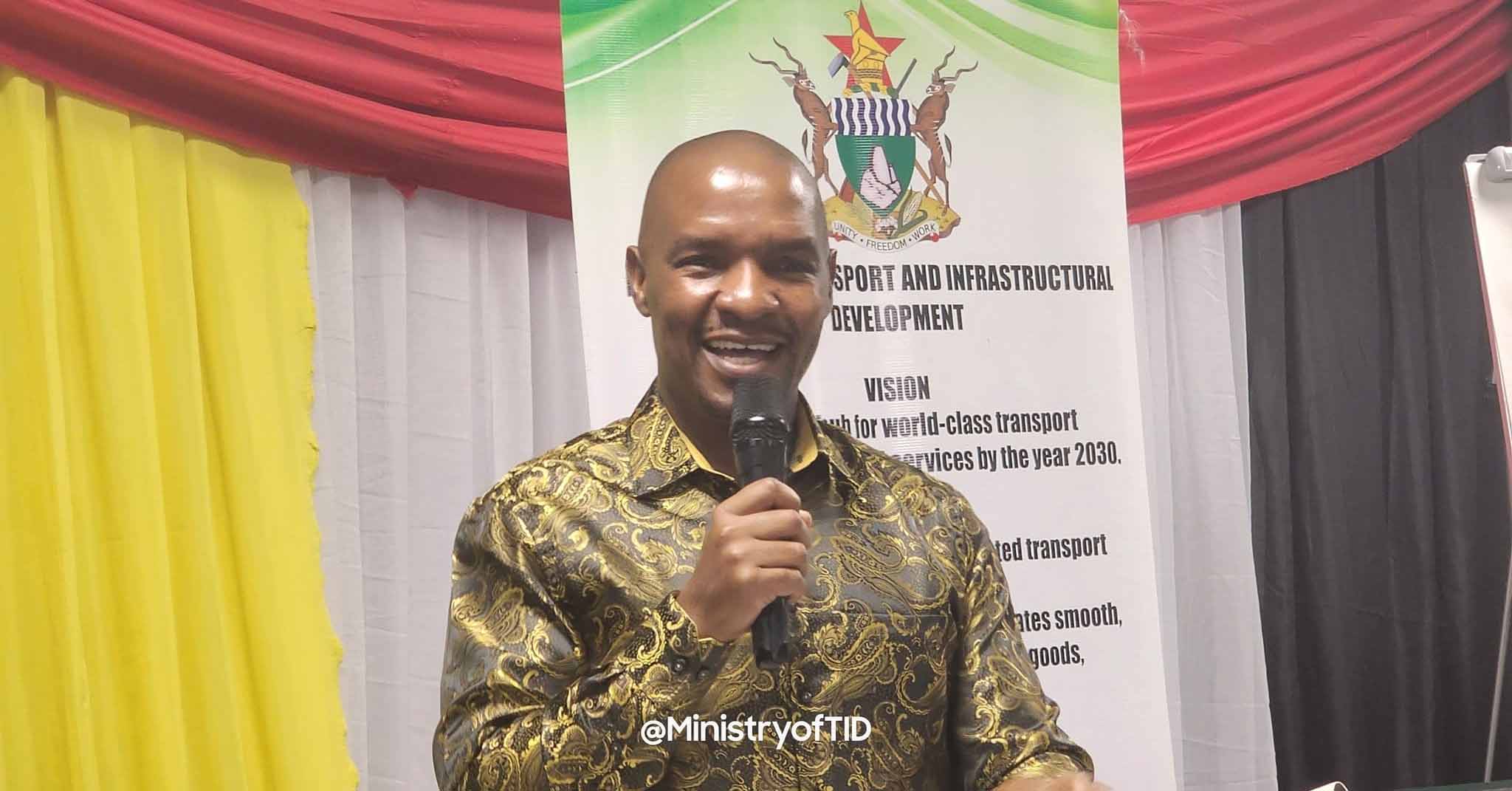
Recently, Transport and Infrastructure Development Minister Felix Mhona visited Bulawayo and promised that the city’s roads will be fixed as a matter of urgency. Over the past week, cars have been plunging in ditches in the city centre.
Mr David Tshuma (41), a motorist from Hillside suburb said the roads are dangerous especially when one is not familiar with the terrain.
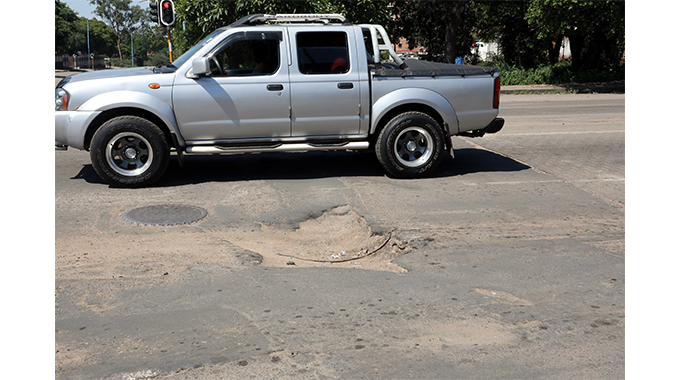
“Our local government should do something about the state of roads that are hard to drive on. The roads become very dangerous if one is not familiar with the route they are using as they will drive into those big potholes,” he said.
Mr Tshuma said he now applies the know your roads driving, which enable him to navigate routes that may even have potholes. He said the potholes can cause accidents especially when drivers try to navigate as some of them may even encroach into other lanes.
Another motorist Mr Simon Dziva (32) from Magwegwe North suburb, said he has noted a lot of cars being damaged by some of the potholes in the CBD.
“The council should at least first fix roads in the CBD as it is the main operation area for most businesses and then proceed to other places as well,” said Mr Dziva.
It is not only the city centre with potholes but most of the city’s major roads.
Bulawayo United Residents Association (BURA) chairman Mr Winos Dube said it is disappointing that the council is not doing anything about the potholes.
“The roads are very terrible in the CBD and it is not only in the city centre but near Kango in Belmont Industrial area. We are calling upon the council to communicate and update us so that we know where the challenge is,” said Mr Dube.
Bulawayo Progressive Residents Association (BPRA) administrator Mr Thembelani Dube said council should prioritise fixing roads and it was worrying that even in the CBD the roads are pothole-littered.
He said covering of potholes using sand is not effective, particularly during the rainy season.
“Of course, the council tried to cover up some of the potholes using pit sand but due to the rains, their efforts have gone down the drain,” he said.
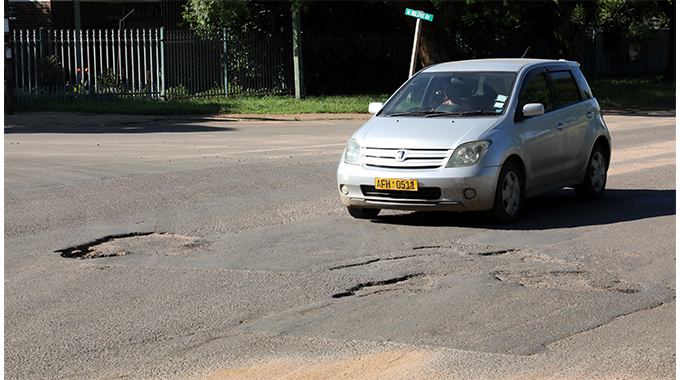
“The council also promised to provide advanced machinery and equipment to cover the potholes but we have not yet seen that happening. BCC has neglected its duty in the sense that we are seeing residents always trying to cover up these potholes over some charges.”
He added that the roads littered with potholes should be given priority and attended to as residents are paying their taxes religiously.
Last month, council submitted a $3 billion quotation to Government so that it attends to some of the dilapidated roads in the city.
BCC is on record stating that it requires US$700 million as most of the roads have outlived their lifespan.
To attend to the worsening state of roads countrywide, Government introduced the Emergency Road Rehabilitation Programme 2 (ERRP 2) last year. This saw significant progress being made in the rehabilitation of Bulawayo’s roads with Siyephambili Drive, George Avenue and 23rd Avenue being some of the major roads rehabilitated.
Government allocated $1 billion to Bulawayo towards the emergency road rehabilitation. Treasury, this year tightened screws on payouts to Government-funded projects after observing that some contractors were inflating prices and fuelling black market rates.



 Online Reporter