admin
admin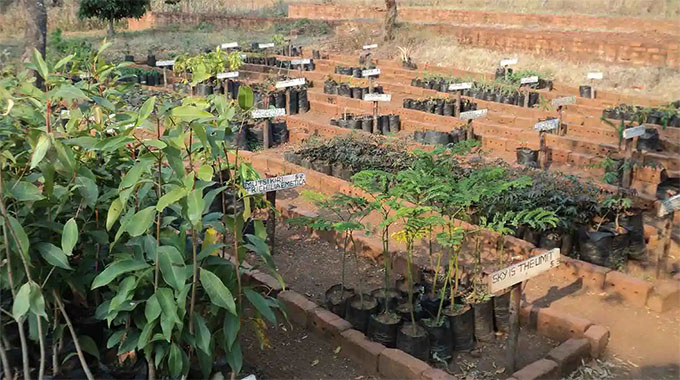
Fungai Lupande Mashonaland Central Bureau
Over two million seedlings of indigenous and exotic trees are ready for planting from next month, just in Mashonaland Central, as the Forestry Commission accelerates restoration of the forest cover in the province.
In the wake of increased high temperatures due to global warming and climate change, the provincial forestry manager, Mr Lucias Mujuru, said people have embraced tree planting as an important day-to-day activity.
He said in an interview that First Lady Dr Auxillia Mnangagwa, who is the environmental patron, has been instrumental in tree planting in Mashonaland Central, headlining many tree planting events.
Also, President Mnangagwa has participated in many tree-planting events in the province to motivate communities to adopt tree planting.
Mr Mujuru said he was impressed by the level of enthusiasm people now exhibit towards tree planting.
He said they were promoting the planting of indigenous trees like masau and baobab under the GEF-6 (Global Environment Facility) programme.
As Bindura University of Science Education is establishing a masau processing plant in Muzarabani, Mr Mujuru said it was important to replenish the forest.
Chitemamuswe Nursery has over 30 000 indigenous species.
“In the face of climate change, food security has been threatened. Although crops may fail due to climate change, trees don’t fail to give fruits,” he said.
“Of late we have been experiencing heatwaves and whirlwinds and we encourage every household to plant at least five fruit trees. Trees are windbreaks from storms.”
They have partnered with farmers, institutions and individuals across the province in the production of seedlings nurseries.
Among the institutions are a Chinese mining company, Sun-He, in Guruve which planted 10 hectares.
“The Forestry Commission has nurseries in Mushumbi, Mavuradonha, Nzvimbo growth point and Guruve. We have trained farmers on how to produce seedlings,” he said.
“We help the farmers and institutions in selling the seedlings and linking them to markets. There is high demand for trees, especially improved fruit trees like citrus, natchjies, avocados and mangos.”
Mr Mujuru said in three years, grafted trees will start producing trees.
He said over a million eucalyptus trees are ready for planting starting November, the onset of the rainy season.
Although trees can be planted at any time of the year depending on the availability of water, the tree planting season runs from November to March.
“Eucalyptus trees are free to farmers to establish woodlots for tobacco curing. Last year we had a shortfall of the gum tree seedlings and we have increased our production,” he said.
“All a farmer needs to do is to prepare the land according to our specifications which are 2,5 meters in a row and inter-row while the holes are at least 30 centimetres deep.
“We have issued gum trees to farmers, one of them had prepared land over 20 hectares. One hectare needs about 1 600 plants. We are happy that people have accepted this programme.”



 Online Reporter