Online Reporter
Raymond Jaravaza, [email protected]
SMALL grain farmers across the country can access more than 8 500 plant genetics of sorghum, millet, groundnuts, chickpeas and pigeon peas free of charge, at the International Crops Research Institute for the Semi-Arid Tropics (Icrisat), to boost yields and contribute to national food security reserves.
This was revealed by Icrisat scientific officer, Mrs Tanyaradzwa Monicah Tenesi, during a recent tour of the plant gene bank located at the Matopos Research Centre, in Matabeleland South.
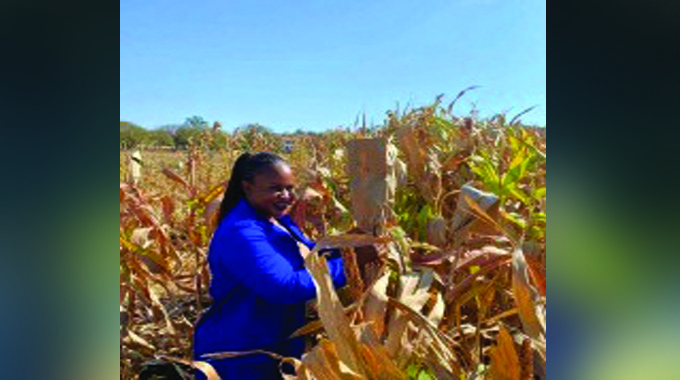
The Minister of Higher and Tertiary Education, Science, Innovation and Technology Development, Dr Frederick Shava, recently toured the agricultural facility alongside a delegation from the National University of Science and Technology (Nust) led by Vice-Chancellor, Professor Mqhele Dlodlo.
“Icrisat serves as the regional gene bank for Eastern and Southern Africa, with a mandate to conserve plant genetics, particularly for small grains such as sorghum and millets, as well as various legumes,” said Mrs Tenesi.
“Preserving plant genetics is crucial as these are the building blocks for developing new varieties of small grain crops. The genetic materials housed at Icrisat are not only intended for breeders or farmers, but are also available to researchers for academic purposes.”
Mrs Tenesi highlighted the national and regional significance of the gene bank, which conserves thousands of genetic materials for sorghum, millets, groundnuts, chickpeas and pigeon peas, available to all Zimbabwean farmers at no cost.
Farmers may request up to six grams of any specific plant genetic material.
“We serve the entire Eastern and Southern Africa region, so we cannot distribute large quantities of genetic material. We typically provide five to six grams per request. However, Icrisat supports farmers in cultivating the materials so they can produce more seeds for future use,” she said.
“All the genetic materials in our gene bank are freely available to farmers and interested parties. We currently conserve 8,517 plant genetics, which we collect through field visits to farming communities to obtain unique varieties. These are preserved for future use by farmers, breeders and researchers.”
The genetic materials are also accessible to partners such as breeders, research institutions and scholars.
Mrs Tenesi explained that once Icrisat receives genetic material, the seeds are planted to study their characteristics, such as germination time and flowering duration, in a process called “characterisation”.
“Each crop has about 32 traits that we examine. This enables us to assist anyone searching for a particular type of material, even if they don’t know the name; just a description is enough,” she said.
Icrisat is an international organisation conducting agricultural research for rural development. Headquartered in India, it operates regional centres and aligns its mission with the United Nations’ Sustainable Development Goal 2, which aims to end hunger, achieve food security, improve nutrition and promote sustainable agriculture.
Ms Agnes Moyo, a Nyamandlovu farmer recently recognised for her commitment to small grain cultivation in response to climate change, noted that many farmers are unaware of Icrisat’s free plant genetics offering.
“I switched from maize to small grains a few years ago, but I still struggle to find the right varieties of sorghum and millet,” she said. “Information about organisations like Icrisat, which offer tried and tested seeds, is invaluable.
“Many villagers in my area still believe small grains are unprofitable. Educating them about the benefits of growing sorghum, millets, and groundnuts, especially in low-rainfall regions like Matabeleland, would be a game changer.”
Minister Shava has urged Icrisat to collaborate with the Ministry of Agriculture, Lands, Water, Fisheries, and Rural Development to raise awareness among farmers about the availability of free plant genetics.
The Government, through the Ministry, has been encouraging farmers in arid regions to embrace traditional grains.
In the past, small grains were undervalued and perceived as crops suited only to vulnerable communities.