Online Reporter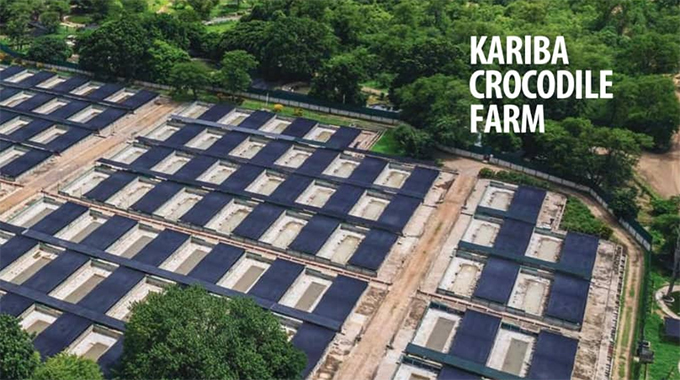
Business Reporter
Amidst a two-year downturn in the global luxury goods market, Padenga Holdings’ Agribusiness division has fortified its operations through strategic investments in economic resilience, environmental innovation, and ethical supply chains. According to its 2024 Sustainability Report, the Lake Kariba-based crocodile skin producer—contributing 67 percent of Zimbabwe’s exports in this niche—has doubled down on sustainability as a buffer against volatility.
Despite a 40 percent plunge in skin sales volumes, revenue edged up 2 percent to $30,43 million, buoyed by a 69 percent surge in average skin prices. CEO Gary Sharp credits this to “producing high-quality skins consistent with premium market expectations,” while stringent cost controls slashed operating expenses by 10 percent. The division’s economic impact ripples beyond exports: it employs 829 workers—79 percent hired from Kariba’s local communities—with salaries and wages injecting $6,65 million into the regional economy. Tax contributions totalled $4,11 million, reinforcing national coffers.
“Economic sustainability forms the foundation for a resilient business,” Sharp stated, underscoring how profits enable critical environmental upgrades.
A £1,2 million wastewater treatment plant, commissioned in December 2024, epitomises Padenga’s environmental pivot. The facility at Nyanyana Farm processes 400 cubic metres of contaminated water daily, returning it to “blue quality” (environmentally safe) status. “This investment demonstrates our commitment to environmental responsibility,” Sharp emphasised.
Complementing this, solar capacity hit 1,2 megawatts at Nyanyana after phase-three installation, while Ume Farm’s off-grid solar output rose 35 percent. Energy-saving measures—like optimised pump schedules—cut electricity use by 10 percent. Carbon emissions per crocodile skin fell to 0.01966 tonnes, down 18 percent year-on-year, edging closer to net-zero goals.
Facing heightened scrutiny from luxury clients, Padenga subjected its supply chain to an independent audit by Environment Resources Management International (ERMI). The review spotlighted feed safety, labour practices, and traceability. Rigorous protocols now govern raw materials: 60 percent of feed incorporates recycled animal by-products, with certificates of analysis mandatory for all imports.
Radio Frequency Identification (RFID) microchipping of individual animals continued, ensuring skins are traceable from farm to tanneries. Anti-bribery policies were extended to contractors, with Sharp noting, “We ensure fair labour practices across our entire value chain.”
With the luxury market still depressed, Padenga plans a 2025 “right-sizing exercise” to align production with demand. Yet Sharp remains bullish on sustainability’s role: “Our integrated approach—ethical operations, environmental stewardship, and community investment—isn’t just risk mitigation. It’s how we future-proof Zimbabwe’s place in the global luxury ecosystem.”