

 Chronicle Editor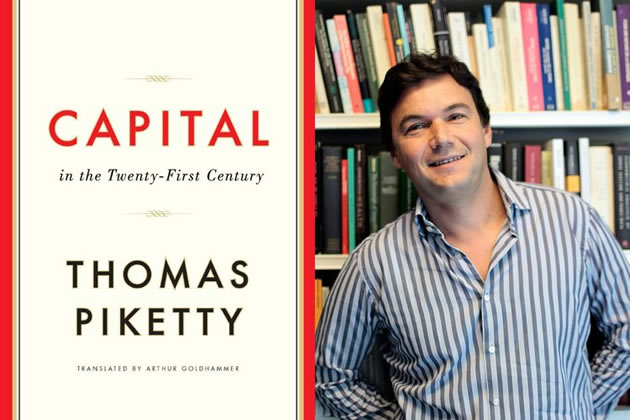
Stanely Mushava Literature Today
In the shadow of Uganda’s oil fields, hospitals, in years freshly elapsed, have epitomised the enduring capitalist tendency of squeezing the poor to fatten the rich.
Hospitals were running down to shells but for staff and basic implements, escalating the country’s vulnerability to maternal, new-born and child mortality.
Patients, some of them possible victims of extractive aftermaths, slept on the floor and were required to bring their own medical supplies.
The International Consortium of Investigative Journalists (ICIJ) trails that conundrum of poverty in the heart of plenty to tax evasion stratagems and corruption by the East African country’s major oil guzzlers.
Heritage Oil and Gas Ltd, a Jersey-based oil company operating in Uganda, enlisted the services of shady Panamanian law firm, Mossack Fonseca, to evade $404 million capital gains tax from the sale of half its stake of the country’s oil field for $1,5 billion.
The Panama Papers, a massive leak exposing the dealings of corporations, politicians, oligarchs, drug traffickers, sex trade networks and bankrollers of terror in offshore tax havens, also implicates key military and political actors for receiving bribes to grant drilling rights to oil corporations.
Zimbabwe, DRC, South Africa, Nigeria and other African countries are also entangled in the leak, understood to be a thousand times bigger than the Wikileaks, though exclusively offshore finance-themed.
Platinum giant Zimplats Holdings is alleged to have set up a company in the Isle of Man to pay salaries to its top management without the knowledge of the central bank and in contravention of Zimbabwe’s control laws.
There are more tax havens, a universe of abuse, outside Panama and the implications are unsettling.
According to a July 2015 report by the International Monetary Fund (IMF), developing countries lose almost 2 percent of their national income every year to the externalisation of funds by corporations.
The web of capitalist intrigue precedes tax headaches. Before having to worry about offshore havens, most African countries were already being prejudiced of their resources by extractive multi-nationals.
“Not more than 10 percent (sometimes as low as 5 percent) is the average royalty that new African oil producers are given by foreign oil giants who come to exploit the petroleum resources of Africa,” observes New African editor-at-large Baffour Ankomah.
And it is these taxes that the extractive multi-nationals have been begrudging the host countries of.
The Panama Papers unravel a world of financial opacity and inequality, two of the most debilitating injustices of the 21st century.
A vast body of literature is swelling around the subjects, notably Thomas Piketty’s 2014 book, “Capital in the 21st Century,” for which he has been hailed by The Economist as the “modern Marx” despite his exception to some of the conclusions of classic Marxism.
“Capital in the 21st century” has ignited rousing debate on inequality and merits the distinction of pushing economic debate towards distributional questions.
Piketty deploys long-run data demonstrating that global inequality is escalating to the unsettling levels last seen before World War 1 to set forth an observation that wealth grows faster than economic output.
For inequality to be mitigated, rapid economic growth is required to catch up to lessen the significance of wealth and, in the current scenario, it could be facilitated by technological progress, rising populations or government intervention.
To avert the jeopardy of capitalism burning in its fat, as Karl Marx anticipated, Piketty proposes a progressive tax on capital and, controversially, a global tax, which he acknowledges to be a utopian concept.
In the aftermath of the Panama disclosure, Piketty has particularly proposed a common tax system for Europe to end financial opacity and the uninhibited rise of private interests.
The virtues of progressive tax on capital, according to Piketty, include inhibiting an endless inegalitarian spiral, regaining control over the dynamics of accumulation and exposing wealth to democratic scrutiny, which he regards as necessary for regulating the banking system and the international flow of capital.
For Africa, the worst is not inequality between nations but inequality within nations, where politicians and corporations constitute a money-minded parasitic coterie bent on stagnating the continent for their narrow interests.
Notably, Piketty gives a bleak outlook about developing countries’ capacity to mitigate inequality and build the social state.
To begin with, whereas richer countries, which have achieved a modicum of success on this front, stabilised government revenues at about 45-50 percent of national income for Western Europe, and around 30-45 percent for the US and Japan, the picture is different for Africa which trailed at 10-15 percent around 40 years ago, barely rising ever since.
“The most striking fact is that the gap between the rich and the not-so-rich countries has continued to widen in recent years.
“Tax levels in the rich countries rose (from 30-35 percent of national income in the 1970s to 35-40 percent in the 1980s) before stabilising at today’s levels, whereas tax levels in the poor and intermediate countries decreased significantly,” Piketty observes.
“In Sub- Saharan Africa and South Asia, the average tax bite was slightly below 15 percent in the 1970s and early 1980s but fell to a little over 10 percent in the 1990s. This evolution is a concern in that, in all the developed countries in the world today, building a fiscal and social state has been an essential part of the process of modernisation and economic development,” he says.
Piketty turns to history to suggest that 10-15 percent of national income in tax receipts does not suffice for a state to deliver much more than its traditional responsibilities of paying the civil service, hardly to satisfactory levels.
As a result of the predicament, state services may not function to expectation, making it difficult to raise taxes significantly for the social state as this corresponds with confidence in the public services.
Piketty observes, as such, that the history of economic development is tied to that of political and cultural development, hence the need for a country to chart its own distinctive path to development.
He blames Western institutions of capitalism and imperialism for robbing Africa of this entitlement, hence igniting the vicious circle of underdevelopment, which has held the continent captive of the years.
“In the present case, however, it seems that part of the blame lies with the rich countries and international organisations. The initial situation was not very promising,” Piketty notes.
“The process of decolonisation was marked by a number of chaotic episodes in the period 1950– 1970: wars of independence with the former colonial powers, somewhat arbitrary borders, military tensions linked to the Cold War, abortive experiments with socialism, and sometimes a little of all three,” he says.
The structural adjustment blueprints imposed on Africa as a condition for aid, which was critical coming from the phase of decolonisation, is equally faulted for underdeveloping Africa.
“After 1980, moreover, the new ultraliberal wave emanating from the developed countries forced the poor countries to cut their public sectors and lower the priority of developing a tax system suitable to fostering economic development,” Piketty notes.
“Recent research has shown that the decline in government receipts in the poorest countries in 1980-1990 was due to a large extent to a decrease in customs duties, which had brought in revenues equivalent to about 5 percent of national income in the 1970s.
“Trade liberalisation is not necessarily a bad thing, but only if it is not peremptorily imposed from without and only if the lost revenue can gradually be replaced by a strong tax authority capable of collecting new taxes and other substitute sources of revenue,” he says.
He notes that whereas today’s developed countries reduced their tariffs over the course of the past two centuries, it was at a pace they deemed reasonable, with clear alternatives in mind, an entitlement which was never allowed Africa.
“They were fortunate enough not to have anyone tell them what they ought to be doing instead. This illustrates a more general phenomenon: the tendency of the rich countries to use the less developed world as a field of experimentation, without really seeking to capitalise on the lessons of their own historical experience,” Picketty points out.
The Africa Rising presents both promise and peril examined in the context of rising inequality. African nations and regional bodies must fast-track the continent out of inequality.
Given our peculiar history as yoke nations, this can hardly be done without underlining black empowerment, democratic scrutiny of finance and progressive taxes on wealth.
- Feedback: [email protected]


 Online Reporter