Online Reporter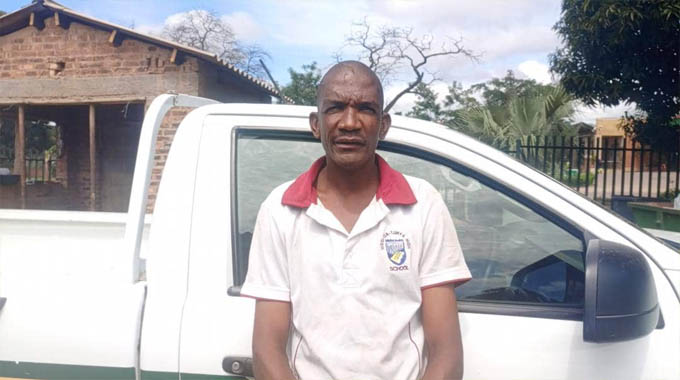
Rutendo Nyeve, [email protected]
A Victoria Falls inmate who walked free on Tuesday under President Mnangagwa’s clemency order stepped into the sunlight with the tentative grace of someone relearning the rhythm of freedom, his words threaded with gratitude and resolve. He expressed deep appreciation for his early release — but vowed to “stay away” from the woman whose assault landed him in jail, a promise shaped as much by contrition as by caution. The air felt different beyond the prison gate: brighter, fuller, and strangely fragile, as though his new beginning depended on how lightly he walked upon it.
Mr Alec Njovu (51) was among 4 305 inmates granted amnesty through Clemency Order No 1 of 2026, a programme conceived to restore dignity and rebalance the scales of justice while easing the choke of congestion in the nation’s correctional facilities.
To him, it was more than a legal gesture; it was a reprieve wrapped in responsibility, a quiet call to do better with the time that remained.
Speaking to the Chronicle moments after leaving Victoria Falls Satellite Prison, an emotional Njovu thanked the President for what he described as a second chance at life, but was firm that his freedom would not include a return to his estranged wife. The words came measured, a man picking his way across the stones of regret with care, holding close the thin, essential line between remorse and renewal.
“I am so happy that the President has granted us amnesty. I came to Victoria Falls prison on September 19, 2025 after I had been arrested and later convicted for assaulting my wife in a domestic violence case. I had enquired on a general domestic issue but she failed to answer me properly and I ended up beating her. So, I am really grateful for what the President did for me. I was supposed to be released on 4 July, but I have since been released months before,” Mr Njovu recounted.
He said his time in custody had forced him to confront his actions and led him to make a difficult but decisive choice about his marriage. The prison days had stretched long enough to etch hard lessons into his thinking, shaping a resolve that now felt as steady as it was sobering.
“I learnt quite a number of lessons while here in prison, so much such that I don’t want to find myself in this place ever again. I am not going back to my wife because I might commit the same offence again. She was visiting while I was in prison and we have a relationship but at this point in time, I am going to my uncle’s house,” Mr Njovu said.
The clemency exercise — which saw prisoners released from correctional facilities nationwide — was officially announced by Justice, Legal and Parliamentary Affairs Minister Ziyambi Ziyambi. The decision rippled across the country like a careful untying of knots, guided by a belief that mercy, administered wisely, can be a tool of transformation.
The minister said the gesture underscored Government’s commitment to compassion, rehabilitation and broader correctional reforms. It was an expression of intent as much as policy, a reminder that criminal justice, at its best, holds space for both accountability and renewal.
The amnesty is targeted and merit-based, prioritising vulnerable groups and inmates who have demonstrated meaningful progress towards rehabilitation. It speaks to a system seeking balance — firm where it must be, humane where it should be — rewarding effort and change with a path back to community.
Most beneficiaries were required to have served at least one-third of their sentences by the date of gazetting. Those eligible for full remission included convicted female inmates (excluding those convicted of specified offences), inmates under 18, those serving effective terms of 48 months or less for non-specified offences, inmates aged 60 and above who had completed one-third of their sentences, and inmates certified as terminally ill. These categories sketch a portrait of priority and protection, an attempt to align mercy with vulnerability and the arc of rehabilitation.
The clemency also extended to visually impaired and physically challenged inmates whose conditions cannot be adequately managed within correctional facilities, inmates at open prisons, and those who have served a minimum of 20 years — including prisoners whose death sentences were commuted to life imprisonment. In these provisions, there is a quiet acknowledgement of human limits and the need to soften the sharpest edges of incarceration where fairness demands it.