admin
admin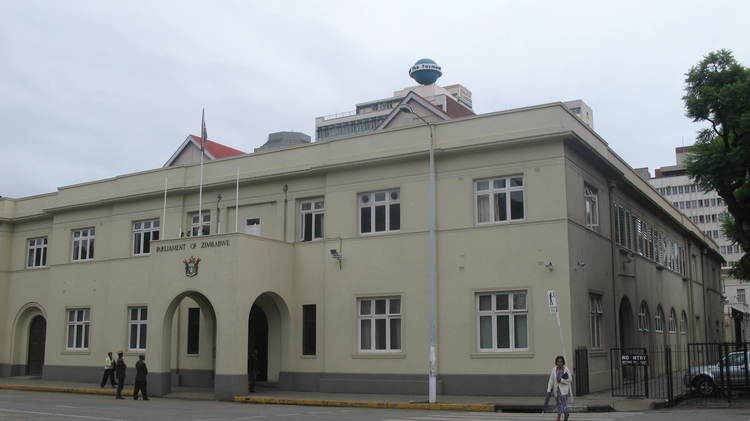
Lincoln Towindo
PARLIAMENT passed only a handful of Acts last year, prompting President Mnangagwa to remark that lethargy in the House was weighing down Government’s reform agenda.
Only the Tripartite Negotiating Forum Act, Companies and Other Business Entities Act, Consumer Protection Act, Microfinance Amendment Act, and the Maintenance of Peace and Order Act went through both Houses in 2019.
Three National Budget Bills were also passed. The President had proposed the presentation of 30 Bills upon commencement of that session. Presenting his State of the Nation Address and officially opening the Second Session of the Ninth Parliament in October last year, the President censured Parliament for its slothfulness.
“The law must be a universal instrument of development,” said President Mnangagwa.
“As such, the slow pace in this august House, which has resulted in a low number of Bills passing through Parliament, cannot be allowed to continue. I, thus, challenge honourable members in their individual and collective capacities, to play their part in speeding up our parliamentary processes.”
Further, six Bills gazetted during the First Session of the current Parliament lapsed after parliamentarians failed to debate and pass them before the session came to a close.
Though the Bills were later restored on the order paper during the ensuing session, the lapsing of the Bills is a damning indictment on the House.
Given such a low turnover of Bills, Government’s legislative reform agenda could be under serious threat.
The Executive has, on the other hand, performed commendably by tabling these Bills, which have in turn been bogged down by parliamentary bureaucratic processes.
As a result of this lethargy, Government has not been spared barbs for superintending over a sluggish legislative reform agenda.
A case in point being the recent extension of sanctions on Zimbabwe by the United States government, which questioned Government’s willingness to implement political reforms. Admittedly, passing a law in Zimbabwe can prove to be a procedural nightmare.
In terms of the rules, preliminary procedures compel any minister in charge of a Bill to place their proposal to Cabinet, which examines it, ensuring that it is in line with Government policy and does not violate any provision of the Constitution of Zimbabwe.
If Cabinet gives the greenlight, a Bill is prepared at the Legal Drafting Department in the Attorney-General’s Office. Chair of the Cabinet Committee on Legislation —the Minister of Justice, Legal and Parliamentary Affairs — presents the draft to Cabinet and upon approval the Bill is published in the Government Gazette at least two weeks before its tabling in Parliament.
Upon gazetting, the relevant Parliamentary Portfolio Committee conducts public hearings to give the public an opportunity to make an input. Following the hearings, the minister responsible for the Bill gives notice in both Houses of his intention to present a Bill, before presenting the Bill by reading the long title.
The Bill is then presented to the Parliamentary Legal Committee (PLC), which is then required to determine whether the Bill does not contravene the Declaration of Rights or any other provision of the Constitution.
It then goes for the Second Reading stage during which the minister explains the principles of the Bill and the PLC tables its report on the constitutionality of the Bill. Debate on the Bill then ensues when the Bill is read for the second time and, if necessary, appropriate amendments are incorporated by the committee.
The Bill then goes to the Committee Stage, where it is analysed clause by clause and other relevant amendments are made.
The Bill then goes to the Report Stage where the chairman of the committee reports the recommendations made to the Bill.
The Third Reading Stage is the final stage before a vote is undertaken on whether the Bill should pass. Once passed it is transmitted to the Senate.
The Bill then becomes an Act once the President assents to it within 21 days of receipt.
The President grants his assent by authenticating a copy of the Act with his signature and attaches the public seal. It is this process that the Minister of Justice, Legal and Parliamentary Affairs, Cde Ziyambi Ziyambi (pictured here), who is also leader of Government business in Parliament, has said Government cannot short circuit.
It is a manifestly elaborate process that naturally requires time. But given that Zanu-PF holds a two-thirds majority in Parliament, the ruling party should not struggle to push through reform legislation and fast.
There are 26 proposed Bills on the current session’s legislative agenda, most of which speak to economic and political reforms. Enactment of these laws should be “pursued with renewed vigour”, to borrow a quote from the President.
Bills such as the Cyber Crime and Cyber Security Bill, Child Justice Bill, and Mandatory Sentencing for Rape and Sexual Offences Bill, Securities and Exchange Commission Bill and Gold Trade Act and Precious Stones Act have been on the legislative agenda for successive years and need to be passed.
The reform agenda will not succeed as long as Parliament’s sluggishness continues to frustrate progress.
This state of affairs cannot be allowed to continue, Parliament needs to step up to the plate and deliver.



 Online Reporter