Andrew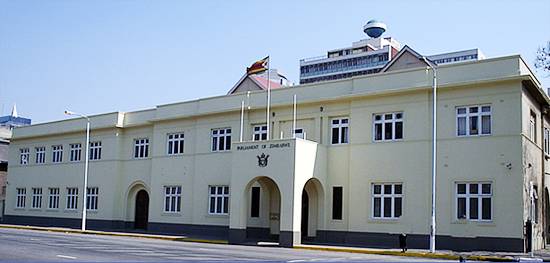
Parliament
Lincoln Towindo
THE novel coronavirus is providing a formidable test to democracy the world over.
Even in “tempered” democracies, institutions, longstanding democratic conventions, norms and traditions are feeling the wrath of the pandemic.
Governments around the world are imposing draconian edicts, which include declarations of state of emergencies and strict state-wide lockdowns, impacting on citizens’ political and socio-economic rights.
Daily, civilians who breach these diktats are being subjected to summary street beatings, arrests and in extreme cases shootings.
Excesses are flourishing and democracy is paying the price.
At the centre of this existential threat to democracy is the partial suspension, in the interest of public health, of key institutions in the support of democracy —parliaments and the courts.
In Zimbabwe, for example, both Houses of Parliament have adjourned until Tuesday May 5 or later if necessary.
Courts have also been partially closed.
Only urgent matters, bail applications and initial remands are being heard, while trials and non-urgent hearings are postponed for the next two months.
For Parliament, all international travel, committee meetings and public hearings stand cancelled.
Only approved field visits, where numbers of the travelling party are 50 or below, are allowed.
All other meetings will be considered by the Clerk of Parliament on a case-by-case basis.
The apparent curtailment of the operations of these two key institutions, albeit in the best interest of public health, should not abrogate their responsibilities in providing checks and oversight. Zimbabwe, like any other democracy worldwide, is threatened by the pandemic in ways unprecedented, and means have to be found to protect these institutions and ensure they perform as close to optimum levels as possible.
This is not to suggest that the Executive has taken advantage of the current status quo to impose unreasonable or patently undemocratic decrees. No!
In fact, what we have observed has been a measured approach, which is in tandem with international best practices and World Health Organisation guidelines.
This, however, does not mean we do not have to prop up these two institutions, even under the current difficult circumstances.
In fact, the need to establish a precedent for posterity when dealing with such disasters cannot be overemphasised.
Scientists predict an increase of similarly disruptive disasters in future mainly as a result of climate change, meaning the time to set precedent is now. Experiences from other jurisdictions could be instructive here.
One option authorities can consider during the lockdown and in the interest of nurturing our democracy is to declare Parliament an essential service.
“Essential services” are services whose interruption would endanger the life, health or personal safety of the whole or part of the population.
But, according to two recent Statutory Instruments gazetted by Government, only funeral parlour operators and coffin manufacturers and sellers; manufacturers and distributors of medical supplies relevant to combat Covid-19 and other medical emergencies; suppliers of agricultural inputs and stockfeed; suppliers and distributors of veterinary requirements for domesticated farm and non-farm animals, and cattle dipping were declared essential services.
Others include producers and retailers of essential goods, food shops, pharmacies and informal food markets, power and water supplies, and public transport by Zupco and the Public Service Commission.
Section 119 of our Constitution makes it clear that: “All institutions and agencies of the State and Government at every level are accountable to Parliament.”
This illustrates the importance of Parliament in our democracy and why it should be considered an essential service.
After all, institutions of the State (including those at the forefront of fighting the coronavirus pandemic) are accountable to Parliament.
It is only Parliament that can ensure that all resources mobilised for the fight against the coronavirus are being invested in the right places and expose all instances of abuse and corruption.
It is the duty of Parliament to shine the light on the operations of those that have been instructed to lead our fight against the pandemic.
South Africa has led the way in this regard, with MPs being declared providers of essential services during their lockdown.
Only last week, their Select Committee on Security and Justice released a report censuring some rogue security sector officials deployed to enforce the lockdown accused of ill-conduct. Parliamentarians there are also leading the fight through community education campaigns promoting social distancing.
Virtual Parliament
Developed jurisdictions have begun experimenting with the idea of video conferencing as they grapple to find a balance between scrutiny/oversight and safety.
The argument here is that our elected representatives need to continue to fulfil their responsibilities.
In an era where all global businesses operate using teleconferences, the board meetings of many companies, large and small, are likewise held online.
Why should this also not be the case with our Parliament, probably starting small with committees?
In the United Kingdom, virtual committees have already been trialled successfully and the idea may soon be extended to include the entire houses.
The Welsh Assembly — the Senedd —became the first major democratic institution to meet remotely a fortnight ago.
Members used Zoom video conferencing to meet virtually from across Wales for the weekly plenary session, which usually takes place in Cardiff.
The South African Parliament is toying with the idea as well.
The Sothern African Development Community (Sadc) has already led the way with the convening of a Sadc Council of Ministers via video conferencing last month.
“We welcome the suspension of the face-to-face meeting and the holding of Sadc Council meeting via video conferencing,” said Foreign Affairs and International Trade Minister Sibusiso Moyo after the meeting.
“Tanzania has hooked and connected 15 0member states where we are having a meeting as usual and this is a process we believe would enhance a lot of conferences in Sadc by adopting technology.”
This is the way to go.
Feedback: [email protected]


 Online Reporter