admin
admin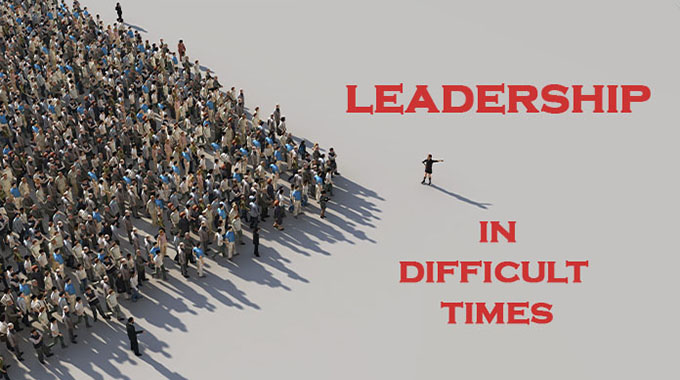
Rudo Grace Gwata-Charamba Correspondent
The definition of leadership continues to confuse people from all walks of life, including some specialists in the field, with the notion commonly perceived to derive from authority, power or title.
Several experts encompassing management and leadership gurus like Peter Drucker, John Maxwell and Warren Bennis offered different definitions of the notions in attempts to reach a consensus.
However, such definitions fell short of the real essence of the notion with the term “leader” often used to refer to someone in charge of an entity such as a company, team, or political party.
On the contrary, leadership stems from social influence and is more comprehensively defined as a process of social influence, which maximizes the efforts of others towards the achievement of a specified goal.
This definition is in line with one of the plainest and famous interpretation of the essence of leadership provided in less than 20 words by John Quincy Adams (1767-1848), the sixth president of the United States.
He asserted, “If your actions inspire others to dream more, learn more, do more and become more, you are a leader.”
Such social influence helps to drive positive behaviour in people at an individual level or in ways that impact millions of people across regions and the globe.
Similarly, author and speaker Drew Dudley defines leadership as the everyday act of improving each other’s lives; thus demonstrating the essence of leadership to development.
The key is that contributing towards making the world a better place is one of the primary purpose for every individual, regardless of status, title or location.
Literature shows that there are generally no limitations to making such contribution, except those perceived by people who choose not to take any leadership role in development.
Moreover, leaders are ordinarily able to discern such reality.
Basically, leadership is a practice that has no age, education or title restrictions, meaning that leaders can emerge from any level within an entity or society, including the mail room, kitchen, playground, pasture or high office.
Accordingly, there are countless types of leaders and followers in every context imaginable, thus making leadership far more accessible than society deems it to be.
That is, everyone possesses the capacity and potential to consistently enhance participation in issues of development both as an implementer and leader.
Leadership is thus essentially a choice that one can make in everyday life, with its quality evaluated, often by oneself, using several criteria.
These encompass the levels of contribution towards positive impact on society, notably growth and empowerment, as well as the level of courage demonstrated by both action and modelling sound behaviour.
Such practice helps to promote inclusivity plus meaningful participation in development with a focus on continuous improvement, hence also applying a basic principle of Results Based Management (RBM).
This is unlike the common tradition of relying on past achievements to foster growth and development.
Literature shows a further call on members of society to celebrate leadership daily, within each one’s environs, through acts of improving each other’s lives.
This is in line with the adage, “Great leaders don’t set out to be leaders . . . they set out to make a difference,” also a clear embodiment of the most basic principle of RBM. Opportunities to make such difference always exist, affording everyone the chance to meaningfully participate and contribute to development, starting from within one’s sphere of influence.
Heeding such call in Zimbabwe, particularly in the context of devolution could significantly drive and support the much-needed accelerated growth, plus development across all sectors and thematic areas.
This is primarily because our society, and to a large extent the whole of Africa, tends to comprise far more universal followers than leaders; an element that could significantly help to explain the limited development of the continent.
Such shortcoming is mainly attributed to the problematic mindset manifested through common statements within both social and business sectors.
Typical examples include, “Oh, that’s not my job. Someone else will take care of this or I wish things were better in our community, but what can I do about it?”
It takes leaders to discern and overcome such problematic mindsets.
The major distinction between leaders and followers is that the latter are completely at ease with the status quo, focusing, daily, on what they perceive to be their specific narrowly-defined duties and busy maintaining their comfort zone.
In the same context, they get pre-occupied with evaluating and criticising the performance of those they perceive to be leaders, and therefore responsible for national development without realising that they, too, have a responsibility to lead within their homes, communities and workplaces.
In contrast, leaders always go beyond the call of duty regarding such responsibility as a foundation on which to build a great legacy.
That is, they take on more than what is expected of them through for example helping out neighbours, colleagues and participating in group projects or even merely stepping out of one’s comfort zone.
Correspondingly, they are always actively looking for opportunities to make things better while followers enthusiastically search for limitations that can be turned into excuses for not participating in development and growth initiatives.
Essentially, leaders focus more on the goal rather than the role.
Moreover, leaders demonstrate great optimism and confidence in people most of whom they nurture and rely on for instituting continuous improvements.
They see everyone as a potential teammate who has something to offer and are not intimidated by other people’s skills, but instead regard the same as potential resources.
Both literature and experiential evidence show that such teamwork is vital for the growth and development of every entity.
When things go wrong, followers focus on the excuses that they always earnestly search for, and also quickly look for and find scapegoats.
In fact, mistakes greatly reveal the true characteristics of individuals, with leaders demonstrating knowledge of the crucial role that such errors play in the processes of growth.
Accordingly, they are always quick to accept responsibility for all their actions.
That is, applying yet another basic feature of RBM; learning from both success and failure.
In the same token, true leaders ordinarily demonstrate an unquenchable thirst for learning with little concern about the source of such education as long as the new knowledge shows potential to improve them and the team’s performance.
They usually surprise everyone with their abilities and skills.
Contrastingly, followers are always preoccupied with showing off that they know everything and this is a factor that often causes them to miss out on most opportunities to learn and improve.
Furthermore, leaders practice patience and combat stress by solving problems, always trying hardest to find ways around obstacles, sometimes employing a simple smile and bit of humour to ease stressful situations.
Such behaviour usually makes people more relaxed and motivated to soldier on.
In the case of Zimbabwe, everyone as an individual or in the context of a group, has the capacity to use social influence on others to maximize their effort towards realising Vision 2030.
That means every citizen can accomplish tasks or model behaviour within different contexts aimed at effectively contributing towards enhanced national development.
A possible starting point is to consistently ask oneself, “What is my impact on others and how can I enhance such impact to enrich the lives of society and towards making the world a better place?”
Dr Rudo Grace Gwata-Charamba is an author, development project/ programme management consultant and researcher with a special interest in Results Based Management (RBM), governance and leadership. She can be contacted via email: [email protected]



 Online Reporter