

 admin
admin
Kennedy Mavhumashava
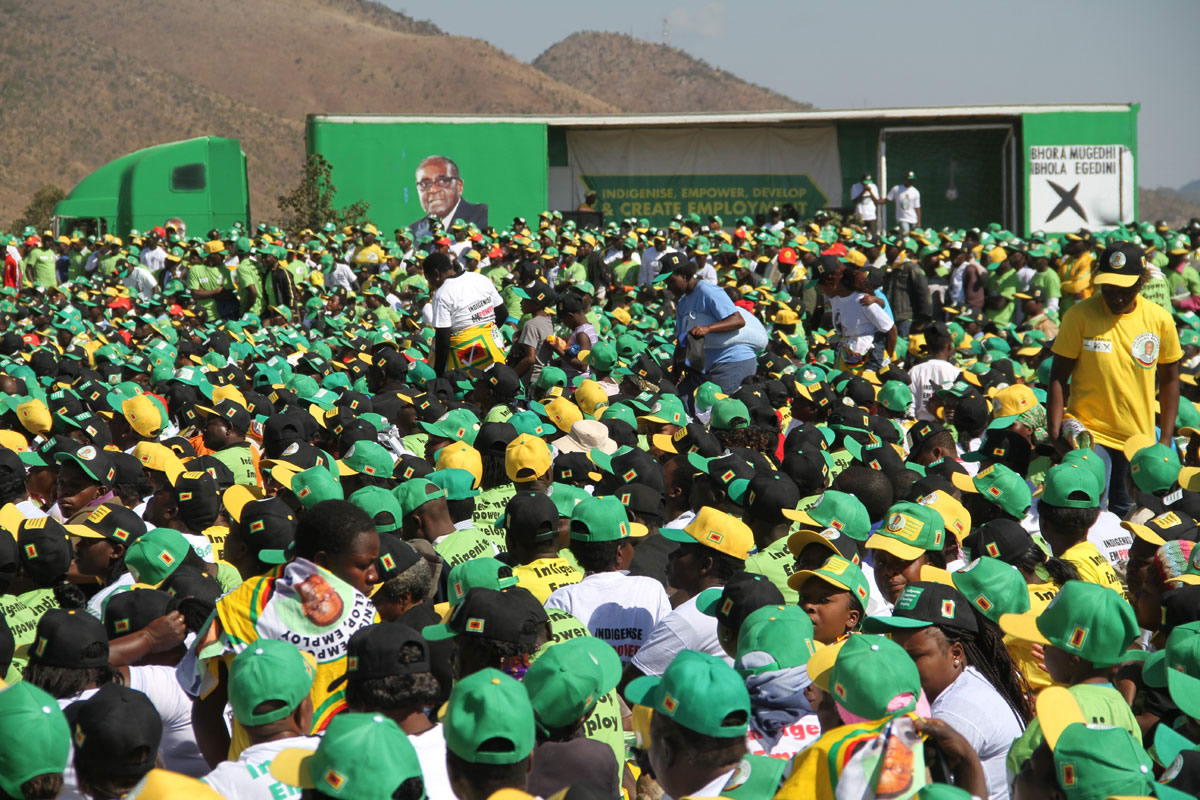
SOCIAL media has become the new frontier for political contestation in Zimbabwe. Zanu-PF, masters at the use of traditional tools of political messaging and mass mobilisation like rallies, posters, radio and television advertisements, has taken to new generation media, where its rivals had held sway since 2000.
“We have received positive responses from mainly young people who appear to have interest in the party policies we are selling through that platform,” said Cde Psychology Maziwisa, Zanu-PF deputy director of information.
“We have policies that people can relate to. We felt as a party that we need to reach out to the youth who are the larger chunk of the people and voting population. We will continue in that direction, in part because our opponents are not using social media successfully and also that it is a viable instrument to communicate our policies and programmes.”
For the revolutionary party, it started with chimbwidos and mujibhas, who relayed important information on foot; and pungwes, the secretive, nocturnal rallies it used to communicate political and ideological messages during the war. Radio broadcasts from Mozambique and Zambia were effective tools at that time as well. More open rallies, posters and radio and television adverts took over after colonialism, which blocked revolutionaries’ access to mass media, gave way to Independence in 1980.
In Election 2013, Web 2.0 applications are getting increasingly useful as outreach instruments, operating side-by-side with the more traditional methods of campaigning – rallies, posters, advertisements and so on.
The revolutionary party is available on a Facebook account, TeamZanu-PF2013 and a Twitter handle by the same name. It also has a Facebook page, TeamZanu-PF2013live which follows President Mugabe’s rallies.
Web 2.0 is a broad term that refers to online technologies that are people-centred. They enable people to create and share information such as pictures, text, videos, sound and so on. Examples of Web 2.0 applications include Facebook, Twitter, You Tube and web logs, commonly known as blogs. Blogs, like Facebook and Twitter accounts can be maintained by individuals or groups of individuals who post commentary, information, news, pictures, graphics or videos.
The various technologies were identified as such at first around 2004 in the US by American Mr Tim O’Reilly.
Web 2.0 tools have many advantages as well as disadvantages. One of their biggest advantages over traditional media is that they are interactive at a social or personal level. Furthermore, they are seen as a way to “democratise” and open up the World Wide Web and allow more non-technical users to use the web.
However, they can be used for negative purposes. They can be used to spread alarm and despondency by people hiding behind the anonymity that the virtual world can provide.
MDC-T, a 14-year-old political party and various other MDC formations have, since their inception been active online. Their individual leaders, Professor Welshman Ncube, Mr David Coltart, Professor Arthur Mutambara and others have used the new platforms to interact with their friends. Zanu-PF took a little longer to embrace the online tools, but has come aboard. Politburo member, Cde Saviour Kasukuwere, Cde Maziwisa and many other senior figures are also very active on social networks.
Political scientist Dr Joseph Kurebwa said Web 2.0 applications are critical in political messaging worldwide as more people have access to communication devices that enable them to receive and transmit messages. Greater mobile communication coverage across the country, he said, means that even some rural voters can receive and share information on Facebook or Twitter or post videos on YouTube.
“There is more widespread use of these technologies now than say 10 years ago,” he said.
“Mobile communication and Internet connectivity is now so widespread in Zimbabwe that one can reach millions of people in a short period. So it has become very critical for political parties and politicians to be active on social networks.”
Internet World Stats says that the proportion of internet users has been increasing phenomenally since 2000 when only 50 000 out of a population of 14, 7 million used it. That was about 0, 3 percent of the national population. The number of users increased to 3, 6 percent or 500 000 people in 2002. In 2005, the proportion had gone up to 6, 7 percent or 820 000 people. Three years later, the number of internet users had grown into double digits – 10, 9 percent or 1, 3 million people. The think tank estimates that Zimbabwe had 1, 4 million internet users by December 2011. That was about 11, 5 percent of the 12, 6 million national population at that time.
The netizen (regular internet users) population should have increased over the past two years. While the figures show only the total number of people who use the internet, they are not disaggregated in a manner that shows those that actually use social media because one can use the internet to read newspapers or send or receive emails without using social media.
Dr Kurebwa said whether or not social media can influence political decisions in local politics is another issue but said politicians have to be available on the forums regardless.
“It takes a lot for that to happen,” he said.
“You have to be very active there writing, putting across your views for you to change people’s views. But to some extent, they can be an influence.”
Many online publications on Zimbabwean news have been set up since 2000. For a number of years, MDC views dominated, but in recent years, there appears as many netizens whose political orientations are of other parties as well.
With mobile phone penetration in the country continuing to expand in recent years, increasing from 6, 8 percent in 2006 to 72, 1 percent by the end of 2011, more people can use their cellphones to access and share social information.
However, some analysts believe that access to the internet through the traditional desk-top computer is still limited in rural areas, a factor which can militate against social media access using that device.
“There is a vast divide between urban and rural areas with respect to internet penetration,” Freedom House, a US political research organisation said in its Freedom on the Net Report for 2012.
“Most rural communities are geographically isolated and economically disadvantaged and have consequently failed to attract the interest of commercial service providers. Telephone penetration in rural areas is minimal, with lack of electricity representing a major challenge; radio remains the main communication medium in such regions. Many rural telephone connections are still shared or ‘party’ lines, leading to poor or unreliable transmission quality, slow connection speeds, and difficulty initiating dial-up internet connections.”
But the relationship between social media and politicians, especially in Africa, has been not so cozy. This is because western interests have tended to abuse them to communicate messages that create disaffection in countries.
The so-called Arab Spring that toppled governments in Libya, Tunisia and Egypt, Dr Kurebwa said, was, to some degree, planned and prosecuted through Facebook and Twitter.
Cde Maziwisa said Zanu-PF was aware of the possible negative uses of the contemporary networking platforms, but was harnessing their positive aspects to create and deepen the revolutionary party’s relevance. He said although the new media could be used negatively by malicious faceless characters, people tend to follow individuals they know exist and are more credible.
“Times have changed,” he said.
“You have to move with the times. I will tell you that out of the 4, 8 million people who will vote in the next elections, a large chunk of them are active on social networks. So we have to be there because many people make their decisions based on what they read and see on the social networks.”
Engineer Walter Mzembi, the Minister of Tourism and Hospitality Industry and Zanu-PF candidate for Masvingo South, said social media are generational tools critical for outreach activities for politicians.
Eng Mzembi, who twits every rally he is holding in his rural constituency, said some people in his area are accessing the new media through their mobile phones to enhance their understanding of political issues. He estimates that 30 percent more of the electorate in Masvingo South work in Masvingo and Chiredzi towns or South Africa, where they can access social media.
“At first, social media was monopolised by MDC-T,” he said.
“They thought it would be for ever but we don’t want them to think that they have a monopoly to change. Zanu-PF can champion change better than them, including rebranding. See how Zanu-PF is rebranding and where the (MDC-T) is.”
Eng Mzembi has 8 000 followers on his Facebook page and others on his Twitter account. Many others visit the Masvingo South constituency website he helped set up.
“Either you adapt or like the dinosaur, you die,” said Eng Mzembi.
“Unfortunately, it is an area that has fallen to hate mongers. For them it is a platform for rumour-mongering and for spreading malicious, hate messages. So it has also been a negative force, but the important thing is for us as a party to do the right thing. When we do that the hate-mongers will have nothing to write about.”
However, he acknowledged that nothing beats the spoken word. The immersive, dramatic and personal character of rallies, he said, is second to none.
“It is a tried and tested tool,” he said of the rally as a tool for political campaigns.
“Nothing beats that but it has a limited coverage. That is where Facebook, Twitter and so on come in to propagate the message nationally in real time out of a rural post in Masvingo South, for instance.”


 Online Reporter
 derick.khumalo