Online Reporter
Business Reporter
Zimbabwe’s digital payments ecosystem recorded ZiG1,37 trillion in transaction value and 511,1 million transactions in the first half of 2026, but industry leaders have warned that adoption is failing to keep pace across all segments of the economy, as new research reveals cash remains stubbornly dominant.
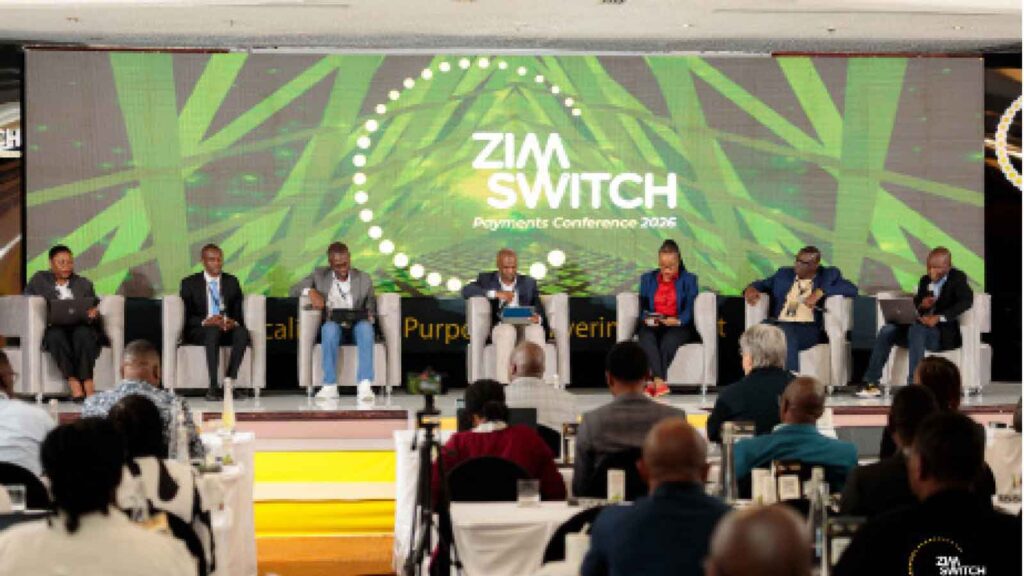
Addressing the Zimswitch 2026 Payments Conference in Victoria Falls, Reserve Bank of Zimbabwe Deputy Director of Financial Markets Dr Josephat Mutepfa said the challenge was no longer the availability of digital solutions.
“Our challenge is no longer the availability of digital solutions, but ensuring they are trusted, affordable, reliable, accessible and widely accepted,” Dr Mutepfa said.
He identified key barriers including network reliability, digital literacy, cybersecurity awareness and merchant acceptance, particularly among small businesses in the informal sector where cash remains dominant.
Dr Mutepfa reaffirmed the central bank’s commitment to promoting a safe, efficient and interoperable payment ecosystem in line with the National Development Strategy 2.
“Building trust in the digital economy requires us all to play our part,” he said. “As we scale digital payment systems, we must ensure that no Zimbabwean is left behind, regardless of location or socio-economic status.”

Call for collaboration
Zimswitch chief executive Mr Zabron Chilakalaka called on the industry to move beyond innovation to delivering tangible impact.
“As an industry, we are being called to do more than innovate. We are being challenged to deliver impact,” he said.
Mr Chilakalaka warned that emerging technologies empowering innovation were also enabling sophisticated cyber threats.
“Innovation must always be met by an equally strong commitment to security and trust,” he said.
Infrastructure in place, adoption lags
Separate survey findings presented at the conference by Topline Research Solutions revealed that while e-commerce adoption had leapt from 17 percent to 50 percent, cash remained entrenched across key sectors.
Topline chief executive Mr Partson Gasura said confidence in digital platforms was high at 72 percent, but significant barriers to adoption remained.

“Cash remains very stubborn across all sectors,” Mr Gasura said. “When you look at things like transport, 95 percent of people use cash. Domestic workers — we all think we must give them cash. That’s an area for intervention.”
The survey found that mobile money was leading digital platforms at 52 percent adoption, with 90 percent of individual customers holding more than one mobile money account. However, the research revealed a stark disconnect between account ownership and usage.
“We have hundreds of thousands of cards in the market, but only 20 000 cards are being used,” Mr Gasura said.
While 94 percent of respondents knew they should not share passwords, only 26 percent avoided using digital platforms in public spaces — a contradiction the researcher said required attention.
The study also found that 56 percent of respondents considered digital systems complicated, with people with disabilities particularly affected by infrastructure that was not accommodating.
On fraud, 15 percent reported experiencing incidents, though Mr Gasura cautioned that consumers often defined fraud broadly.
“If you buy a red dress online and they deliver a blue dress, they call it fraud,” he said. “Failure to meet expectations in this market is called fraud.”
Fragmentation and competition hurting adoption
Mr Michael Chauruka, Head of Strategy, Business Development and Projects at Zimswitch, said while the industry had recorded significant growth in terminals, accounts, and transactions, the real question was whether that growth was coming from the right places.
“Everything is basically an increase. This has also translated into an increase in terms of the number of transactions which are actually being processed,” he said. “Where is it coming from? Is it coming from the right places? Is it coming from the areas where they are excluded? I think for me that is the challenge which we have as an industry.”
He stressed the importance of ecosystem collaboration in driving adoption.

“When you break that cycle — when you have a solution which is there wherever you go — you don’t need to care about which bank or which MNO.”
Ms Tatenda Tsikira of AFC Commercial Bank told delegates that the industry had made significant investments in payment infrastructure but was failing to extract value from it. She illustrated the scale of underutilisation with a striking example: for every 20,000 point-of-sale terminals acquired by a bank, only about 2,000 were actually active.
She blamed fragmentation driven by excessive competition and called on the industry to share automation processes and infrastructure, warning that the proliferation of more than ten digital products was confusing customers rather than offering convenience.
Transaction taxes driving customers back to cash
Mr Irvine Masona of CABS delivered a stark warning about the impact of transaction taxes on digital adoption. He noted that the Intermediated Money Transfer Tax now constituted more than 67 percent of the transaction cost for the majority of digital payments, a burden that was pushing customers back to cash.
He declared that until the digital dollar and the cash dollar had parity, no one would use the digital dollar. He also revealed that less than five percent of transactions processed through the national switch were conducted online, representing a massive untapped market.
Zimbabwe National Chamber of Commerce chief executive Mr Christopher Mugaga strongly opposed the IMTT tax, arguing that you could not talk about financial inclusion while imposing such a levy. He also warned that if African countries did not trade with each other, digital commerce would suffer, and the extractive economy model did not allow digital payments platforms to flourish.
Cash paradox and financial footprint
Mr Tapiwa Chikwanda of NetOne Financial Services articulated what he termed the “cash paradox”.
“As much as cash is king, cash is a dead asset when we need it in our pockets. We don’t get any data. We don’t get any additional financial services that we desire, say loans, insurance payments,” he said.
Digital payments, by contrast, create a financial footprint — a record of transactions that can unlock credit, insurance, and other services. But this value proposition has not yet been fully communicated to or understood by the general public.
He also highlighted that USSD remains the key driver of participation in Zimbabwe’s digital payments ecosystem.
“Mobile apps are good. But our mobile phone penetration as far as data-driven devices are concerned is not as good. It is more feature phones,” he said.
This means that while banks and fintechs have invested heavily in app-based solutions, the majority of Zimbabweans still rely on USSD to access financial services.
“We need to partner with banks, MNOs, government, regulators — the works. We need to come together to say this is what we need in terms of access. Then participation comes to the financial space,” he said.

Inclusion and accessibility
Ms Bianca Mahoso from National Building Society emphasised the need for the industry to ensure systems are secure and to communicate proactively when incidents occur.
“We communicate proactively when incidents happen because that’s what customers are looking at,” she said.
Mr Tapiwa Majo outlined a six-pillar consumer protection framework involving regulators, payment service providers, payment service banks, consumer advocacy, and industry collaboration.

“They need to put in mandatory measures rather than optional measures to ensure that when you look at the consumer, things are supposed to work as they are supposed to,” he said.
Mr Maukazuva of ZB Financial Holdings said the government is also playing a role in driving usage through digital government services. He drew parallels with Zambia, where the government is developing a Government Service Bus offering a range of services including insurance, vehicle fitness, driver’s licences, and land titles.
“If you are a citizen, you can pay for all these services digitally,” he said.
Mr Maukazuva concluded with five recommendations: enhance data collection by transitioning from low KYC to enhanced KYC to enable AI-driven insights; innovate around consumption patterns by understanding where and how people spend money; influence customer behaviour by driving awareness and creating tangible value; address platform performance to ensure reliability and build trust; and focus on cost by establishing a framework that manages transaction costs, particularly for inclusive platforms.
“Cost is very critical. There has to be a framework that manages the cost of transactions, especially when certain platforms are providing financial inclusion,” he said.

Digital payments and economic growth
Jacqueline Jumah, Director of Advocacy and Capacity Building at Africa Nenda, provided a continental perspective, revealing that a 1 percent rise in digital payments use was associated with a 0.1 percent increase in GDP growth over two years and a 0.06 percent reduction in informal employment.
She noted that African firms now pay 75 percent of sales and 81 percent of purchases digitally, and that Africa’s US$2 trillion payments market was becoming the working capital for the African Continental Free Trade Area.
She outlined four priorities for the continent: anchor rules in outcomes such as inclusion, stability and consumer protection; make inclusion the test of success by measuring usage, not accounts opened; treat consumer protection as core design, not compliance; and use data to steer, not to police.
The conference, running under the theme “Scaling with Purpose, Delivering Impact”, brought together more than 150 delegates from seven countries.
As the conference drew to a close, the message was unanimous: the infrastructure and products are in place. What is now needed is adoption and usage across all segments of society.
“Financial inclusion should not go back once — it must continue,” Mr Maukazuva said.
The vision is clear: a Zimbabwe where every person, holding any device, can participate fully in the financial economy — not just as a user, but as an empowered economic citizen.


 Bongani Ndlovu