Online Reporter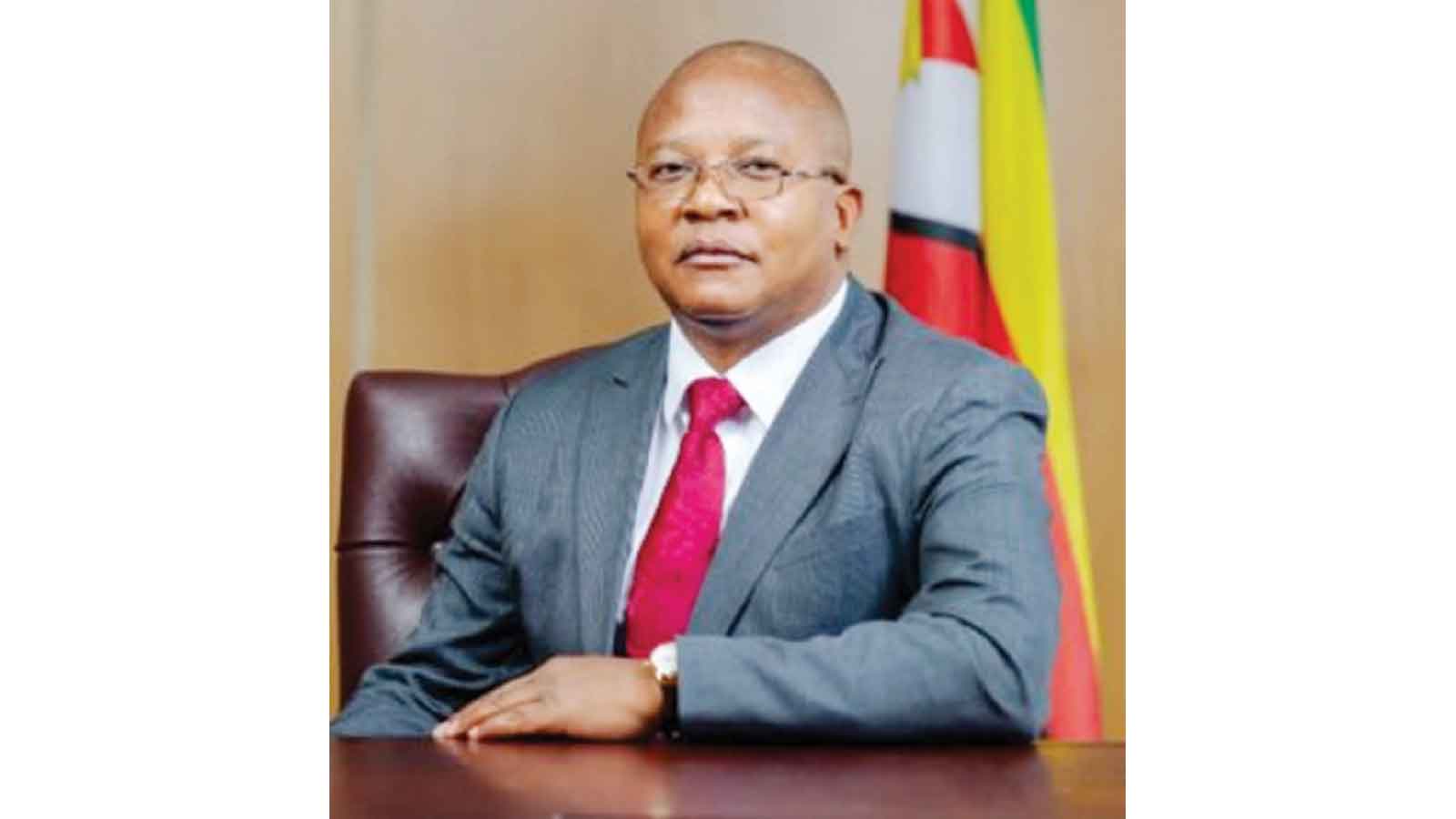
Sikhulekelani Moyo
Zimpapers Business Hub
THE Government is rolling out a package of policy, fiscal and technical reforms to attract exploration finance and expand Zimbabwe’s pipeline of new mines, Mines and Mining Development Minister Dr Polite Kambamura has said.
Speaking at the Mine Entra Exploration Symposium, Dr Kambamura said Zimbabwe already has the geology and skills, but now needs capital to turn resources into discoveries and jobs.
“We have the geology, we have the human capital, what we now need is exploration finance,” Minister Kambamura said.
“Streaming finance, equity, shares, loans need to flow to Zimbabwe. That’s why we are gathered here.”
The minister acknowledged that decades of fragmented records have made it harder for investors, noting that geological reports, maps and drill logs produced around the period of Zimbabwe’s independence from Britain were taken out of the country, with some now in private archives.
“We should neither traumatise ourselves over that loss nor remain imprisoned by it. Let us be transformed by the renewal of our minds,” he said.
“This is the time to rebuild Zimbabwe’s geological memory and to build it even better with the aid of new technologies.”
To do that, Fr Kambamura said the Government is modernising the Zimbabwe Geological Survey through systematic data recovery, digitization, core libraries, and databases. It is also moving to a computerised mining cadastral system to make titles clear, secure, searchable and transferable.
“For roughly three decades, the pace and breadth of systematic exploration have been below what geological potential demands,” he said.
“Technology now allows us to change that equation.”
He cited high-resolution airborne magnetics, radiometrics, gravity and EM surveys, satellite imagery, drones, 3D modelling and AI as tools that will shorten the path from raw terrain to drill-ready targets.
“AI will not replace geologists. It will help the geologists integrate decades of maps, assays, structures, and remote sensing data at a speed no human team could actually achieve unaided,” he said.
Under the current tax framework, Dr Kambamura said prospecting expenditure, including surveys, can be deducted under the Income Tax Act. Qualifying exploration and development costs can also be carried forward against future mining income.
“These are incentives that the Government came up with to attract junior mining companies into the country,” he said.
The Minister added that qualifying mining capital equipment can benefit from customs duty rebates and VAT deferment, while ZIDA is mandated to facilitate investment entry and servicing.
The Government is also studying further instruments: competitive co-funding of drilling and geophysics, a dedicated exploration incentive for juniors, and a project preparation facility for metallurgy, geotechnical and environmental work. Any support, he said, must be milestone-based, independently audited, and require that verified data eventually enters the National Archive.
Minister Kambamura stressed that mining rights must carry real work obligations.
“Mining rights are development assets, not certificates for indefinite speculation. We therefore seek the correct balance, security for the serious explorer and use it or lose it, displacing speculative mining titles,” said Dr Kambamura.
On investment, he said Zimbabwe remains open to responsible foreign capital in exploration, processing, labs, power, water and logistics.
The recent reservation of small-scale gold mining up to 20 claims for Zimbabwean citizens is part of a deliberate allocation: citizens at small scale, domestic and international capital at large scale.
“We expect that this policy will stimulate exploration rather than suppress it,” he said.
Linking exploration to industry, Dr Kambamura said the fifth objective is to connect every discovery to domestic processing.
He pointed to the lithium policy, which restricted raw ore exports and will require a move to concentrate and then lithium salts by January 2027.
“The strategic principle is sound. Mineral production must build industrial capability inside this country,” he said, aligning the push with Vision 2030.
The minister said the Government is drawing lessons without copying: public geoscience from South Africa, policy stability from Botswana, faster capital recovery from Zambia, and clear permits from Cote d’Ivoire and Senegal.
He noted Zimbabwe’s geology rivals Australia’s, particularly the 550km Great Dyke for platinum and chromite, gold-rich greenstone belts, and pegmatites carrying lithium, tantalum and tin.
“Our future is bright. Let Mining Entra 2026 mark the point at which Zimbabwe moves from speaking mainly about the minerals we have mined before to systematically discovering our future minerals,” said the minister.
“Let us recover our geological memory, drill the untested, grow Zimbabwean junior miners into serious mining houses, welcome responsible global capital and connect every critical discovery to value addition and shared prosperity.”