admin
admin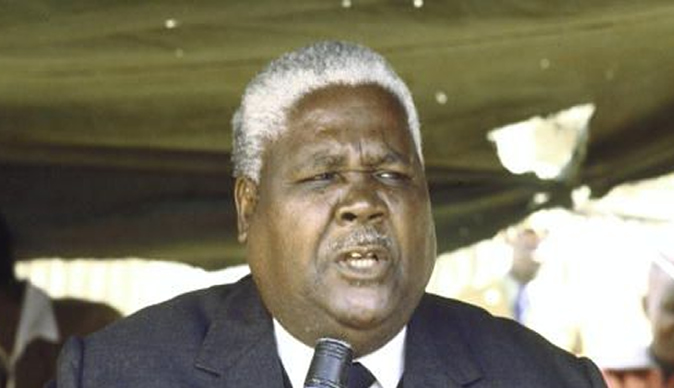
By Joshua Nkomo
FROM my earliest years, I thirsted for freedom. When I became a man, I understood that I could not be free while my country and its people were subject to a government in which they had no say.In middle life, I fought for national independence. I was 63 years old when, in 1980, Zimbabwe emerged as the last of Britain’s colonies to win nationhood.
I have been called “Father Zimbabwe”. Whether I deserve that title is not for me to say. Our war of independence was longer and more cruel than any fought in Africa, because it was unnecessary. The white people of Southern Rhodesia, outnumbered by at least 20 to one by blacks whom they refused to acknowledge as their fellow citizens, must have known in their hearts that they could not in the long run perpetuate their rule.
The British government had the constitutional duty to make the settlers obey the law, but declined to do so. We had no alternative to taking up arms. By their prolonged resistance, the settlers themselves fostered bitterness not only between themselves and the black majority, but also between the various African factions struggling for justice in prison or in exile.
The year 1962 began with the creation of ZAPU and ended in armed confrontation with a new and even more frankly racist government of Southern Rhodesia. Of course, I would have preferred the peaceful road to freedom that was open to other colonies in Africa. It had been just possible that British intervention, or pressure from the outside world, or even an outbreak of common sense among the settler community, might have created a hope of African advancement by peaceful means. But it was not to be. We were forced to fight.
Well, before it actually began, I told a British minister in London exactly why we would be forced into armed struggle. I was ushered into the Junior Minister at the Commonwealth Relations Office, the Duke of Devonshire. The duke was polite and frank: “Mr Nkomo, you must realise that Southern Rhodesia has a complicated, advanced economy. We could not possibly hand it over to be run by untrained hands.”
I answered him directly: “If development in Southern Rhodesia is an obstacle to the political freedom of the black people there, then we shall have to destroy that development. In the war, if a bridge became a danger to your nation, you blew up that bridge – not that you do not think bridges a good thing, but because at that time that particular bridge was helping your enemy. So if factories in Rhodesia are an obstacle to our advance, we shall have to blow up those factories.”
(Extract from Nkomo: The Story of My Life)


 Online Reporter