Tendai Gukutikwa
Post Reporter
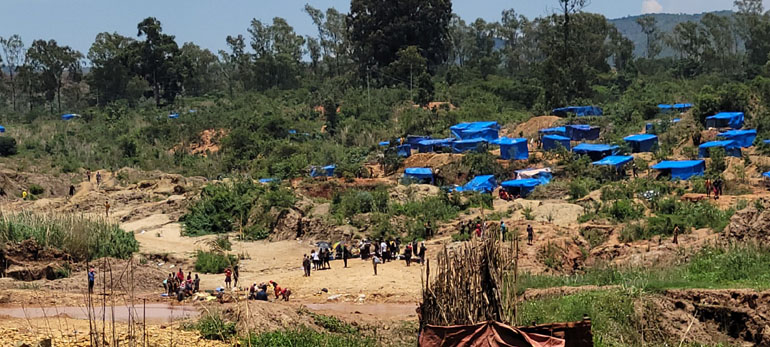
THE first thing that greets anyone entering Penhalonga is the choking haze of red dust and endless rows of blue plastic shacks.
The dust hangs heavy, settling on walls, clothes, vegetables, and faces — a permanent stain that refuses to fade.
Along the roadside, crooked wooden cabins lean against one another, patched with rusted zinc sheets and timber blackened by years of smoke and rain.
From afar, they resemble ordinary tuckshops selling bread, cooking oil, and soft drinks. But behind the counters, beneath sacks of maize-meal, another trade thrives.
Marijuana (mbanje) wrapped in tiny sachets changes hands in seconds.
Bottles of broncleer cough syrup vanish into torn satchels. Harsh homemade spirits are poured into reused, unlabelled containers.
Young men drift in and out of the cabins, eyes restless, boots caked with mud — some fresh from illegal gold mining tunnels where they would have spent days underground.
Penhalonga, once celebrated for its rich gold deposits and scenic mountain slopes, is now increasingly synonymous with drug and substance abuse.
The mining settlement, just outside Mutare, has been flagged as one of Manicaland’s major drug hotspots, alongside Odzi, Sakubva, Birchenough Bridge, Hauna, Murambinda, and Chimbike.
For many here, drugs are no longer a vice, but a means of survival.
The mushrooming of drug dens has reshaped the area’s character.
At shops like PaDon and Tsvingwe, empty broncleer bottles litter the roadside. In Mbare, one of Penhalonga’s busiest illegal mining zones, groups of men smoke marijuana at dawn before vanishing into trenches gouged deep into the earth.
Some tunnels are barely supported, others snake beneath roads and homes.
The panners call them mazambuko.
An illegal miner, speaking anonymously, admitted that drugs have become inseparable from the culture of mining itself — a way to endure the endless nights and days spent underground.
“You cannot survive down there without something to keep you going. We work underground for long hours without proper food or sleep. Some shafts are frightening and very dangerous. Marijuana helps people calm down while broncleer gives others the energy to keep digging,” he said, adding that many miners began using drugs after arriving in Penhalonga in search of quick buck.
“You come here looking for gold and find people already smoking or drinking dangerous things. At first you think you are strong enough to avoid it, but after some weeks underground, most people end up joining in. Some say it removes fear. Others say it helps them forget problems at home,” he said.
However, many residents say the crisis runs deeper than addiction alone.
At a muddy illegal mining site near Redwing Minea, miners scramble for small traces of gold beneath dangerously hanging rocks.
Most are youths from different districts who thronged the area hoping to strike it rich. Instead, many have found themselves trapped in a cycle of dangerous labour, drugs and poverty.
An artisanal miner, Farai Chikomo said the pressure to survive underground created a culture where drug use was normalised.
“People take drugs to forget hunger and fear. They do this to brave the trenches. Some shafts collapse while people are inside. Some miners die underground. After seeing such things, others turn to drugs completely, but I am not saying it is a good thing to do,” he said.
As trucks carrying gold ore thunder through the settlements, women selling vegetables, airtime and fried snacks watch silently from makeshift stalls built beside muddy footpaths.
Among them was Charity Katsama, known locally as Mai Tino, who sells prepared meals to the miners in Penhalonga.
But beneath the aluminium pots and steaming food containers lies another business. While she denied selling anything, but food, some panners admit in hushed tones that they have seen others buy marijuana and broncleer from her.
“I do not sell marijuana, but I know most vendors do because sadza alone cannot feed their families’ children. The panners always ask for marijuana or cough syrup when they approach a vendor, and if you refuse, they simply go to another stall. They know that between two vendors, either both are selling or one is, but I am an exception,” she said, glancing around nervously.
She said business picks up at night when miners return from the shafts.
“Most of them come tired and shaking from cold or exhaustion. They buy food and ask quietly for the sub. Some are very young, maybe 15 or 16-years-old,” said Mai Tino, adding that poverty and unemployment are driving many people into the illegal drug trade.
“People here survive through anything they can find. Some women sell vegetables, others wash clothes for miners, while some secretly sell drugs because the demand is high, even though it is criminal. You know the saying, money is where the police are,” she said before laughing it off.
The growing drug trade in Penhalonga is no longer hidden in whispers, as several residents have recently appeared in court for unlawful dealing in dangerous drugs.
Earlier this year, a vendor in Penhalonga, Tanatswa Nyambuya (25), was convicted of unlawful dealing in dangerous drugs after being found in possession of marijuana.
Nyambuya appeared before Mutare magistrate, Mr Honest Musiyiwa, facing charges under Section 157(1)(a) of the Criminal Law (Codification and Reform) Act [Chapter 9:23], which prohibits unlawful dealing in dangerous drugs.
It was revealed in court that Nyambuya was selling drugs.
Her conviction added to statistics of several cases exposing how deeply drug trafficking has taken root in the mining settlement.
In another incident, two men from Penhalonga, Jonathan Tembo (47), and his son, Godknows Tembo (32), were arrested after police allegedly discovered dagga hidden underground inside a wooden cabin at the Mbare illegal vending site.
Police said the recovered dagga weighing two kilogrammes.
The cases mirror what has become increasingly visible across Penhalonga – cabins operating as informal tuckshops by day, but allegedly transforming into underground drug markets after dark.
Some residents say the trade thrives because of the constant movement of illegal miners and gold buyers who flood the settlement daily in search of quick money and escape from the harsh realities underground.
As darkness falls, Penhalonga transforms.
Music blares from wooden bars and drinking spots crowded with miners covered in red soil.
Clouds of marijuana smoke drift through the night air as groups gather around fires discussing gold prices and mine collapses.
Residents say the problem has become so widespread that even school-going children are now exposed to drugs at an early age.
Local church leader, Pastor David Muchengeti said the community is slowly losing young people to addiction.
“Drug abuse is destroying families here. We are seeing boys dropping out of school because they want fast money from gold panning. Once they enter that life, many start using drugs,” said Pastor Muchengeti, adding that churches are struggling to rehabilitate affected youths due to limited resources.
“Some young people want help, but there are no proper rehabilitation centres nearby. That is why the Government’s plans to establish rehabilitation facilities are very important,” he said.
Despite the growing crisis, there are signs of hope.
Community leaders, churches and health workers continue holding awareness meetings encouraging youths to abandon drugs and illegal mining.
Minister of State for Manicaland Provincial Affairs and Devolution, Advocate Misheck Mugadza, said while substance abuse is now a major public health and social crisis across the province, the Government is intensifying awareness campaigns and strengthening rehabilitation programmes to assist affected individuals.
“Penhalonga was among the identified drug hotspots, and this problem is increasingly impacting our youths, not only undermining public health, safety and national productivity, but also becoming a security threat. The Government recognises drug dependence as a public health condition requiring care, treatment and support,” he said. The Government has also announced that it has earmarked rehabilitation centres in every district to improve access to treatment and aftercare services.
“The rehabilitation centres will help improve access to treatment and integrate restorative care into the province’s health delivery system,” said Minister Mugadza.
For Penhalonga residents, the Government’s intervention is seen as a turning point, bringing renewed hope that the community can gradually rebuild lives affected by drugs and illegal mining.
ENDS
Penhalonga’s dangerous mix of gold and drugs