Online Reporter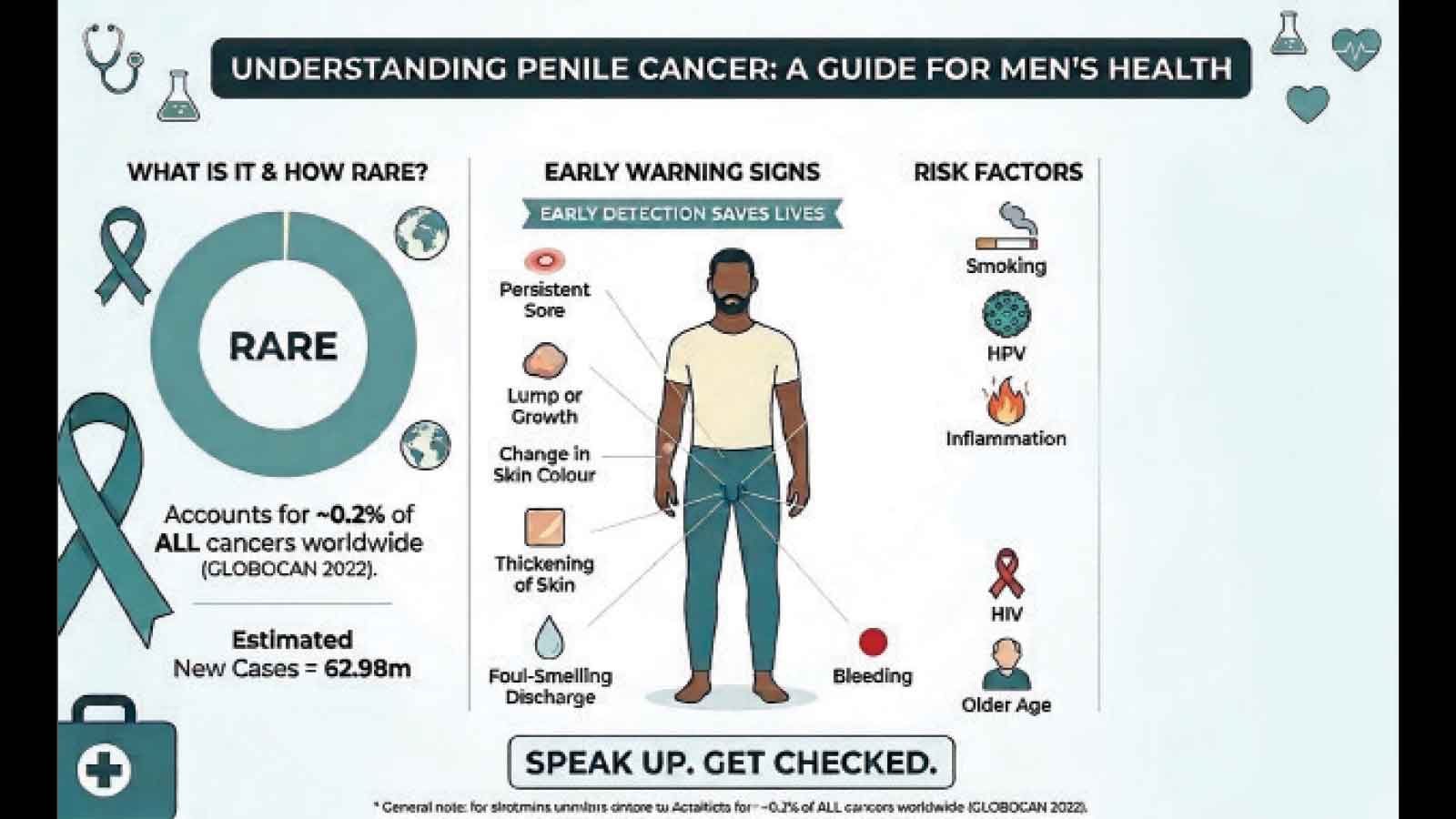
Rumbidzayi Zinyuke-Health Buzz
For many men, there are probably a few parts of the body they would rather not discuss with anyone, including a doctor.
Their genitals are definitely on top of that list.
A small sore on the penis may be dismissed as an irritation. A change in skin colour may be ignored. A lump that does not hurt may be watched for weeks, with the hope that it will disappear on its own.
Embarrassment, fear of what the doctor might say, or simply the belief that “it cannot be anything serious” can all become reasons to delay seeking help.
But that silence can come at a cost.
Penile cancer is rare, accounting for only a tiny proportion of cancers worldwide, yet it is a disease men need to know about because the earliest warning signs can be visible. And when it is detected early, treatment is generally more manageable and may allow doctors to preserve much of the penis.
Globally, an estimated 37 699 new cases of penile cancer were recorded in 2022, with about 13 729 deaths, according to GLOBOCAN estimates. The disease accounted for only about 0.2 percent of all cancers worldwide, underlining just how uncommon it is.
Yet rarity should not be confused with insignificance.
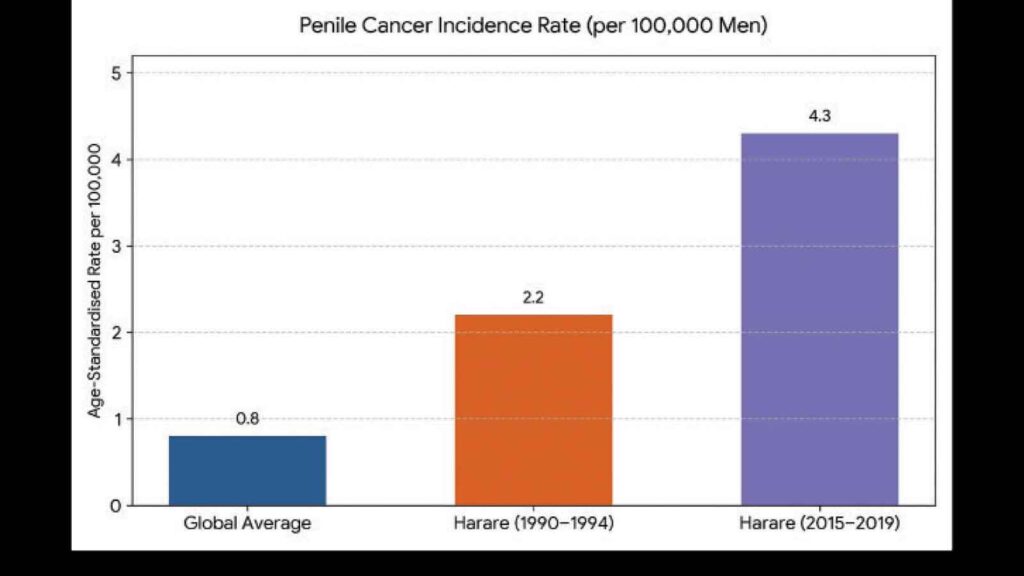
Research has shown that penile cancer is disproportionately seen in parts of Africa, Asia and South America. The global incidence was estimated at 0,8 cases per 100 000 men, while some countries in Southern Africa recorded substantially higher rates.
Zimbabwe is not immune to the problem.
An analysis of data from the Harare Cancer Registry covering 1990 to 2019 found 220 cases of penile cancer among black men during the period.
The age-standardised incidence rate rose from 2,2 per 100 000 men in 1990-1994 to 4,3 per 100 000 in 2015-2019, while the overall incidence increased by an average 3,8 percent every year over the study period.
The figures do not represent the entire country, as they come from the Harare Cancer Registry, but they provide an important indication of the burden of the disease in Zimbabwe and reinforce the need for greater awareness among men and healthcare providers.
So, what should men look out for?
One of the most important messages is that penile cancer does not necessarily announce itself through severe pain. In fact, the first warning may simply be a change in the appearance of the penis.
Experts say this could be a sore or ulcer that does not heal, a lump or growth, a change in skin colour, thickening of the skin, a rash, bleeding or a foul-smelling discharge. Some men may also experience difficulty pulling back the foreskin, swelling, or lumps in the groin if the disease has progressed.
The absence of pain should therefore never be taken as reassurance.
A man who notices a persistent abnormality should have it examined rather than waiting for pain to develop. This does not mean every lump, rash or sore is cancer — many are caused by infections, inflammation or other conditions — but only a healthcare professional can determine the cause.
There are also several factors that can increase a man’s risk.
Human papillomavirus (HPV) infection is an important risk factor, while smoking, chronic inflammation, phimosis — a condition in which the foreskin is difficult to retract — older age and HIV infection have also been associated with increased risk.
This does not mean that every man with one of these risk factors will develop penile cancer, nor does it mean that a man without them is completely protected.
Rather, the factors highlight why men should pay attention to persistent changes and seek medical advice when something does not look or feel normal.
Another challenge is that penile cancer is not a condition for which there is a routine screening programme for all men.
Instead, early detection depends heavily on men recognising unusual changes and presenting for assessment.
Most penile cancers begin in the skin, meaning abnormalities can potentially be noticed before the disease becomes advanced.
That makes awareness particularly important.
For a man, noticing a change in such an intimate part of his body can understandably be uncomfortable. But embarrassment should not be allowed to become a barrier to care. Doctors and nurses routinely examine conditions affecting the genital organs, and seeking medical advice does not mean a man has cancer.
It simply means he is taking his health seriously.
The World Health Organisation notes that cancers are more likely to respond to treatment when detected early, with early diagnosis improving the chances of survival and reducing the complications and costs associated with advanced disease.
For penile cancer, that message is particularly relevant because the first signs can be relatively easy to overlook.
Men should, therefore, get into the habit of paying attention to changes in their bodies. There is nothing embarrassing about asking a doctor a question that could save your life.
Penile cancer may be rare, but for the man who develops it, the earlier it is identified, the sooner treatment can begin, and that makes speaking up, even about the most uncomfortable symptoms, one of the most important decisions a man can make.
Feedback: [email protected]