

 admin
adminjournalists and police, hold around two billion euros (US$2,7 billion) in Greek bonds, about one percent of the total value of obligations earmarked for the debt swap.
Another half a dozen funds holding some 2,7 billion euros in bonds, including the country’s largest social security institution IKA and prominent agricultural fund OGA, on Tuesday agreed to join the initiative, which aims to trim Greece’s sovereign debt of over 350 billion euros by up to 107 billion euros.
Two more funds worth 1,7 billion euros are to decide yesterday.
One of them is the pension fund of civil servants, whose union Adedy yesterday stormed an earlier meeting and plans to do the same today.
Athens has already passed legislation to force recalcitrant bondholders to participate if a majority agrees to the debt rollover. And Greece has warned that that rejection of the hard-won agreement to cut privately held debt could cost investors much more in the longer term.
“Greece’s economic programme does not contemplate the availability of funds to make payments to private sector creditors that decline to participate,” a statement issued by the Public Debt Management Agency (PDMA) said.
Banks, insurers and investment funds holding debt issued under Greek law must decide whether to write off half of the money they are owed, while those who hold debt issued under foreign law have until April 11 to decide.
The country’s main six banks on Tuesday told Finance Minister Evangelos Venizelos that they supported the move, or would recommend such a course of action at board meetings to be held yesterday and today, the ministry said.
For bonds issued under Greek law, Athens is targeting a participation rate of at least 75 percent of investors.
Failing this it has said the operation might be called off, which could lead to a messy default as early as March 20. Under the terms of the pending deal, private holders of Greek debt are to exchange a total of 206 billion euros in bonds for new debt with a 30-year maturity, EU-backed notes and securities linked to Greece’s future output.
The country is due to reimburse 14,4 billion euros in debt on that date.
Meanwhile, the cancellation of a large chunk of Greece’s debt should take place “without a hitch”, the EU’s Economic Affairs Commissioner Olli Rehn told French newspaper Le Figaro yesterday.
“According to our information, the debt swap should take place without a hitch since the operation is interesting financially for the private sector,” Rehn said in the interview.
The commissioner was asked about the possibility that holders of default insurance policies, known as credit default swaps, would claim payment if the Greek swap offer went badly.
“It is not a scenario that we are privileging.
“Quite the opposite,” he said, a day after fears on the debt swap sent global stock markets down sharply.
Market investors are hoping enough of Athens’ private creditors sign up for the debt swap — essentially a 107-billion-euro (US$140 billion) writedown of their bonds.
The plan’s success is a key condition for a 130-billion-euro rescue package to save Greece from a debt default and avoid another potential global crisis. Rehn said the “risk of explosion (of the eurozone) is behind us”, but recession in the eurozone was here “and unemployment was worrying”.
Official data on Tuesday showed that the eurozone economy grew by 1,4 percent last year, less than previously forecast, and is now in mild recession.
The EU statistics office Eurostat said output shrank by 0,3 percent in the fourth quarter and revised down growth for the third quarter from 0,2 percent to 0,1 percent. — AFP.


Online Reporter
- Chronicle , Herald , Manicapost , SundayMail , SundayNews
- September 19, 2026
- 62 views
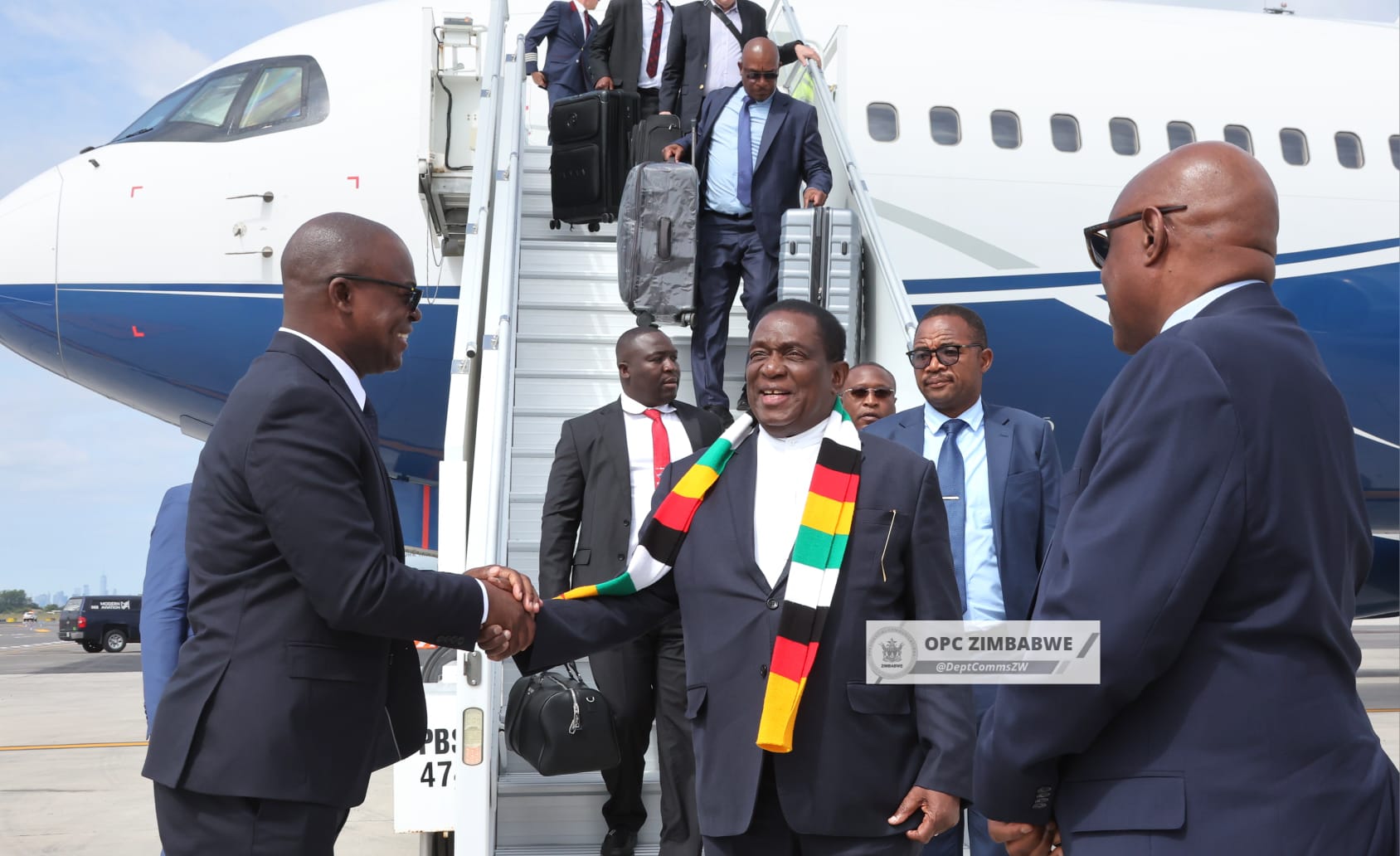
NEW: President Mnangagwa arrives in New York, to attend Zimbabwe Business Forum tomorrow
Wallace Ruzvidzo in NEW YORK, USA PRESIDENT MNANGAGWA has arrived in New York to join fellow Heads of State and Government at the 81st Session of the United Nations General…
