Andrew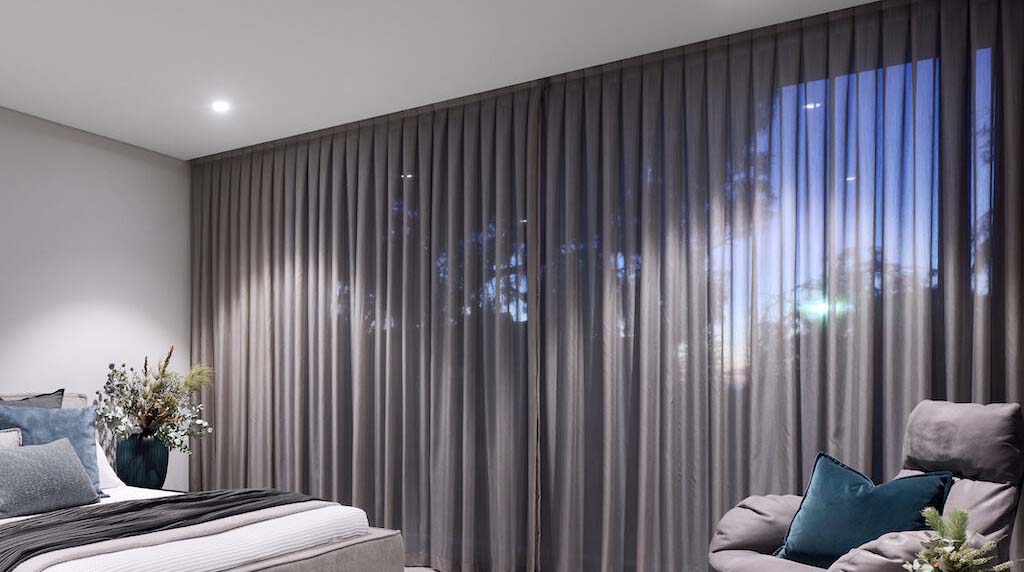
FOR privacy, you need living room drapes that cover the window and keep out prying eyes. If this is your aim, it can be useful to combine shades or blinds with drapes. If you opt for a combo, you might have more options for the drapes, as they will not need to be so opaque. To control light, the choice of fabric is key. Sheers will still let in plenty of natural light, while blocking out harsh direct sun. Medium weight fabrics like linens will let some light filter through, but less than sheers. Heavier fabrics, paired with a lining, will totally block out natural light.
How to measure windows for curtains
For a room to look cohesive, all the drapes have to hang from the same height and be the same length. Be sure to measure how far each one of them is from the ceiling. Use the one closest to the ceiling as the measurement for all the window heights when it comes to installing the curtain hardware. To measure the actual size of each window, measure from the top edge of the window down to the window sill. For the horizontal dimension, measure from the outside of one moulding to the other.
Measuring curtains
When it comes to measuring the curtains, you will decide if they are custom drapes or standard size curtains?
If you are going to purchase custom living room drapes, you will have endless options. These include how high to mount your hardware, the width of the finished drapes and the overall length. If you are working with standard sizes, you have to stick to the basic lengths and widths.
How long do the drapes need to be?
Short drapes are rarely attractive. Assuming you are looking for floor-length living room drapes, you need to decide how you would like them to hang. Standard curtain panel lengths are 63 inches, 84 inches, 95 inches,108 inches and 120 inches. You might have limits on how the curtains hang, depending on the height of the window and how high you want to mount the rod.
Brushing the floor —These curtains should hang just above the floor by about half an inch.
Breaking the floor — Curtains hung in this fashion will hit the floor and bend at the bottom but not puddle. They are typically one to three inches longer than the measurement to the floor.
Pooling on the floor — Drapes that hang this way are anywhere from 6 to 12 inches longer than the measurement to the floor and will generously puddle at the bottom.
Width
The first consideration is whether you want the curtains to cover the entire window or not. If you are using drapes in combination with blinds or if the curtains are purely decorative, you do not need to calculate as precisely. If you do want to cover the whole window, you then need to make some extra calculations. When measuring the width, add 12 inches to each side to make sure it covers the moulding and is wide enough to account for the rod. Standard off-the-shelf curtain panels are usually 48 inches wide. The panel may be narrower if it has pleats or gathers. Some designs need you to settle for double or triple widths.
How to hang curtains
Hanging your drapes evenly across all the windows in the living room will help make it look cohesive. Put the curtain panels on the rod. How you do this will depend on the type of curtain.
For example, look at whether there are grommet holes, pockets or they clip onto rings.
Should curtains touch the floor?
This is a common question. Floor-length curtains look best. In fact, shorter curtains are just not attractive and are an outdated look. If having long curtains is not possible, one is then better off with blinds. – bhg.com



 Online Reporter