Online Reporter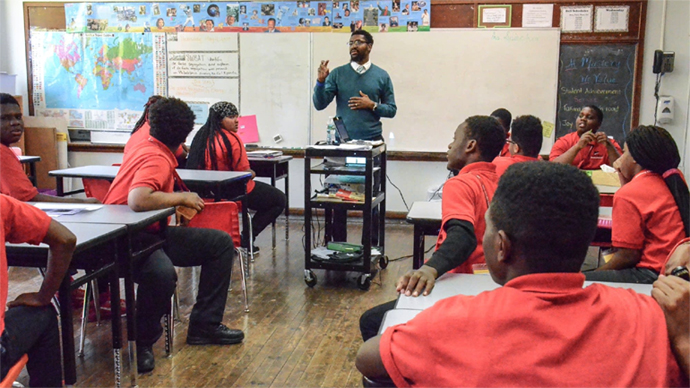
Ronald Takudzwa Sambona
Correspondent
EINSTEIN’S Space-Time Theory clearly states that spacetime tells matter how to move, and in return, matter tells spacetime how to curve (bend).
I must confess, like most people, I thought learning was something a teacher did singlehandedly on their own initiative.
I soon discovered a tragic flaw in this reasoning – I, as the learner, am removed from the equation.
But Einstein knew better than I or anyone else alive today that all life affects and influences one another both on the larger scale of the grand universe and on the smaller scale of our daily interactions.
Isn’t it quite interesting that we never question the impact of our approach in learning?
How do learners influence teaching, and how do educators influence learning? What is the right pedagogy for maximum performance in education?
I have started to view the relationship between educators and learners as interconnected, similar to spacetime and matter in Einstein’s theory.
One exists solely because of the other and serves the other’s needs equally. Learning is not a task for one man, for one man has never successfully surrounded an anthill – Never!
Educators tell learners how to move, and in return, learners tell educators how to curve (bend).
Our pedagogical approach to learning must be based on this recognition of a symbiotic relationship centred around dependence and genuine need.
It is, not only the educators’ role to feed the learners, but also the learners’ role to tell the educators how they intend to be fed.
Pedagogy must allow for learners to fulfil their part of the equation in order to get better, balanced educational outcomes that truly reflect equal commitment and performance from both educators and learners.
Learning is a partnership in following.
Educators are not always leaders, and learners are not always followers.
The best scenario is a balanced situation where learners and educators are all followers, allowing themselves to be led by the other towards better educational outcomes.
Leadership, like good followership, is following the law of the situation. Both educator and learner alike must unite to follow the invisible leader – the common shared purpose.
Without this commitment to following our shared purpose embedded in our pedagogy, educational outcomes suffer tremendously.
At a time when education has gotten more expensive because it is vital to success, it becomes paramount to tailor our pedagogy in order to fit the needs of the digital age and ensure a high return on investment through improved learner performance. Our pedagogy can either make or break us; we have an important choice to make! If all emotions fail to register, let the white light of reason remind us that there is no terror in the bang, but only in the anticipation of it.
We will be far better because we choose to do what is hard, but we will be far worse if we choose to do what is easy. Yes, educators have an important role – one that is not separate from the learners they serve, but deeply connected and rooted to one another.
Thank you! I rest my case.