admin
admin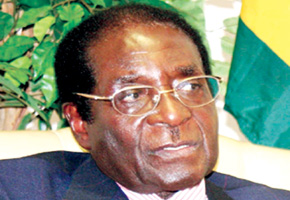
That record makes them walk with a calculated swagger, flex their neck and cough with a genuine boost. Yet it borders on tragic irony that, more than three decades down the line these educated and learned people appear lamentably to have failed to pen a true and authentic story for our country and the rest of the world about the bumpy but successful revolutionary journey they travelled, culminating in the independence and freedom that the country enjoys today and on which some sellouts to imperialists are also drunk.
This pen refers specifically to the comrades who slept in trenches in foreign lands, were bitten by mosquitoes and by cold weather, and ran the gauntlet of snakes and enemy fire in the bush for 15 years as they prosecuted the armed struggle — a revolution that has, and continues to revolutionise the social and economic lives of the Zimbabwean people as a whole.
But where is the story written by living, or left behind by the heroes, man and women, who fell in battle?
This is the story that pulsates with pain, unmitigated love of the motherland, and the joy at the consummation of the freedom that some of our selfless young men and women and older people too sacrificed their precious lives so that Zimbabwe might choke with independence and freedom.
Now where is that story 32-plus years into Uhuru since 1980? Indeed, where are the biographies of leading revolutionary fighters, dead or alive? For example, where is the story written by, or biography of, the Zanla commanders Josiah Magama Tongogara, Rex Nhongo or other revolutionary icons Lookout Masuku, Jason Ziyaphapha Moyo of Zipra and others, that might stand as bequests replicating and illuminating a revolutionary past to be followed by present and future generations?
The same could be said of Zanu-PF’s late chairman and lawyer, Herbert Chitepo, killed in a bomb blast in Zambia and Josiah Tungamirai, a political stablemate of Chitepo.
Perhaps a more sensational story about what it felt like to carry an AK 47 alongside her male comrades and at a young age when she might have enjoyed life in the village like her peers — notwithstanding the tyranny of the white regime would be an account by Joice Teurai Ropa Mujuru, Zimbabwe’s Vice-President.
Sadly enough, however, nothing of the sort by herself or by other women, who also waged war against the racist Smith regime, is to be found on shelves in our bookshops at present. Or are these stories still being scripted by the heroines and heroes of the struggle that secured our country from foreign captivity?
Most importantly for Zimbabweans and the rest of the world, a personal story of the armed revolution in Zimbabwe and, the kind that Iraq’s Saddam Hussein would call “the mother of revolutionary stories” is urgently awaited by all and sundry.
This writer dies to walk into a bookstore one day and smack on to a book on the shelf with the title Robert Gabriel Mugabe — My Part in the Armed Revolution, by Robert Gabriel Mugabe.
Surely this is the big one that would change the perspectives of critics, some of them belching with blind prejudice, against President Mugabe.
Look at what an unlikely source says in praise of Cde Mugabe: “He is a fountain of experience, knowledge and, most importantly, a fountain of stability. There are a lot of horrible things that would have happened in this country if he had not said ‘No’. History will prove the correctness of this statement. He has been the number one symbol of stability . . . Us (we) the younger generation are lucky to have gone through his hands.”
No, Mr Biti is in no way trying to curry any favour with the President, as some people might think. He would perhaps do so if he were in Zanu-PF; but he is a secretary-general of the rival MDC-T. But also as a critic of President Mugabe, his recent remarks point to a political maturity and ability to tell trees from the woods — an insight rare among blind, gullible political critics. The burning question is where is the “history” of Cde Mugabe which Mr Biti says will prove the “correctness” of his remark about the President?
For now that history remains in the mind of Mr Biti and of many other people, Zimbabweans and foreigners, who admire the person of Cde Mugabe for what he is made of.
But the generality of the admirers and non-admirers of the President cannot open other people’s minds to read what is written on the minds about Cde Mugabe’s mettle. Let us have that “history” in flesh and blood — palpable inner bookstores and in national and school libraries.
This suggests that, in spite of his very busy daily schedule, the President might wish to consider making time to write his political history himself, dictate it into a dictaphone for secretaries to transcribe, or have a trusted biographer or assign a team of good writers to begin work on that history.
Writer, publisher and educationist, Pathisa Nyathi painfully explained to this writer the other day why there is such a dearth in this country of political and other history books — a lack of diaries of events kept by people in the making of history which whites kept and out of which they then wrote history books.
Those leaders who participated in the armed struggle would appear to have kept no diary in which they chronicled every single happening in the course of the revolution, hence the absence of books about day-to-day happenings which would have been of use as authentic records.
Nyathi said Zimbabwean society was largely “oral, rather than literary”, the latter a preserve of events. Memory is a weak slave, as it were, and so the lifespan of oral history cannot withstand the flight of time. Zimbabweans ought to recognise this fact and embark right now on a paradigm shift by writing books on land reform, indigenisation and economic empowerment while these developments are still hot from the pot.
Non-believers exist on the empowerment journey and one can identify them for their contention, for example, that the land reform programme was being implemented in a “chaotic way”; by that remark referring to land occupation by former freedom fighters.
But these critics deliberately, or ignorantly overlook the fact that the occupation of land by former freedom fighters was an eloquent statement of patience lost after waiting for a long time for compensation that Britain had promised to give to white commercial farmers so that a smooth transfer of white-owned land to blacks needing it the most was carried out.
In this regard, therefore, political and economic historians have an onerous responsibility to write books (now) justifying the bold moves by the Government to democratise both the economy and the land that remains soaked in parts by the blood of the heroes and heroines of the armed revolution.
Nyathi, a historian, also asked what Zimbabwean journalists have written about a “noble” profession for many years shut out to most blacks as a preserve for whites who used their pens to fortify white rule and discrimination against the black majority. For instance, what have I personally written about my own career spanning nearly 50 years?
A forthcoming book, a third by this scribe will shortly answer Nyathi’s challenge to my pen. Still journalists remain challenged to write accounts of their entry into a career whose stress was on promoting development socially, economically and politically not at the same time condoning corruption, tribalism or promoting an anti-black-rule kind of journalism the foreign press tried strenuously to infiltrate directly or indirectly through unpatriotic local writers impelled by a blind spousal of so-called western journalism.
In this regard, Nyathi and other Zimbabweans concerned like him might rightly ask what books local journalists have written about the Willowgate Scandal of the mid-eighties under which some prominent politicians fell from grace for their involvement in the sale of Toyota Cressida motor vehicles at exorbitant prices after buying them cheaply.
Geoffrey Nyarota whose personal fame and that of The Chronicle of which he was editor rose, is probably better placed than most writers to come up with a blow-by-blow account of what transpired in Willowgate in order for the present and future generations to shun any similar scandal against which sanctions imposed might be so ghastly to contemplate.
Finally, there is really no justifiable reason why the history of the armed struggle and that of land redistribution and economic empowerment may not be written by locals, because, moreover newspapers and radio and television have consistently published stories about these developments which are critical to the lives of our people and their future.
The stories published are “rough drafts of history”, as the journalists should know which historian has the liberty to use as materials for books about the road that Zimbabwe has travelled to date and into the future.
Any delay by Zimbabweans to tell their own true story might result in whites, for whom our revolution remains an abomination, to write their own distorted history of Zimbabwe.


 Online Reporter