admin
admin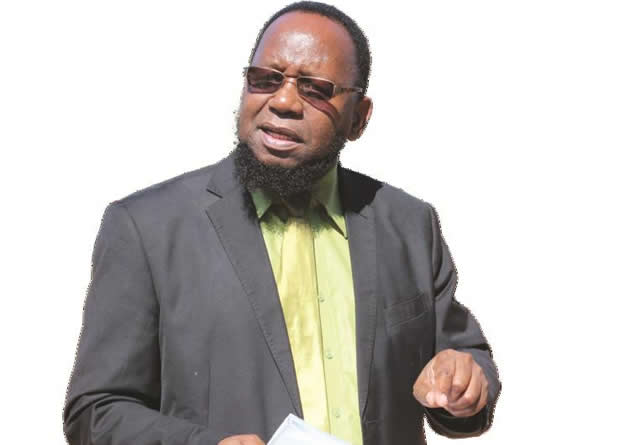
Stephen Mpofu
It’s official. The borders of the teaching profession are porous and masquerades fencing the idea of breaking a chalk can detour in from perambulation in life without let or hindrance and hang in there for as long as their fancy lasts.
That, at least, is the photocopy by this pen of the picture painted in the background by Cde Lazarus Dokora, Minister of Primary and Secondary Education, when announcing that a Professional Teachers’ Council would be set up to register those qualified to serve in the profession so important for the role it plays in producing leaders of tomorrow.
As things stand today those quacks who worm their way into the teaching profession will demand that pupils abide by a dress code of their school when they themselves are not under the harness of any ethical code.
Worse still, such teachers may abuse those under their charge with wanton impunity, knowing full well that no card exists to read them the Riot Act for any breaches of the profession.
In a recent address to teachers in Bulawayo Cde Dokora declared that the borders of the teaching profession should be tightened up with the introduction of a regulatory council to deregister members found guilty of transgressing laid down professional standards.
The Minister cited legal and medical professions where, he said, no one practised their trade without first being registered by councils overseeing the affairs of those professionals.
For instance, Cde Dokora noted there was no such thing as a temporary doctor or a temporary lawyer either, his remarks suggesting that these anomalies had to be banished from the teaching profession so that the right people with the right qualifications were allowed to practise.
As things stand, it is no exaggeration to suggest that the teaching profession is replete with imitation professionals who know that they have nothing to lose even when found on the wrong side of the law.
It is no fairytale for this pen to suggest that some teachers are gallivanters with a propensity for flirting with girls under their charge, resulting in the abuse of those they are supposed to protect and nurture in loco parentis.
Add to that, other wayward forms of behaviour, such as drunkenness on duty — perhaps by a few but who nevertheless tarnish the image of the teaching profession in the eyes of the public at large who generally hold teachers in high esteem.
There is no doubt that when those in the profession realise at all times that Big Brother — in this case as a metaphor for their ethical code — is watching them they will eschew any temptation to breach the ethics of the profession.
In the final analysis teachers who work, lead and live by example stand a big chance of producing their own kind from among the school children under their care.
But the ministry in point appears to have a more gargantuan task to handle after a civil service report disclosed that 96 percent – or 11, 813 people who have been rendering service to government but were not captured on its pay system – were in the primary and secondary ministry.
[Altogether the 13,000 people reportedly accounted for $84 million yearly in salary arrears to the already cash-squeezed Treasury.]
The audit report said “at least 12,392 persons were found to be rendering services but are not on the payroll, implying a committed expenditure of $83,517,120 per annum.”
Obviously, Cde Dokora’s ministry will have to act in conformity with the recommendations of the audit, as should other wings of government found wanting by the audit which also revealed that School Development Associations employed teachers without requisite qualifications, yet colleges were churning educators and this resulted in headmasters and deputy heads not teaching.
The envisaged professional Teachers’ Council will certainly come handy in dealing with this anomaly so that all the employees earn their keep and that standards at schools are not prejudiced.
Also, it really boggles anyone’s mind that the Ministry of Agriculture, Mechanisation and Irrigation Development could blissfully deploy agricultural extension workers to urban areas where, as everyone knows, there are no agricultural activities of the kind that requires the work of such specialists in those areas.
After the audit report, a strong case clearly exists for swift remedial action to be taken so that the government does not waste scarce resources the way it is being made to do by those government entities that defy laid down rules and regulations.
In the same vein, measures ought to have been taken yesterday to clean up the payroll which appears to be crowded with ghost workers some of whom are known to have long gone abroad to as far away places such as Australia for work.
The big question that begs for an answer is; just who are the ghosts pocketing the money for which they broke no sweat?
They and their paymasters need to be paraded before our courts for justice to take its course.



 derick.khumalo