admin
admin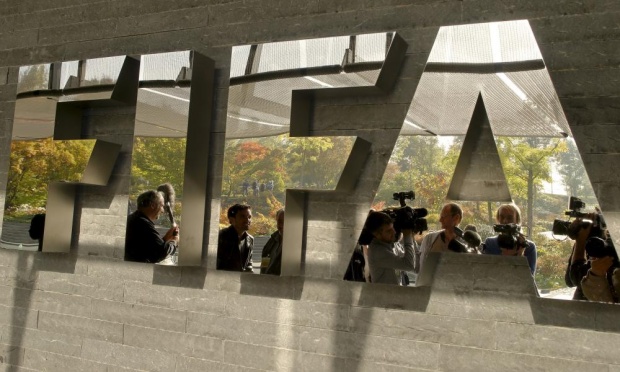
Sharuko on Saturday
I was 18, when I finally left the comfort and green grass of home, to pursue my A-Level studies at a Baptist Mission in the rural heartland of Sanyati.
That was in 1988.
There was a reason l chose Sanyati, it was the rural home of my uncle, my mother’s father.
Twelve years earlier, as a mere six-year-old kid, I had been rejected from enrolling for my Grade One studies, on the lame excuse that l was too young.
Why?
Because I couldn’t wrap my right hand around the top of my head to enable my fingers to touch the tip of my left ear.
They said it was a basic test, to judge whether one had reached the seventh year, even though the scientific evidence of that remains to be seen.
But, in a way, it looked a better test, as primitive as it was, than how whites used to weigh black people, to try and predict their ages.
So, amid the disappointment of my rejection from school, my dejected old man sent me to Sanyati, to take me away from the pain of seeing my colleagues embarking on their formal education path.
For the first time in my life, I was taught to head cattle and, in the innocence of my youth, the act of routinely beating the weakest of my uncle’s cows, became a favourite daily routine, despite the savagery of the act.
Little did I know, back then, that, a dozen years down the line, I would be back in Sanyati.
Not as someone nursing the pain of rejection from school, but as someone pursuing an extended flirtation with secondary school studies.
A Bulawayo team, Zimbabwe Saints, and a Bulawayo star, Ephraim Chawanda, also known as the Rock of Gibraltar, were the big winners in domestic football, in ‘88.
Chikwata won their first league championship, after independence, while Chawanda won their first Soccer Star of the Year gong, in the era of a free Zimbabwe.
Saints have not won the championship since then.
EIGHTEEN years later, in 2006, a Bulawayo team, mighty Highlanders, were crowned champions, after a dominant season, in the domestic football marathon.
Their best player, Honour Gombami, should have been crowned Soccer Star of the Year but, somehow, the selectors went against tradition, and settled for Clemence Matawu.
The spectacular fallout from that process, which still looks as flawed today as it was questionable back then, hasn’t been diluted by the passage of time.
Bosso, just like Saints before them, EIGHTEEN years earlier, have not won the league championship since that triumph in 2006.
EIGHTEEN years ago, Highlanders were the only team good enough to beat Charles Mhlauri’s CAPS United, in the league, during that landmark campaign by an All-Star Green Machine team.
Makepekepe lost just once, in the league, all season, in 2004, with the defeat coming at home in a seven-goal thriller they lost 3-4 to Bosso, at the National Sports Stadium.
Highlanders finished in second place that season, seven points adrift of champions CAPS United.
But Bosso’s tally of 64 points would have been good enough to win the league titles in 2001, 2003, 2005, 2007, 2008, 2009, 2011, 2013, 2014 and 2015.
It’s a measure of how competitive the domestic Premiership was, back then, that even a Dynamos team, which had just won their first league championship in 10 years, in 2007, was still good enough to reach the CAF Champions League semi-final, the following season.
Monomotapa, in their maiden CAF Champions League campaign in 2009, even went all the way to the group stages of the continent’s premier inter-club tournament.
They eliminated Ajax Cape Town in the first round, knocked out ASEC Mimosas, in the second round, and went on to win two of their six group stage matches, after beating Heartland of Nigeria 2-1 and Etoile du Sahel of Tunisia, by a similar scoreline.
The following year, during the 2010 CAF Champions League campaign, little Gunners, making their maiden appearance in the tournament, thrashed Mafunzo of Zanzibar 6-1, on aggregate, in the first round.
Then, they produced the result of the tournament, in the first leg of their second round match against the continent’s biggest, and most successful football club, Al Ahly of Egypt, winning the David versus Goliath showdown 1-0 in Harare.
Of course, the Cairo powerhouse won the second leg, but their scrappy 2-0 win in Cairo was as much a relief to them as it was a beautiful advertisement of the amazing fighting spirit, and impressive talent within the Gunners ranks.
Today, EIGHTEEN years after we finally played at the AFCON finals in 2004, in what we believed was the coming of age of our Warriors, our national game lies in ruins while the domestic Premiership is barely recognisable as our top-flight league.
The league which, at the 2004 AFCON finals, provided all the three goalkeepers — Tapuwa Kapini (Highlanders), Ephraim Mazarura (Black Rhinos) and Energy Murambadoro (CAPS United) — who were on the mission of duty in Tunisia.
EIGHTEEN YEARS AGO, WE FEATURED AT OUR MAIDEN AFCON FINALS
The league which, at the 2004 Nations Cup finals, provided the player, Leo Kurauzvione who, at the age of 23, appeared to represent the future of this team.
Although it didn’t eventually pan out that way, with Leo’s star fading amid the acrimony which stalked his ugly divorce with Dynamos, there is no doubt that there was real potential in the midfielder.
It’s also the league which, at the 2004 AFCON finals, provided a good chunk of the players who were on that national duty —– Dazzy Kapenya (Sporting Lions), Bekithemba Ndlovu (Highlanders), Lazarus Muhoni (Black Rhinos), Esrom Nyandoro (Amazulu) and Ronald Sibanda (Amazulu).
And, these were not players who were just there to make up the numbers but key members of that Warriors team with Muhoni having been one of the stars of that successful campaign, for a place at that AFCON finals.
His priceless goal, against the Eagles of Mali, after providing the finishing touch to excellent work, down the channel by the reliable and magical Peter Ndlovu, will always carry its weight in pure 24 carat gold.
It even won him a nickname, ‘Mali,’ in what is a reminder to him that, no matter what happens, no matter how time will fly past, the fans will never forget that moment when his touch helped down the Eagles.
Nyandoro even scored the goal of the tournament, in Tunisia, with a full-bloodied drive, with as much venom as it had the accuracy to find its target, in the top corner, in that eight-goal thriller against the Indomitable Lions of Cameroon.
Two years later, at the 2006 AFCON finals, all the three ‘keepers, just as was the case in Tunisia in 2004, were based on the domestic front — Kapini and Murambadoro were this time joined by Gift Muzadzi, who replaced Mazarura.
James Matola, the tough-as-teak defender they nicknamed Van Damme, was at Buymore, where he was a teammate of Francis Chandida while Gidiza also returned and Brian Badza and Lloyd Chitembwe were from CAPS United.
By qualifying for our second AFCON finals, we showed that our maiden appearance, two years earlier, was not a fluke, in any way whatsoever and, after decades of heartbreak, we had arrived at the big stage of the big boys.
I was there in Egypt, at the 2006 Nations Cup finals, covering the Warriors, just as had been the case in Tunisia, at the same tournament, two years earlier.
I realised that the confirmation of our status, as a country which had finally earned its stripes, to compete at the big occasion, by picking our second ticket to the AFCON finals, came in the year that marked EIGHTEEN years, since the year I left home, as an 18-year-old, to further my studies.
I have always considered myself a football man, through and through, and I have insisted it wasn’t a mere coincidence that I was born in 1970, the year when the globe witnessed the finest collection of players to make a national team, at the World Cup.
Carlos Alberto, Gerson, Jairzinho, Rivellino, Toastao, Clodoaldo and Pele all combined to create the greatest All-Star national team to ever grace the game.
They didn’t just win the ’70 World Cup, with a four-goal destruction of Italy, in the final, but they won every match they played at that showcase in Mexico and also throughout the qualifiers.
It was the first World Cup to be played outside Europe and South America.
It also became the first World Cup where yellow and red cards were issued, the first one to be broadcast in colour on television and, at an average of 2.97 goals per game, set a high standard for attacking football, which had never been seen before.
And, crucially, has never been seen since.
For Pele, it was his third World Cup title, with his first having come in Sweden in 1958 where, in the final against the hosts, on June 29, that year, he became the youngest player to feature in a World Cup final.
He was 17 years 249 days, just 116 days short of celebrating his EIGHTEENTH birthday, and scored twice in that final, in a five-goal romp for the Brazilians.
It was at the ‘70 World Cup, in Mexico, that the FIFA leaders decided to expel this country from the tournament, because of the entrenchment of racism, which the Unilateral Declaration of Independence, five years earlier, represented.
Coincidentally, this country’s membership of FIFA had been accepted, in 1965, the very same year that the white rulers, who were in charge back then, would declare UDI.
EIGHTEEN years earlier, in 1947, this country’s national football team had played an away international game, for the first time, across the Zambezi in Zambia, with the friendly ending in a 2-2 draw.
EIGHTEEN years earlier, on June 27, 1929, this country had played its first international match in the capital, in a 0-4 losing cause, in a friendly match against the England FA Select Side.
The English won the second game 6-1, in Bulawayo, two days later, during a tour of Southern Africa, in which they enjoyed a clean sweep, winning all their other 15 games in South Africa, for an impressive return of 17 wins in 17 games, 69 goals for them and only 16 against.
The next time this country would play a European team, in a friendly match, would be in December 1983, against Switzerland, with the date coming exactly EIGHTEEN years, after the UDI fiasco of ’65, which provoked the FIFA sanctions.
EIGHTEEN, THE NUMBER, THE MYSTERY
After about half-a-century of patronage, as an unapologetic supporter of Zimbabwean football, and 30 years in the trenches of analysis of the game, I now believe I have become a student of the local game.
Some of the things, which keep emerging in my study, make up for some fascinating reading.
I take, for instance, just a number like EIGHTEEN, and what eventually emerges from it, in as far as its association with our football, is just mind-blowing.
Okay, let’s try this and try to make sense of it all:
EIGHTEEN is the number of years between the end of World War II, and the formation of Dynamos, in 1963, in what was a game-changing moment for football in this country.
EIGHTEEN is the number of years between the Warriors, winning their first silverware at the CECAFA Senior Challenge Cup in 1985, and our national team finally securing their place at the AFCON finals, in 2003.
EIGHTEEN is the number of years between our country winning its independence, ironically on April 18, 1980, and our first club, Dynamos, appearing in the final of the Champions League, in 1998.
EIGHTEEN is the age that Peter Ndlovu was, in 1991, when he was signed by English club Coventry City on his way to become the first African, to feature in the Premiership, the following year.
EIGHTEEN is the age that Moses Chunga was, in 1983, when he arrived at Dynamos, as a spiky-haired rebellious teenager who, a few years’ time, would become the first local footballer, after Independence, to move from the domestic top-flight league to Europe.
EIGHTEEN is the number of years which separated the start of the domestic top-flight league championship, in 1962, which was won by Bulawayo Rovers, and the arrival of Independence, in 1980, which ended our isolation from FIFA.
EIGHTEEN if the number of years between Highlanders winning the Division Two league, in 1972, and winning their maiden Premiership title, in 1990.
EIGHTEEN is the number of years between the time Steve Kwashi won the league title, as a star forward, with Zimbabwe Saints in 1977, and his arrival as coach at CAPS United in 1995, where his presence transformed the Green Machine.
EIGHTEEN is the number of years between the turn of the millennium and the start of the 2018 World Cup, in Russia, a tournament where the Warriors were barred from taking part, because of the sins of their administrators, who failed to pay Brazilian coach, Valinhos, his dues.
EIGHTEEN is the number of years between the Warriors’ first appearance, at the AFCON finals in 2004 in Tunisia, and their banishment, from the FIFA family, last week.
Eighteen years ago, we had quality football in our domestic Premiership and, to some extent, decent leadership at ZIFA, which is now being called the Zimbabwe Island of Failed Administrators.
That Makepekepe team of 2004 was as amazing as it was breathtakingly efficient, an All-Star group of entertainers and executioners, who were the prime brand of our top-flight league.
The domestic Premiership was breathing and in excellent health.
We have to find a way of breathing life into our Premiership which has been abandoned by those who used to be its all-weather patrons with many of them having shifted their romance to Division One football.
I watched my fourth Division One match, this season, at Morris Depot yesterday and was charmed by the life in the stands, the number of fans and, of course, the decent quality on the pitch.
It’s what is lacking in the domestic Premiership which is now a shadow of itself.
We have to revive it, for the sake of those who toiled to ensure that Dynamos, Highlanders and CAPS United would become a part of the fabric of our football, and even challenge for honours on the continent.
Let’s forget those people, from the Zimbabwe Island of Failed Administrators, who chose to somehow inject thousands of US dollars, in Covid-19 bailout funds, provided by the Federation of International Failed Administrators, into non-existent Division Four and Five leagues, at the expense of our Premiership.
Without a thriving domestic Premiership, we won’t develop as a football country, and, after all, we just have EIGHTEEN clubs in our top-flight league.
Is that asking for too much, for us as a nation, to find a way to empower our 18 PSL clubs so that we revive interest in our top-flight league?
After all, it’s the league which gave us Peter and Moses. They were both EIGHTEEN when they made key moves in their careers.
To God Be The Glory!
Peace to the GEPA Chief, the Big Fish, George Norton, Daily Service, Sitting Bull, Crazy Horse and all the Chakariboys still in the struggle.
Come on United!!!!!!!!!!!!!!!!!!!!!!!!!
Ronaldoooooooooooooooooo!
Text Feedback 0772545199
WhatsApp 0772545199
Email- [email protected]; [email protected]
You can also interact with me on Twitter (@Chakariboy), Facebook, Instagram (sharukor) and Skype (sharuko58) and GamePlan, the authoritative football magazine show on ZTV, where I interact with the legendary Charles “CNN” Mabika, every Wednesday night at 9.30pm


 Online Reporter