

 admin
admin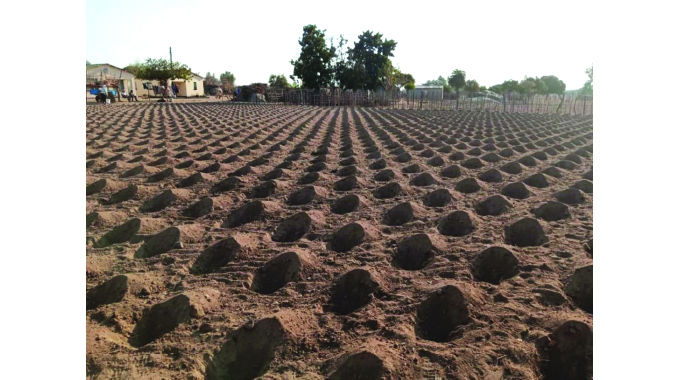
Precious Manomano Herald Reporter
The Government has intensified climate proofing agriculture methods as part of measures to adapt to the effects of El Nino during this summer cropping season.
These include drilling of boreholes, emphasising on Pfumvudza permanent plots and encouraging farmers to plant early maturing varieties.
This comes as the Meteorological Services Department (MSD) has predicted that the country will receive below-normal to normal rainfall with the bulk of Matabeleland North, parts of Midlands and Matabeleland South provinces being the most affected.
Farmers are also encouraged to continue planting in dryland areas following heavy rains that are predicted this week.
Experts are encouraging farmers without irrigation to plant now using water that they get from other sources such as wells and dams.
Ministry of Lands, Agriculture, Fisheries, Water and Rural Development Deputy Director for Livestock Production Rutendo Nyahoda urged farmers to work on permanent plots for Pfumvudza/Intwasa, adding that they must be done on time and with mulch applied for effective moisture conservation.
She encouraged farmers with irrigation to put every square inch of irrigable land to maize also on emphasising on early maturing varieties to allow smooth transitioning in winter wheat production in 2024 season.
“By now at least three plots will be ready for planting at household level. With this renewed thrust of Pfumvudza and development we should be able to produce enough cereal grain to ensure national food security. Livestock farmers should ensure that their livestock is given enough water and feed during this lean period. A whole Government approach has involved to ensure the availability of water bowsers and transportation of hay bales for hard hit areas,’’ she said.
She said farmers should not to work alone, but allow cooperating efforts to ensure that livestock do not deteriorate at critical levels.
Director of Crop Production Mr Leonard Munamati encouraged farmers to plant, adding that dry planting and planting short varieties is currently needed to ensure that crops are not affected by the time.
“This week we are hoping that we get good rains as predicted by the Meteorological Services Department. We are encouraging farmers to plant. “
“Those with irrigation should increase space and those without sources of water can do dry planting waiting for the rains. Farmers in region 1 and 2 should plant short season varieties because we are behind.
“In Region 4 and 5 where farmers receive less rainfall, we urge framers to grow traditional grains. We encourage farmers to grow crops such as cowpeas, groundnuts or sweet potatoes. This is the time to plant. We want every household to be food self-sufficient,’’ he said.
Some of the farm workers at Foundations for farming in Harare were yesterday watering Pfumvudza plants as a way of climate proofing the crop.
The Pfumvudza programme, coupled with good conservation farming techniques and correct agronomic practices, could be the answer to the real threat that comes with climate change.



 Peter Tanyanyiwa
 Online Reporter