admin
admin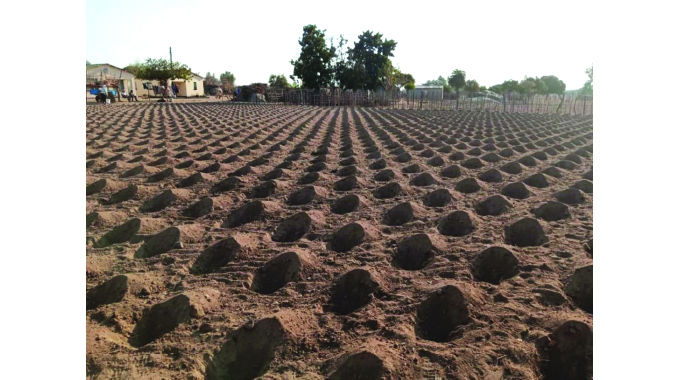
Elita Chikwati Senior Agriculture Reporter
Pfumvudza/Intwasa farmers have appreciated the benefits of the technique which has enabled most of them to be food-sufficient even under dry conditions experienced during the 2021/22 rainfall season.
The 2021/22 season was characterised by heavy rains and long season dry spells which affected some crops in many parts of the country, especially those planted using the conventional method.
In some areas maize was written off after suffering from moisture stress.
Pfumvudza is a concept aimed at climate proofing agriculture by adopting conservation farming techniques and involves the utilisation of small pieces of land and applying the correct agronomic practices for higher returns.
The concept, which is being applied to maize, traditional grains and soyabeans and is also aimed at commercialising smallholder agriculture.
Conservation agriculture is based on the principles of minimum soil disturbance (holing out), mulching to conserve moisture, timeliness of operations and adoption of good agronomic practices.
The Presidential Inputs scheme was implemented under the Pfumvudza programme and farmers were given free seed, basal fertiliser, top dressing fertiliser, chemicals and lime for free.
Mr Wellington Chimuramba of Mubaira, Mhondoro, said Pfumvudza /Intwasa was a better way of coping with the challenge of tillage facilities.
“We used to grow maize the conventional way and after losing cattle to tick-borne diseases we resorted to Pfumvudza. The programme has proved to be good as one is always assured of yields even under dry conditions. This season the dry spell heavily affected crops and the maize under the Pfumvudza plots performed fairly better. Even though we had a bad season we are assured of household food security. We will not beg food and we are self-sufficient,” he explained.
Mrs Stella Bepu, of Marufu Village in Mhondoro, said they were expecting two tonnes from their four plots of maize.
“This season was bad, we had heavy rains which caused leaching. We experienced heavy rains which caused leaching but Pfumvudza crops were not affected because of the mulch.
“Some farmers who had the conventional crop had to add more top dressing fertiliser to their crop which increases production costs. We relied on our free inputs from the President and followed advice of Agritex officers on the Pfumvudza practices and now we are food secure,” she said.
Mrs Shelter Shambare, of Mutimumwe Village, said Pfumvudza was very helpful as it helped in reducing costs.
“With Pfumvudza, a farmer can carry out land preparations and plant on time.
“We used to wait for tractors to hire or oxen from other farmers and this used to delay our farming operations.
“Now because we rely on Pfumvudza, we start land preparations soon after harvesting and we do this bit by bit. By the time the first rains come we would have completed land preparations and ready to plant.
“I also realised I was wasting fertiliser. I used to apply basal fertiliser after the crop germinated when, in fact, the compound D should be applied during planting.
“This season I used one bag of basal fertiliser and one and half bags of top dressing fertilisers where we used to apply four bags of compound D and four bags of ammonium nitrate. We are expecting high yields than those we used to get. Long back we used lots of fertilisers getting low yields, but under Pfumvudza we used less fertiliser and get high yields,” she said.
Mrs Mavis Dendengure, of Nhamburo Village in Chikwaka, said she now knows the importance of mulching.
“Mulching helps suppress weeds. I do not need to hire labour for weeding or buy chemicals. The mulch also helped the crop during the dry spell. The mulching conserves moisture and my crops survived the hot weather,” she said.
Agritex extension officer for Goromonzi, Mrs Lucia Hamadziripi, said a number of farmers were adopting Pfumvudza after realising the benefits from fellow farmers who undertook the programme from the start.
“Most farmers who were using the conventional method this season suffered losses as their crops were affected by the dry spell.
“Some farmers in Chikwaka planted long season varieties and these performed well without irrigation.
“The cob size is good, the crop has uniformity and the farmers are going to get high yields.
“Most farmers who applied mulch are happy and assured of food security. Farmers produced maize, groundnuts, soyabeans, sunflower and cotton under Pfumvudza and the results are pleasing.
“Some of these smallholder farmers will have a surplus to even sell to the Grain Marketing Board,” she said.



 Online Reporter