Online Reporter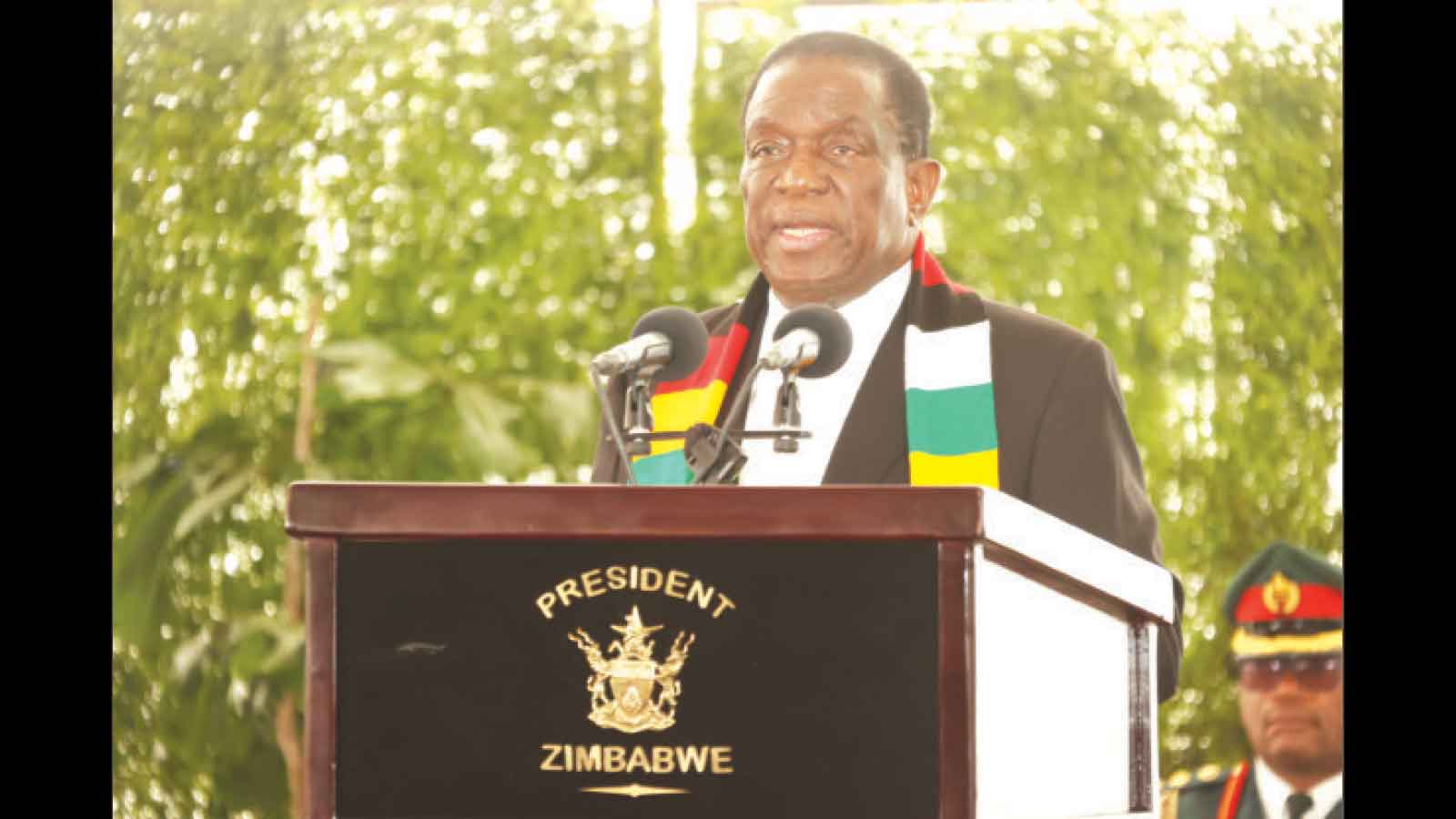
Nqobile Bhebhe-Zimpapers Business Hub
PRESIDENT Mnangagwa has called for increased private-sector and institutional investment in smart infrastructure, including municipal bonds and green-energy funds, as Government moves to accelerate projects critical to Zimbabwe’s 2030 upper-middle-income target.
This comes as the country is focused on modernising its transport, energy, digital, water and urban infrastructure to unlock wider economic gains and tapping into regionally integrated trade opportunities.
In a speech read on his behalf by Finance, Economic Development and Investment Promotion Minister, Professor Mthuli Ncube, at the official opening of the Zimbabwe Economic Development Conference (ZEDCON) 2026 in Bulawayo yesterday, President Mnangagwa emphasised the need to urgently modernise infrastructure and commended the conference theme: “Smart Infrastructure for an Upper Middle-Income Society”.
He said the upgrading of key infrastructure will facilitate the seamless movement of goods and services locally and across the region, unlock the full potential of the African Continental Free Trade Area, and optimise the benefits of Zimbabwe’s position as a logistics hub.
“Zimbabwe is not land-locked — we are land linked. Our vision is to become the logistics Hub of SADC, COMESA and the entire African continent,” said President Mnangagwa.
As the country looks to capitalise on intra-regional trade opportunities, he stressed the importance of ensuring logistical efficiencies and trimming costs, improving market access and increase the competitiveness of local producers under regional integration frameworks.
“Smart infrastructure is far more than building blocks of concrete, steel, high-tech hardware, or artificial intelligence. It’s about integration interoperability, intelligence and sustainability,” said the President.
“Smart Infrastructure is the backbone of an upper-middle-income society. An upper-middle-income economy cannot be sustained by outdated networks resting on archaic regulatory laws and byzantine planning modules.”
Zimbabwe’s infrastructure drive is already being implemented within the broader National Development Strategy 2 (NDS2) and Vision 2030 framework, with Government prioritising five major areas. These are energy and power security, digital and broadband connectivity, integrated transport and rail networks, water and agricultural infrastructure, and urban planning and smart cities.
“Under NDS2 and Vision 2030, Government is prioritising high-impact capital investments across five core pillars:
“We’re eliminating electricity deficits through utility-scale solar, hydro and public-private renewable energy partnerships, ensuring that every factory, farm and household enjoys reliable, uninterrupted power,” President Mnangagwa said.
“We’re bridging the digital divide so that schools, hospitals and clinics, as well as households, regardless of location, are linked to high-speed internet. We’re revitalising the National Railways of Zimbabwe to slash logistical costs, preserve our highways from heavy haulage and solidify the country’s position as the premier transit and trade hub of the SADC region.”
Government is also accelerating dam construction, smart irrigation and water management systems to guarantee national food security. Similar effort is being directed at upgrading urban landscapes to foster clean, modern and tech-enabled environments that attract global capital and restore civic pride.
“We’re implementing the ease of doing business reforms across the economy to create an environment where businesses can operate efficiently with lower costs.
“Further, we’re leveraging regional integration platforms such as SADC, COMESA and the African Continental Free Trade Area to drive export growth and unlock market access for our products,” said President Mnangagwa.
He said Government was also modernising the legal and regulatory framework governing infrastructure Public-Private Partnerships (PPPs), creating opportunities for private investors and financial institutions to participate in major projects.
“Government is removing bottlenecks and establishing a favourable investment environment designed to protect investment and guarantee returns,” said the President.
“The foundation is being laid; the legal guarantees are in place. I call upon the private sector and financial markets to take full advantage of this modernised investment environment.
“I want to encourage innovative financing models, including municipal infrastructure bonds and institutional capital to green energy funds, to accelerate project execution.”
President Mnangagwa also told delegates that Zimbabwe was making progress in infrastructure development, citing the rehabilitation of the Harare-Masvingo-Beitbridge Highway, expansion and modernisation of Robert Gabriel Mugabe International Airport, construction of dams and development of modern border posts.
The infrastructure thrust is being underpinned by macro-economic reforms, which he said have created greater stability for businesses and investors.
“Our macro-economic and ease of doing business reforms are bearing fruits and laying a solid foundation for sustainable economic growth,” said President Mnangagwa.
“We’re building foundations for a globally competitive economy, targeting sustained annual economic growth rates of at least five percent per annum, driving our GDP per capita towards upper-middle-income benchmarks.
“Infrastructure development is an important pillar and integral towards achieving our national objectives.”
Zimbabwe’s external position has also remained favourable, supported by exports and diaspora remittances, while Government was building foreign currency and gold reserves.
“Rising investment, both public and private, in agriculture, manufacturing, mining and infrastructure, signify renewed hope in the promise of our great country, energising our people, our industry and our Government, to expand reforms going forward,” said the President.
President Mnangagwa further called on local engineers, contractors, women, youths and innovators to participate in the infrastructure development programme, positioning Vision 2030 as an opportunity for domestic businesses to access procurement and investment.
He told delegates, who included Government and business representatives, academia, development partners and other stakeholders, to debate Zimbabwe’s economic priorities and translate research and private-sector concerns into policy recommendations.
He reiterated that Zimbabwe’s transformation would require sustained implementation across sectors rather than isolated infrastructure projects.
“We’re building this country brick by brick, power line by power line, fibre cable by fibre cable, railway by railway and City by smart city,” said President Mnangagwa.
“Zimbabwe is open for business and the time to invest in our nation’s smart infrastructure is now. Let it be known across the African continent and beyond that our economy is on an upward and transformation trajectory.”