

 admin
admin
Sifelani Tsiko Agric, Environment & Innovations Editor
Zimbabwe must take practical steps to provide more resources to strengthen the capacities of healthcare workers in responding to the novel coronavirus which is sweeping across the globe, physicians say.
Physicians at a medical practitioners’ symposium on COVID-19 said it was important for the Government to prioritise strengthening the capacities of healthcare professionals to treat patients in isolation facilities and improve infection prevention and control in health facilities.
“Zimbabwe’s healthcare system is very fragile and is already overwhelmed by a number of pandemics, including HIV and Aids, malaria, tuberculosis,” said a top University of Zimbabwe College of Heath Sciences physician.
“It is an unavoidable fact that many physicians, nurses and all other healthcare workers are working in hospitals and clinics where there is a shortage of protective clothing and yet, they often do not know which of their patients are sick. They still lack emergency health preparedness and response skills.”
The Zimbabwe College of Public Health Physicians (ZCPHP) organised the one – day symposium to provide the most current information for medical practitioners and guidance in the prevention, diagnosis and management of COVID 19 cases in the country.
Dr Vonai Chimhamhiwa, an official of the ZCPHP, said the symposium sought to raise awareness on mechanism of getting regular accurate information and sharing to strengthen emergency preparedness and response.
“COVID 19 is now around us and very soon we will be having local transmission,” she said. “As medical professionals we need to be on guard. We need to look at how we conduct our work, our environs and identify all potential risks.”
The escalating coronavirus is exposing inadequacies in health systems, not only here in Zimbabwe, but all over the world.
Health workers on the ground in Zimbabwe and across the world continue to provide care during the pandemic despite the severe lack of resources and dangers to their personal health.
In his presentation, World Health Organisation (WHO) country official Dr Lincoln Charimari said it was vital to give technical guidance and advice to health professionals on how to limit human–to-human transmission to bolster the country’s capacity to isolate and provide appropriate treatment to affected people.
“It is very critical for us to impart skills to medical professionals to follow prescribed policies and guidelines on health emergency preparedness and response,” he said.
“Since February 1, 2020, the epicentre of the coronavirus has been shifting. It has moved from China to western Europe and the Middle East. The pandemic is spreading to Africa and we have to minimise the social and economic impact by adopting policies and procedures for emergency health preparedness.”
Dr Charimari gave a broad overview of the history of global pandemics – from the bubonic plague, Spanish flu, cholera, SARS virus to swine fever, Zika and the Aids pandemic.
He also outlined the WHO interim guidelines on COVID 19 giving the global response strategy, transmission surveillance, safety and precautionary measures as well as challenges that included the stigmatisation of Chinese nationals across the world.
Dr Godfrey Mungwadzi presented a paper on case management and the options available for medical professionals.
“Case management needs a lot of resources and capacity in order for us to handle patients,” he said.
“Our healthcare system is struggling to provide us with basic clinical tools and it is important to ensure that safety and precautionary needs for health professionals are met. They are at risk of exposure.”
His presentation touched on the history of coronaviruses, the causes, symptoms, surveillance mechanisms, early supportive therapy and monitoring as well as challenges that face medical professionals when handling deadly infectious diseases.
Dr Mungwadzi’s presentation explored current efforts to develop vaccines to contain coronavirus.
“On drugs and treatment, there is none that has performed to very meaningful levels. Drugs that were used to treat Ebola have been promising and in the US they are using those drugs to do trials.”
At present, there is no proven drug treatment for the new coronavirus and doctors around the world have been desperately testing a mixture of medicines in the hope of finding something that will help patients.
Several antiviral drugs have been considered possible treatments, but none has proved effective.
Dr Mungwadzi told the symposium how Chinese doctors were pulling out all the stops to try to help their patients using antibiotics and antiviral drugs to try to fight off the virus and bacterial infections.
Patients were also given steroids or other drugs in an effort to cure COVID-19.
The physician said there was no solid evidence as yet that anything was working as the pandemic escalated to all regions of the world.
“Our doctors here are not safe at all. I’m not sure of the compensation of doctors,” Dr Mungwadzi said. “This is a wake-up call for us to take up the matter.”
Professor Valerie Robertson, a retired University of Zimbabwe microbiologist and an official of the Infection Control Association of Zimbabwe, gave useful insights on protective measures, prevention and control of coronavirus.
“We don’t know much about the disease and we are learning month-by month,” she said. “It is very important for medical professionals and our people to understand how the disease is transmitted, how to protect themselves against exposure, how to prevent it and control it.
“Our healthcare institutions need to understand the core components of Infection. Prevention and Control (IPC) programmes of the WHO as well as localised ones to reduce risk and exposure.”
She demonstrated practical steps on preparations and precautions that could be taken by professionals at their areas of practice, clinics and hospitals.
Prof Robertson said it was vital to strengthen disaster preparedness for response, to take action in anticipation of future events and to ensure that capacities are in place for effective response and recovery at all levels.
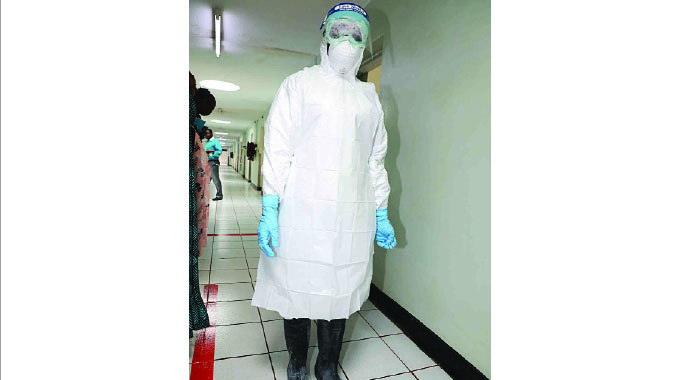
Zimbabwe is ramping up efforts to fight coronavirus and has designated Wilkins Hospital as a dedicated centre for managing and controlling coronavirus.
Staff at the hospital were trained to manage the Ebola virus and had their skills up-scaled to handle the emerging coronavirus
In addition, the hospital now has an ambulance for handling COVID-19 patients.
Andrew Tarupiwa of the National Microbiology Reference Lab said Zimbabwe had the capacity to test the coronavirus and only sends samples to South Africa for confirmation of local tests.
“We have testing machines which were donated by China and the WHO which we are running,” he said.
“We don’t have confirmed cases here. We have so far done 16 samples of suspected cases in the country and all have been negative.”
The machine, he said, can test 96 samples and each one takes about 6 hours to complete.
Despite, the modest efforts made to prepare for coronavirus, physicians bemoaned the lack of adequate ICU units, inadequate doctor and nursing numbers and the general lack of resources in healthcare institutions in the country.
They called on the Government to decentralise access to testing, to promote the use of drones in ferrying samples from remote areas to the national laboratory centre and widen the adoption of telemedicine.
Physicians said it was important to share concrete examples, challenges, good practices and lessons learnt regarding important elements in national and international strategies which enhance preparedness for effective response to the pandemic.
In previous outbreaks of infectious diseases as well as this one, healthcare workers have experienced a disproportionate share of infections leading to the death of many.
One physician said because testing has lagged, healthcare workers often have no way to know whether people walking through the door with respiratory symptoms are suffering from the flu, asthma or covid-19.
People with respiratory symptoms were brought come into contact with healthcare workers who often have no protection.
High-profile events are being cancelled and postponed around the globe to prevent the spread of the novel coronavirus, which emerged in Wuhan, China, late last year and has killed more than 7 800 people and infected nearly 200 000 people as of this week, according to the World Health Organisation.
About 80 000 people have recovered from the infection, according to data collected by Johns Hopkins University.
More than 600 cases of COVID-19 had been confirmed in 34 countries in Africa as of 19 March, compared to 147 cases one week ago, according to the WHO Africa Region Office.
It says although the region has seen a significant increase in confirmed cases recently, there are still fewer cases than in other parts of the world.
Zimbabwe has since declared the coronavirus epidemic a “State of National Disaster” and recently the country postponed the Zimbabwe International Trade Fair, all independence celebrations and banned public gatherings.
It has also earmarked US$26 million for coronavirus disease health emergency preparedness and response plan.


 Online Reporter