

 admin
admin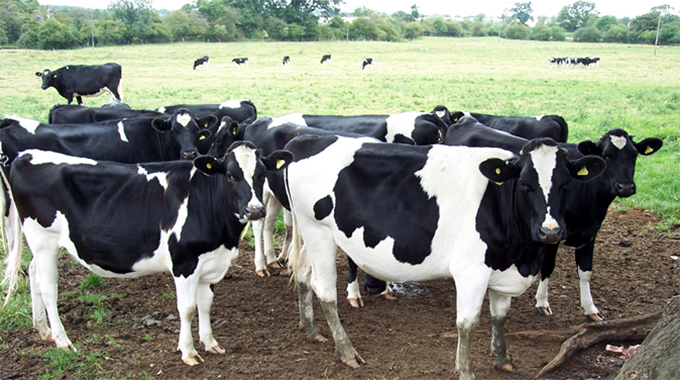
Precious Manomano-Herald Reporter
THE Government is accelerating plans to improve the national dairy herd in line with the country’s agricultural growth recovery plan.
The interventions include increasing the number of dairy farmers producing milk delivered to formal markets as well as enlarging dairy cattle to boost milk production in the country to meet the demand of dairy products.
In an interview, Director of Veterinary Field Services in the Ministry of Lands, Agriculture, Fisheries, Water and Rural Development, Dr Jairus Machakwa said they were targeting to increase milk production to 150 million litres by 2025.
The current production stood at 76.7 million litres which falls short of the existing demand in the country.
Dr Machakwa outlined a myriad of challenges that were inhibiting the growth of the dairy sector insisting that they would they be dealt with; the target was achievable.
“Government seeks to address main problems and root including low viability, insufficient dairy animals in the national dairy herd, low productivity, high mortality rate and low number of dairy farmers producing for the formal market.
“There are issues such a gender inequality which also need to be addressed and the sector has a limited number of youths in dairy farming, limited use of green technology, lack of appropriate financing facilities for the dairy sector and low levels of milk consumption. The main objective of the strategy is improved performance of an integrated and inclusive dairy value chain where everyone is a winner.
“The overall target is to increase the milk production from 76.7 million litres in 2020 to 150 million litres in 2025,” he said.
He said artificial insemination will also help to boost the national herd in cattle production.
“Strategic interventions aim at growing the national dairy herd by 20 000 dairy animals from 34 000 to 54 000 through increased use of artificial insemination (AI) and sexed semen attributing to growth of the dairy herd to 10 000 dairy animals, establishment of local breeding centres with bulls of desirable genetics attributing to a growth of 7 200 dairy animals, and procurement of in-calf dairy heifers attributing to a growth of 2 800 dairy animals,” he said.
He said the growth of the dairy herd will enable increased annual milk production of 53 million litres by 2025.
The signing of the Dairy Declaration of Rotterdam in 2016 by representatives of the global dairy community, demonstrates the commitment of the sector towards sustainable development.
In line with the first pillar of the Comprehensive Africa Agriculture Development Programme, dairy farmers are committed to producing nutrient-rich milk on their dairy farms for consumers to enjoy a healthy lifestyle.
In 2001, World Milk Day was established by the Food and Agriculture Organisation to recognise the importance of milk as a global food, and to celebrate the dairy sector. Since then, the benefits of milk and dairy products have been actively promoted around the world, including how dairy supports the livelihoods of one billion people.
Previously there has been a slow growth, generally in both dairy animal numbers and milk production from both the large-scale commercial and smallholder sectors in the last decade owing to loss of valuable genetic material.
Milk output is projected to reach 95 million litres in 2022.
The Government was supporting the dairy sector in the national Budget by introducing a 5 percent duty on dairy imports to capacitate the dairy recovery programme.
Under the livestock and recovery growth plan, milk production is intended to rise from the obtaining annual production of 79,9 million litres to 150 million litres, and increase the dairy herd from 39 980 to 60 000 by 2025.
About US$75 million is required to fully revitalise the sector.



 Online Reporter