admin
admin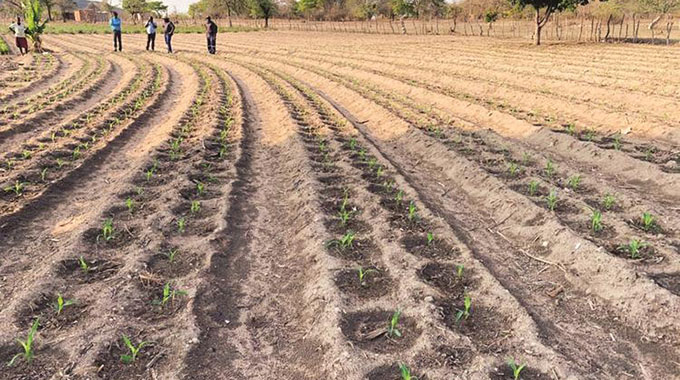
With Pfumvudza/Intwasa likely to reach 3 million small-scale farmers this coming season, with more joining the 2,7 million who were farming under the scheme last season and with those established farmers expanding the number of plots, Zimbabwe will be probably be producing a record summer harvest.
Each farmer gets free inputs for five plots. Many families already in the system are able to recycle their older plots by checking the rotted mulch and adding more mulch and manure.
This requires a lot less work than the physical digging of the holes for a new 39m x 16m plot, and so farmers can increase the number of plots they will be using.
Since many farmers were below the five in the last two seasons, moderate amounts of work in the preparatory stages are likely to see many more reach this number this season and so we are not just seeing 3 million farmers, but also something a lot closer to 15 million plots.
Besides these farm plots there are also the little plots that up to 500 000 urban dwellers are being encouraged to dig so they can join the programme.
Since finding enough clear urban land for the full-sized plot is tricky, most will be smaller and the Government has tailored a special pack for these single small informal allotments that are mainly used to provide at least some home-grown grain for an urban household.
Those up to 15 million Pfumvudza/Intwasa plots, with most families now coming up to the group of five, allow the Ministry of Lands, Agriculture, Fisheries, Water and Rural Development to plan for diversified farming on most small-scale farms.
These farmers will not be producing just one crop, but will producing at least three, and some will be coming close to having a different crop on each plot.
Grain is the critical crop of course, but even here there will be more diversification between maize and small grains and the basic compulsory grain crop varies by region.
In the modest amount of natural regions one and two farmers will be concentrating on maize, getting packs to plant three of their five plots with this grain.
For their final two plots they can choose between two of traditional grains, sunflowers, groundnuts, African peas and sugar beans.
As you move down the natural regions, those in natural region three get the option to plant two plots with maize or sorghum, or even one of each, and then the same range of options for the remaining three as the natural region two farmers get for their optional plots.
For natural regions four and five wishful thinking is not encouraged.
The three compulsory plots are sorghum, millet and sunflower, but maize is one of the options for just one of the two optional plots, although farmers can boost production of traditional grain as well as go for the African peas or groundnuts.
The greater precision of looking for pack combinations that suit the growing conditions reflects the desperate desire to ensure that all farmers produce a reasonable harvest, not just to feed themselves, but also to generate income.
The initial pilot Pfumvudza/Intwasa scheme in 2019-2020 season with just under 10 000 farmers involved was to see if a single plot could produce enough grain for a family for a year.
The best farmers, and especially those using legume mulches and manure, found it could. This has been largely confirmed by the results of the last two seasons.
With the diversification we are now seeing, farmers will be using for on-farm requirements probably close on the harvest of the equivalent of two plots, taking not just grain, but other products and even using some of the grain for things like poultry feed as that programme accelerates.
But that leaves the equivalent of at least three plots, and on these the average farmer is not growing food but growing money.
A lot gets written and spoken about the way Pfumvudza/Intwasa is ensuring household and national food security, and that is one of the results. But it is unlikely to be the way most farmers think.
Yes they want to grow enough food for their family, but more and more they are now also wanting to earn a decent income from their farming.
Many will be growing more than the Pfumvudza/Intwasa five plots, with tobacco in the favoured areas having its own commercial inputs scheme and cotton in much of the rest of the country now getting organised with a similar Pfumvudza/Intwasa type of scheme.
But even the general Pfumvudza/Intwasa five-plot scheme is designed to be split into 40 percent or less for household and farm needs and the rest for sale.
Considering that the urban population is now coming close to 40 percent of the country, food grown on farms has a huge and growing market but one where the farmer gets money and the urbanite gets the food.
This is serious rural development, and while the Government is giving free inputs in Pfumvudza/Intwasa, this is not just created out of nothing.
Everything is carefully budgeted and the insistence on value for money is now shining forth. But the budget is well below what would be required under traditional food handout schemes, and giving a farmer with growing skills and a decent farming system a pack of seed and fertiliser and then a guaranteed market is probably the cheapest ways of developing rural areas.
The crop diversification, coupled with the poultry, cattle and other livestock schemes, plus the borehole and vegetable scheme, are all designed to at least equalise incomes between rural and urban areas and lift millions out of poverty.
The growing flood of agricultural produce of course produces urban jobs; more and more as Zimbabwe hits self-sufficiency and then export markets for value added raw materials grown on farms, more and more factory space is needed and that means more and more jobs, so everyone wins.
There are still some extra additions.
For example the major cattle areas in the west probably need some sort of smart scheme to grow a drought-resistant variety of lucerne, and if that needs some more research on the lucerne and then some on dryland farming, well we are building up our pool of practical research scientists.
But already, and the latest census results on housing show this, we have more and more farmers thinking commercial, that is growing money, and as more of the harvest is money, rather than farm food, we can work out how farmers can grow all our needs for all our food, plus grow some more to export.



 Online Reporter