Online Reporter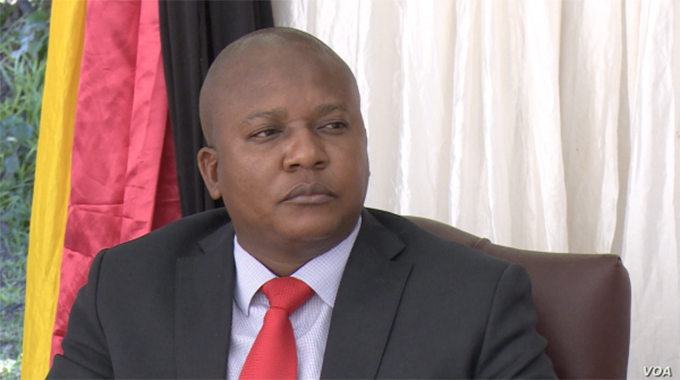
Sikhulekelani Moyo, Zimpapers Business Hub
GOVERNMENT has underscored the need for a radical shift from being a raw material exporter to a value-added producer, to create more jobs and meet the transformative goals set under Vision 2030, which envisages to have an upper middle-income economy.
Addressing delegates attending the ongoing Zimbabwe Alternative Mining Indaba in Bulawayo, Mines and Mining Development Deputy Minister, Dr Polite Kambamura said the thrust now should be to value-add the country’s minerals.
He told delegates that the world was rapidly undergoing a “Just Energy Transition”, moving from fossil-fuel-based energy systems to clean, renewable, low carbon alternatives.
This creates opportunities for critical minerals like lithium, cobalt, rare earths, and platinum group metals, which are essential inputs for batteries, renewable energy systems, electric vehicles and technologies that underpin a green economy, he added.
“Zimbabwe is richly endowed with several of these minerals. As recent policy research shows, we have the largest lithium reserves in Africa, with potential to be a key player in clean energy value chains,” said Dr Kambamura.
“At the same time, under National Development Strategy 1 (NDS1), we have begun to lay the foundation for greater beneficiation, structural transformation, enterprise development and improved mineral governance.
“Under Vision 2030, the goal is for Zimbabwe to be an upper-middle-income economy. That will not be achieved within the blink of an eye, it’s not an event but a process, a process that can be achieved through a plethora of initiatives and export of beneficiated minerals or mineral-bearing finished products.”
Deputy Minister Kambamura said the “Just Energy Transition” presents an opportunity for Zimbabwe, not just a challenge.
“An opportunity to leapfrog, to industrialise, to create jobs, to improve incomes, to protect communities and ecosystems and to do this in a way that is socially just, equitable and sustainable,” he said.
“A radical shift from being a raw material exporter to a value-added product producer for local consumption and for export is the way to go. Government is implementing robust strategic measures towards this.”
Dr Kambamura said refining, smelting, processing, battery‐component manufacturing and battery assembly hubs must be the nation’s centres of excellence.
Zimbabwe has already banned the export of chrome ore, lithium ore or concentrates.
Dr Kambamura said plans to establish gemology training and value addition centres are already on the cards.
He said among the strategies is to legislate that foreign investors commit to technology transfer through training of local personnel and investing in local research and development.
“We need to build curricula for critical minerals, battery technology and metallurgical engineering. Government will be considering fiscal incentives, tax breaks, subsidies, or grants for companies that process locally for SMEs in the value chain,” said Dr Kambamura.
“However, these incentives must be balanced to prevent revenue loss and must be well-targeted.”
Under NDS1, the Ministry of Mines and Mining Development has already adopted strategies for value addition and beneficiation. Deputy Minister Kambamura also said there are legal reforms underway including amending the Mines and Minerals Act, the Precious Stones Trade Act and the Gold Trade Act.
He said these changes are meant to facilitate better governance and enable value addition and the use of regulatory tools like the “Use It or Lose It” principle on mining titles to ensure those with licences engage in production.
Other initiatives include the investor dispute resolution mechanism through the Zimbabwe Investment Development Agency (Zida).