Chronicle Editor
Bruce Ndlovu, Sunday News Reporter
EXPERTS on the frontline of the country’s battle against substance abuse have described the Government’s plans to convert idle Covid-19 provincial facilities into drug treatment facilities as a game changer, as it will allow those that want to clean up their act to do so under the care of health professionals.
Minister of Information, Publicity and Broadcasting Services, Dr Jenfan Muswere, announced recently that in addition to the establishment of drugs and narcotics units at Beitbridge, Victoria Falls, Chirundu and Mutare border posts, the Covid-19 facilities were going to be turned into multi-sectorial drug rehabilitation centres, as the country ramps up its fight against drug and substance abuse.
Those looking to get clean from drugs are offered help and treatment in the psychiatry institutions such as Sally Mugabe Psychiatry Unit, Parirenyatwa Annex Psychiatry Unit, Ngomahuru Hospital and Halfway House and Ingutsheni Hospital.
In an interview, Mr Mthulisi Moyo, a member of the Bulawayo Province Committee on Substance Abuse, which falls under the office of the Minister of State for Provincial Affairs and Devolution, said Government’s latest plans was a shot in the arm for those fighting the drug and substance abuse scourge.
“It’s not easy to overcome an alcohol problem at home. It needs medical assistance meaning to say there needs to be treatment to manage the process of withdrawal itself and to manage complications that may come, secondary to withdrawal. So, when we have rehabilitation centres, it is a game changer. We can educate communities as much as we want and raise their consciousness but if there is no place for people to go for 30-day, 60-day or 90-day rehabilitation programmes, then we are wasting our time. So, I can say Government’s plan is exciting and I am actually looking forward to it happening,” he said.
Mr Moyo said while educating communities and convincing those abusing drugs and other illicit substances to seek help was admirable, it was not enough if there were no rehabilitation centres to give assistance to those that sought it.
“When you look at the plan to respond to the drug and alcohol problem in Zimbabwe, one of the pillars of that plan is treatment and rehabilitation. This means that without investment by the public and private sector into establishing rehabilitation, we might not necessarily win the battle. There is a lot of work that is now being done within communities to educate them and raise their consciousness about the scourge of substance abuse and I am one of those people doing this. From my experience, the most disheartening thing is that after spending two weeks educating community members and encouraging those with a drug and alcohol problem to come forward and accept that they have a problem and they need help, you then realise all of a sudden that there are no facilities to help those people,” he said.
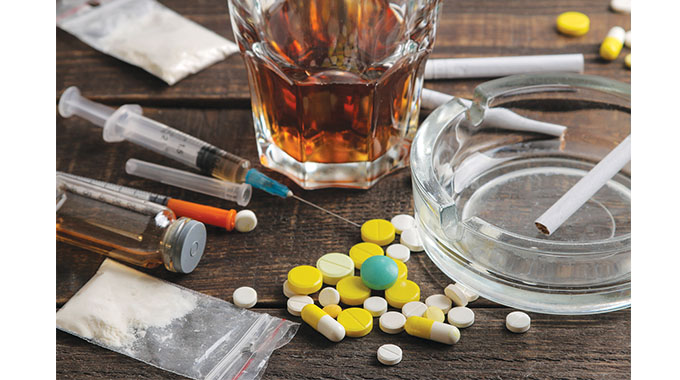
Mr Moyo said rehabilitation was crucial, as it was hard for people to overcome their addictions while at home.
“The substance abuse problem has different stages. You have experimentation, you have regular use, you have abuse and then you have addiction. For people that are abusers, people that are now at addiction level and are now totally dependent on their substance of abuse, it is not easy for them to start their rehabilitation journey from home or the same communities where they got used to the substance of abuse.
“There needs to be an isolation of some sort, a removal from the place where they have been struggling with their substance abuse problem. Secondly, there needs to be professional assistance, meaning that the things we do to help each other at home may no longer be enough because we are now talking about something that is at a disorder level. We are looking at social workers, we are looking at psychiatrists, clinical psychologists and medical doctors,” he said.
The clinical director at Ingutsheni Hospital, Dr Wellington Ranga said the establishment of rehabilitation centres will go a long way in the fight against drug and substance abuse. Ingutsheni has bore the brunt of the drug epidemic in Bulawayo, with the hospital announcing last year that 90 percent of its patients in the acute wards were admitted for alcohol and substance abuse, leading to overcrowding. Statistics from Active Youth Zimbabwe, a drug treatment and rehabilitation organisation show that the average age of substance use initiation is between 13 and 14 years old in the metropolitan province.
“Theoretically of course, this can go a long way in helping us confront this scourge that has taken hold of our society at present. The main problem is that people get these addictions while they are in wider society so, we have to go to the source of the problem and society. It would not help if we don’t fix the society that triggered their drug or alcohol addiction in the first place because at the end of the day, they are still going back to the same society after they have been rehabilitated. Rehabilitation centres are one of the many measures that are required for the drug problem to be fought and eradicated. So, in that sense, it is good news and should be lauded for what it intends to do,” he said.
However, Dr Ranga said there was still more work that needed to be done in wider society, as that is where the problem emanated from.


 Online Reporter