


 Chronicle Editor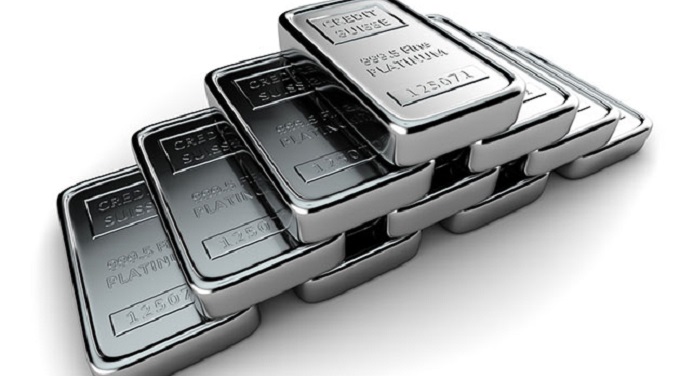
Stanford Chiwanga
ZIMBABWE’S reliance on exporting raw ores has cost the country dearly in terms of economic diversification and the much needed revenue flows to the fiscus. One mineral that Zimbabwe has lost out on is platinum – value addition in this mining sector has benefitted South Africa and the developed world and yet Zimbabwe, which has the second largest platinum reserves in the world, has little if anything to show for this rich endowment.
The country has the second largest known deposits of platinum group metals (PGMs) in the world with three mines operating namely Zimplats in Selous (Ngezi), Mimosa in Zvishavane; and Unki in Shurugwi. The three companies have more than 8 000 tonnes of PGM resources with Zimplats owning the majority of the reserves and resources (80 percent), followed by Unki (approximately 12 percent) and lastly Mimosa (8 percent).
A platinum mine produces 4Es which include platinum, palladium, gold and rhodium. However, copper, nickel and cobalt are the other by-products of PGM refining. The value addition process for the PGMs includes mining, concentration, smelting, converting and the converter matte which is exported to South Africa for refining.
Research shows the contribution of exports of various metals to Zimbabwe’s fiscus and these include, pearls, precious stones and metals (43 percent); nickel and articles thereof (26 percent); ores, slag and ash (20 percent) and Iron and Steel (8 percent). The high share of the pearls and precious metals is attributable to gold and PGMs export. The significant share of nickel and articles thereof is attributable to the production of refined nickel from Bindura Nickel Corporation (BNC) in Bindura and Empress Nickel Refinery in Kadoma.
There is however, great potential for the iron and steel industry which awaits the resuscitation of Ziscosteel. The export trends for metals and metal products for the period 2008-2012 shows there was significant growth in exports of pearls, precious metals and stones (from US$10 million to US$1,4 billion), nickel and articles thereof (from US$180 million to about US$500 million), ores, slag and ash (from US$120 million to just under US$400 million) and iron and steel (US$100 million to US$150 million). Export growth in the metals and metal products is very attractive and investment into expansion of projects in this sector has the potential to significantly improve the national economy. Thorough value chain analysis of precious metals, base metals and the ferrous group of metals is therefore critical.
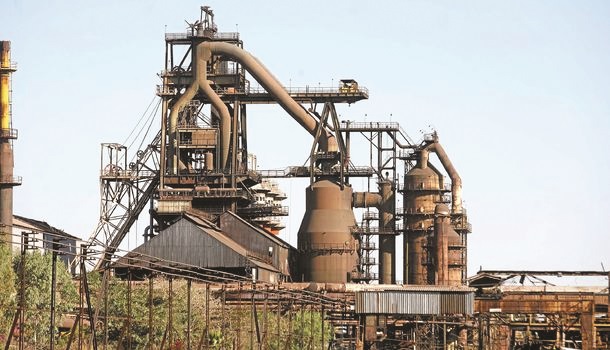
The Zimbabwe Economic Policy Analysis and Research Unit in a 2014 report entitled Engineering and metals industry value chain analysis gives a thorough analysis of the PGM mining and its by products and they note that the platinum-group metals (PGMs) are extremely scarce by comparison, to other precious metals, which is due both to their low natural abundance and to the complex processes required for their extraction and refining.
Relative to the other precious metals the PGMs have high technological properties which they possess. The six PGMs, ruthenium, rhodium, palladium, osmium, iridium, and platinum), together with gold and silver have been considered to be “precious” metals.
They are all sufficiently ductile and malleable to be drawn into wire, rolled into sheet or formed by spinning and sampling. Valuable for their resistance to corrosion and oxidation, high melting points, electrical conductivity, and catalytic activity, these elements have wide industrial applications. The major uses are found in the chemical, electrical, electronic, glass, and automotive industries. However, the application of platinum group metals in the automotive industry is fairly recent, resulting from emission-control legislation in the USA.
The primary inputs or raw materials for processing platinum group metals are: ore, milling consumables (steel balls), matte, oxygen, flotation reagents (frothers, collectors, modifiers, and regulators), smelting fluxes and other chemicals, and energy (coke, electricity and generators). PGMs are also obtained as by-products from nickel-copper refineries in Zimbabwe from the RioZim Empress Nickel Refinery, which treats matte from Botswana. The products from the extraction of the PGMs in Zimbabwe are PGMs concentrate which is a product from froth flotation, PGMs matte, a concentrate from smelting and PGMs by-product of base metal refining.

PGMs refining or separation of the metal elements is being done in South Africa. The mineral processing activities rely heavily on electricity to fuel the various energy requirements for mineral extraction and with Zimbabwe having some of the most expensive electricity relative to the region, production costs for most of the miners become higher in the country hence their preference to value add in South Africa.
According to Mr Munyaradzi Goremucheche, an expert in the mining sector, there are only three major companies that process PGMs in Zimbabwe.
“Of the three firms, two process up to a froth flotation concentrate, and export the concentrate to South Africa for smelting and refining. The other firm processes up to the converter matte, after smelting the froth flotation concentrate, and the company exports the converter matte to South Africa for refining to recover the metal products. All the companies therefore do not cover all functions of the value chain,” said Mr Goremucheche.
In order to evaluate the power dynamics in the value chain, it is necessary to study the three major PGMs processing companies in Zimbabwe. Zimplats, the major actor, is owned by Impala Platinum which owns more than 70 percent of the share. Mimosa is owned by Mimosa Investments of Mauritius, with links to Aquarius Platinum of South Africa, whilst Unki Mine is owned by Anglo American Platinum – there are multinational and regional companies. Therefore the PGM value chain is a global one cutting across continents and regions, with primary production occurring in Zimbabwe, secondary processing including refining taking place in South Africa and Europe, while much of the fabrication and end products are manufactured in Europe, North America and Asia, closer to the major end markets.
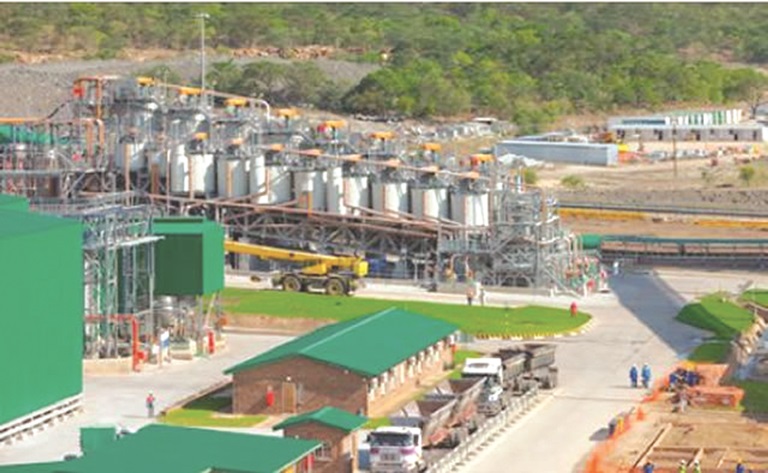
Regionally three mining companies in South Africa control more than 10 percent in the region’s PGM production namely Anglo Platinum, Impala Platinum and Lonmin. Anglo American is the major shareholder (75 percent) of Anglo Platinum, which produces 40 percent of world production. Additional players in the region include Northam, Aquarius Platinum and Barplats play less significant role while several junior exploration companies exist.
Globally, the PGM Industry is represented by the International Platinum Association, whose members include the largest mining companies such as Anglo Platinum, Norilsk Nickel and Impala, as well as downstream actors like BASF Catalysts LCC28 (USA/Germany), Ishifuku Metal Industry Co. Ltd. (Japan), Johnson Matthey Plc. (UK), Tanaka Kikinzoku Kogyo K K (Japan), UmiCore SA (Belgium) and W C Heraeus GmbH (Germany).
There exist three major channels through which mining and processing companies sell their products to downstream customers. Actors have direct supply contracts with fabricating companies, as well as with large end user companies, mainly car manufacturers. A portion of the supply was also sold through spot markets, like the London Platinum and Palladium Market and the Exchange Traded Funds of the Zurich Kantonal Bank in Switzerland.
The Anglo American Group and Johnson Matthey Company had a special marketing agreement where Johnson Matthey was responsible for marketing the Anglo Plats products. The major fabrication companies downstream of the supply chain are Johnson Matthey (UK), BASF (Germany/US), Tanaka (Japan), UmiCore SA (Belgium), Heraeus (Germany), Toyota Motor Company (Japan), Honda Motor Company (Japan).
“Since Zimbabwean’s PGM sector is owned by the major global players including Anglo American, it implies that the sector belongs to a global value chain. The setup is therefore quasi-hierarchical with buyers in developed countries influencing the quantity, quality and price of the goods. This therefore makes it near impossible for the Government to arm twist platinum miners to value add the PGM meaningfully locally so that employment can be created and revenue flows can be boosted to the fiscus,” said Mr Butler Tambo, a Policy Analyst who works for the Centre for Public Engagement.
However, this does not mean Zimbabwe cannot fully benefit from platinum. Opportunities for Zimbabwe exist through global PGM demand.
The Minister of Mines and Mining Development Winston Chitando admitted that Zimbabwe was not getting a fair share from platinum mining.
“There are many benefits that come with platinum mining but we do not realise them as a country because we largely concentrate on the extraction of the mineral for export. There is little or no value addition. Platinum is a special ore and we stand to reap huge rewards if we add value to it locally and as government we looking for ways and investors to achieve that,” said Minister Chitando.

There is a growing demand for platinum jewellery and Zimbabwe can add value to its platinum by manufacturing jewellery which will be sold as finished products in the global market. Platinum jewellery is in great demand in USA, China, Japan and Europe.
Zimbabwe can become a giant in the electronic sector as platinum is used in the magnetic layers of all hard disks and, to achieve higher data densities and faster access times, the levels used in the cobalt-based magnetic alloy continue to increase. With the proliferation of hard disk devices, such as recordable DVD players and personal digital music players, in addition to the more slowly growing established computer market, platinum usage rose by 20 percent in 2005 and this trend will increase in the foreseeable future.
Platinum is also used to manufacture glass and fibre glass and it is mostly used in Japan, Taiwan, China, South Korea, and Singapore to make high-quality glass which is used to meet the demand for flat-panel displays.
PGMs are also used in the petroleum refining industry. Strong global demand and tight supply have meant that petroleum refineries have been operating at or very close to capacity, so catalyst beds have been topped up more frequently. The future prospects for platinum in petroleum refining were reported to be stable, with the sector demand steadying at around 170 koz per year. Attempts at reducing the platinum (and ruthenium) content of the bi-metallic catalysts used in reforming petroleum have shown that a loss in catalyst performance can occur.
The Muzarabani oil drilling which will commence earnestly in 2020 will also benefit as the platinum will be used as a catalyst in refining the locally produced petroleum.
Zimbabwe should invest in the auto-catalyst as platinum has the potential to benefit the country in the medium to long term in this sector. ZEPARU in a 2014 report entitled Engineering and metals industry value chain analysis noted that the auto-catalyst sector is the most important end-user of PGMs. Increasingly stringent environmental legislation and the spread of regulation into more engine sectors globally have created a huge ongoing market for platinum, palladium and rhodium.
Platinum competes with palladium for use in gasoline-powered vehicles, while only platinum is suitable for diesel engine systems. Platinum alone has the properties to deliver the required performance under the lean-burn, low exhaust temperatures of the diesel engine exhaust. Sales of platinum-based diesel engine catalysts are steadily increasing as lower running costs make diesel vehicles a more popular car choice.

Looking ahead, tightening exhaust emission regulations worldwide for both light and heavy diesel engines will mean increased use of platinum-rich catalysts. Market penetration of diesel light vehicles in some parts of the world, notably North America, has been very low compared to that in Europe, but is expected to rise as fuel economy becomes a more important factor in car purchasing.
In a nutshell, Zimbabwe with 12 percent of the world’s platinum is under utilising its vast resource and stands to triple its growth pace if and when it starts not only mining but adding value to its platinum.



 Online Reporter
 Bongani Ndlovu