admin
admin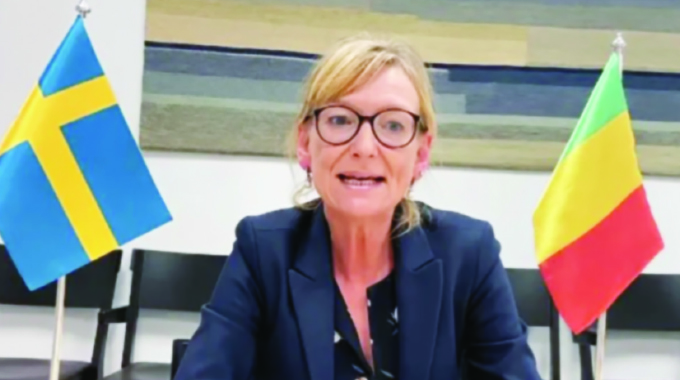
Isdore Guvamombe
Reflections
Since Africa attained its independence, albeit, mostly after protracted armed struggles that spilled a lot of blood, Western Europe did not stop thinking of more subtle ways to continue running their former colonies.
This is precisely the reason why Western countries have now abrogated themselves the right to declare elections in Africa free, fair or stolen: free when their preferred candidate wins and, stolen when a liberation movement wins.
Look at the trouble African countries led by liberation movements go through in every election from Zimbabwe to Namibia, South Africa and Mozambique.
This is not a coincidence. The plan to discredit and eventually delete liberation movements from earth is being perfected each day.
The threat is real.
I am deliberately not calling them former liberation movements like others do, because to me liberation is a continuous process.
Because of Africa’s vast untapped natural resources, there has emerged a serious agenda by Western countries and their allies to delete from earth all the remaining liberation movements.
African National Congress (ANC) of South Africa, Zanu PF of Zimbabwe, Revolutionary Front for the Liberation of Mozambique (Frelimo), South West Africa People’s Organisation (Swapo of Namibia), Chama Chamapinduzi of Tanzania, and Movement for the People’s Liberation of Angola (MPLA) are all targets.
In the Sahel region, there is a second liberation in Mali, Burkina Faso and Niger where they are fighting against peaceful political independence granted by France several decades ago to more meaningful wholesome independence. Today, Western countries are fighting to destroy those too.
But closer home, the last election in Mozambique is a good example of an orchestrated plan to get rid of Frelimo even after winning elections, which was fronted by Sweden.
The Swedish International Development Cooperation (SIDA) 2020-2026 Plan, presented to the Mozambican people as humanitarian, human rights promotion, development inspiring and people-centric project, was in fact a regime change agenda.
Everything was meant to cage Frelimo and oust it and give the pro-Western opposition power.
Democracy, good governance, accountability and other fancy trinkets mentioned in the document were a wrap of a simple smokescreen behind which regime change was hidden.
When the Mozambican election came, SIDA eventually and brazenly took a leading role with the support of Western countries and the US, and tried every trick to rig the election in favour of the opposition.
When it was clear the opposition was losing, SIDA housed the opposition at its embassy in Maputo, coordinated them, oiled their resistance machinery, and unleashed chaos.
Many people died. Many people were injured. Many businesses were burnt to ashes. Many cars were burnt. Homes were destroyed.
All this in the name of democracy?
SIDA committed a crime in Mozambique. SIDA is accountable for the disturbances and in my strongest option must be expelled from Mozambique to send the right message.
Look at the loss of life. Look at the loss of business. Look and the post-chaos infrastructure repairs now needed in Mozambique.
If you look at the SIDA project 2020-2026, it’s clear that it was well-crafted to cover the election period in Mozambique.
That this came to Mozambique on the heels of the Swedish Ambassador to Mali being expelled, tells stories about how Sweden has taken a leading role in destroying Africa’s liberation movements.
For the avoidance of doubt, Mali, Burkina Faso and Niger, are fighting a successful liberation war from the former colony, France, and Western countries are at the throats of those countries. They call it the second liberation.
Sweden’s Ambassador to Mali, Kristina Kuhnel, was ordered to leave the West African Sahel nation within 72 hours. Mali’s foreign ministry said it was because of what it called a “hostile” statement by a Swedish minister.
The diplomatic spat underscores the broader geopolitical shift occurring in the region as three states – Mali, Burkina Faso and Niger – are pivoting away from traditional Western allies towards Russia.
Sweden’s minister for international development cooperation and trade, Johan Forssell, said the government had decided to phase out aid to Mali due to its ties to Moscow.
“You cannot support Russia’s illegal war of aggression against Ukraine and at the same time receive several hundred million crowns each year in development aid,” Forssell said, commenting on a post on X, which said Mali was cutting ties with Ukraine.
Ruled by a new breed of politicians since 2020, Mali has been battling ethnic Tuareg rebels in its north after it cut military cooperation ties with Western powers, including European Union countries.
Recently, Mali cut diplomatic ties with Ukraine over a diplomat’s comments suggesting that Kyiv had provided help to Tuareg rebels who claimed to have killed at least 84 Russian Wagner mercenaries and 47 Malian soldiers.
Ukraine’s foreign ministry later said there was no evidence Kyiv had played any role in fighting and called Mali’s decision short-sighted and hasty.
Since then, relations between Mali, Niger and Burkina Faso and Western powers have deteriorated as the three turn to Russia for support.
Mozambique should follow suit and close the Swedish Embassy for its brazen participation in the elections of a sovereign state.
All liberation movements in Africa should, therefore, huddle and support each other, against this onslaught.
The right messages should be sent to all those Western countries who still have colonial hangovers and think Africa cannot decide its own destiny outside them.
Modern politics have taught us that we are equal, and we have options as to who we want to deal with and how.
In modern politics, Western countries are part of the global village that is a button away and options such the BRICS (Brazil, Russia, India, China and South Africa, plus others) are real options, politically, economically and socially.
Imagine how the BRICS family is growing with Belarus, Bolivia, Kazakhstan, Cuba, Malaysia, Thailand, Uganda, Uzbekistan, and Nigeria having joined by 2024.
One good thing about BRICs countries is that its member states are not tainted by past colonial misdemeanours and are mostly fair players seeking to do business with countries led by liberation movements without strings attached.
So, Sweden and its allies must know that Africa now has many options and that colonial hangovers must be a thing of the past. In fact, should Sweden continue to meddle in internal political affairs of African countries, it will see most of its diplomats being expelled.
No country is small anymore. Each country is as big as its friends.
Africa’s liberation movements should understand that in their unity of purpose, new friends and new thinking belies their survival.


 Online Reporter