


 Online Reporter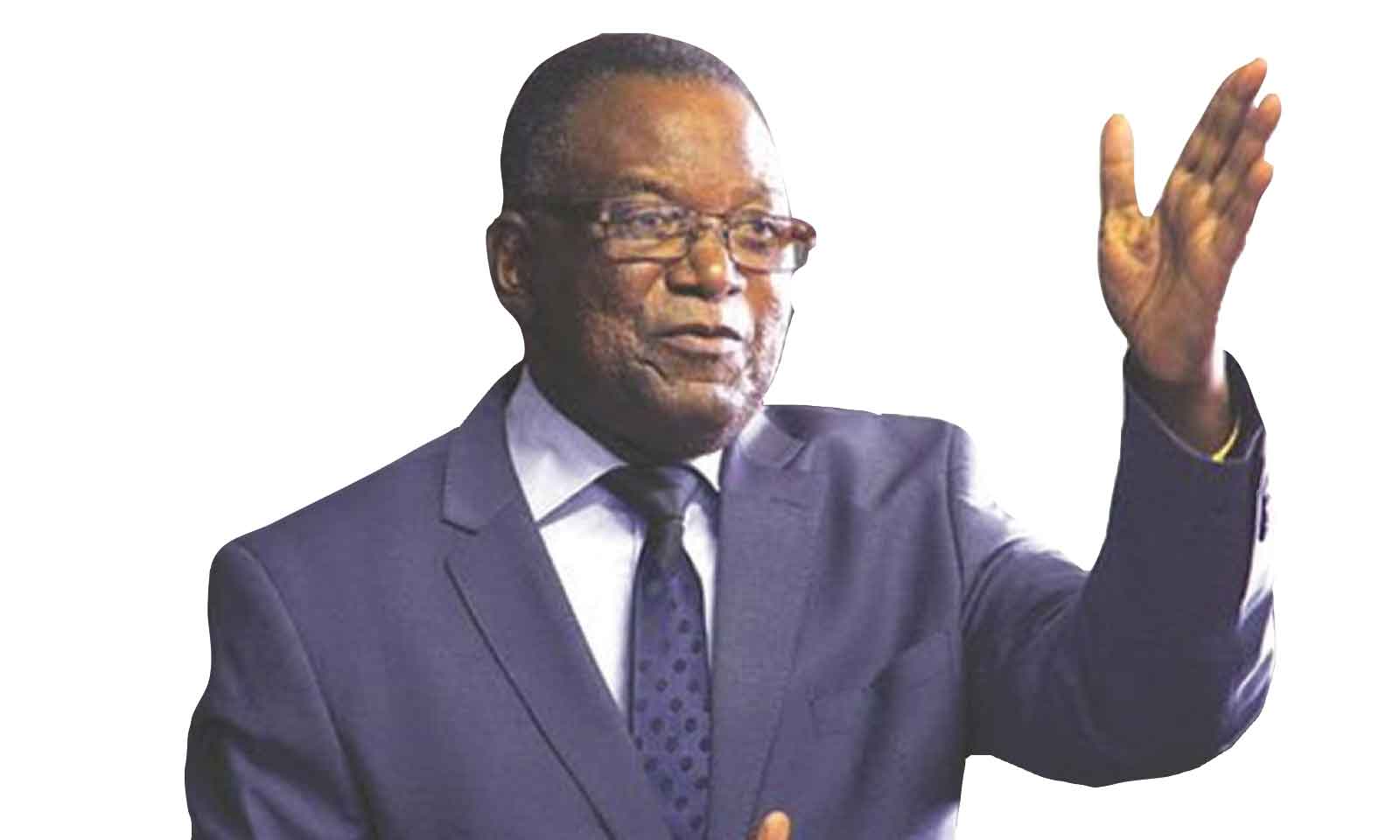
Over the past eight years, the Second Republic has embarked on numerous transformative projects across key sectors, including infrastructure, mining, energy and health, that are fundamentally reshaping the nation’s development trajectory. These initiatives are not only driving inclusive growth but also advancing Zimbabwe’s strategic goal of achieving upper middle-income status by 2030. Central to this effort is the rigorous monitoring of implementation. Special Adviser to the President Responsible for Monitoring Implementation of Government Programmes DR JORAM GUMBO has been visiting various projects countrywide to assess progress, address bottlenecks and ensure alignment with national targets. Our Senior Reporter ZVAMAIDA MURWIRA recently had a sit-down with him to gain insights into these projects and programmes. Below are excerpts from the interview.
*************
Q: Could you provide an overview of the key projects the Second Republic has undertaken since 2018 and their impact on ordinary citizens? Additionally, how do these projects align with the Government’s economic blueprint, the National Development Strategy 1 (NDS1), and support the transition towards National Development Strategy 2 (NDS2)?
A: Government has implemented more than 11 071 development projects across all sectors since 2018. To date, more than 9 000 projects have been completed.
The surge in the number of projects in 2025 under NDS1 can be attributed to it being the terminal year before the transition to NDS2, prompting Government and local authorities to accelerate project completion and secure results for reporting and evaluation.
Q: Could you provide a brief synopsis of key projects in some of the provinces?
A: In Bulawayo province, there was Bulawayo Khami Road construction that has improved connectivity between Bulawayo city and surrounding areas, reducing travel time and costs.
We also had the expansion of Ingwebu Breweries and development of the United Bulawayo Hospital’s water reservoir.
In Harare, there was the completion of the Trabablas Interchange; the Afreximbank Trade Centre is also under development, while rehabilitation work is ongoing at Parirenyatwa Group of Hospitals.
The Varun Beverages plant was expanded, while we also had big developments at the Geo Pomona plant.
In Manicaland, there was Taguta Stone Crushers, Allied Timbers, GMB (Grain Marketing Board) Mutare artificial intelligence-powered silos.
In Mashonaland Central province, we had the Eureka Gold Mine expansion and it is now targeting to produce 1,5 tonnes of gold.
Q: Were the specific needs of each province taken into account when planning and allocating these projects?
A: Yes, indeed. Looking at the projects under the Second Republic, they were spread across provinces. The distribution was meant to make sure that each project has an impact on the local population. The President instructed us through Cabinet to implement specific projects that are peculiar to a given district like Binga. We have had big projects in energy, education, tourism, transport and health, among others.
In transport, we have the Harare-Beitbridge road, refurbishment of Robert Gabriel Mugabe International Airport; the same with Joshua Nkomo in Bulawayo.
In agriculture, we are producing enough for us to consume and we have had surplus wheat, while tobacco production has reached record levels.
In agriculture, we have developed dams — Muchekeranwa, Kunzvi, Semwa, Vungu, Gwayi Shangani.
What is critical about these dams is that they are structured in a way to allow irrigation to ensure food security.
Q: What challenges has the Government encountered since the launch of these projects in 2018, and how have they been addressed?
A: There was Covid-19 which slowed down our implementation of projects. It slowed down our programmes. We also had economic challenges caused by sanctions, which means we had to do things on our own without borrowing from anyone. We could have done much better had there been no sanctions. There was also a challenge with inflation.
There were also natural disasters like Cyclone Idai that affected several communities.
Government had to move in to construct houses for affected people.
These were some of the challenges that slowed some of our projects.
But we also had successes. Remember, when the President was SADC (Southern African Development Community) chairperson, we came up with big improvements where state-of-the-art villas were built at the new Parliament building in Mt Hampden.
In essence, what is critical about these projects is that they were people-centric; they were meant to improve the lives of people.
Q: In your view, what reforms or improvements are needed in monitoring and evaluation systems to ensure these projects deliver maximum impact and output?
A: Like in any industry or sector, there is always room for improvement.
I have visited our embassies whenever I travel outside the country in the UK, Nigeria, Mozambique, Zambia, Tanzania. I have also visited liberation camps like Chimoio, Nyadzonya, Mkushi. What I discovered going out to see these places is that the underlying pressure that I found, or if I should say, the drawback about completing the works is finance.
We must have dedicated financing.
And if a budget has been made, it is supposed to be used on that one project; that project has to be finished.
So, I have seen some stalled projects, which continue to be considered for funding in the next financial year, because there has been lack of funds disbursement.
So, if disbursements can be aligned with the projects, then things would move.
That is where the problem is at the moment.
Q: One of the key vehicles for achieving national development goals — including the target of becoming an upper middle-income economy by 2030 — is timely enactment of legislation. However, many Bills have repeatedly failed to be concluded before parliamentary sessions are prorogued, causing them to lapse and delaying critical economic reforms. Often, the Executive is blamed for these delays. In your view, what concrete steps should be taken to accelerate the passage of Bills in Parliament and ensure legislative processes support, rather than hinder, our economic ambitions?
A: On the positive side, Government has created a very conducive environment for those who want to do business in Zimbabwe.
Not only through His Excellency’s open for business manta but also through legislation.
Government has moved in to remove some taxes that hindered investors. There were many regulatory requirements and levies that were required before one starts a business.
And that was a handicap. It actually doesn’t work well for investors.
If you want to open a grocery store, there are several taxes, levies, permits, health certificates and licences required. So, the Government has been looking at all these things in all sectors and some have already been removed.
You will find that each and every Tuesday when there is a Cabinet briefing, you are told during post-Cabinet briefing that some taxes and levies have been removed.
A statutory instrument is going to be gazetted to give effect to those Cabinet decisions.
But having said that, there is also a need for us as legislators or as Government and through Parliament to expedite Bills that are brought to Parliament.
The delays in passing Bills can be a hindrance to progress and the implementation of projects.
So, the President has made it clear to the Leader of Government Business to make sure that there is no delay in passing of Bills.
The stages that have to be followed in passing a Bill is also an area that has to be looked at so that there is speedy implementation of Bills that are brought to Parliament.
Q: Finally, as we begin implementing NDS2, what is your outlook for the next five years? What are the prospects for successfully achieving our national development objectives under this new strategic framework?
A: At each and every sitting of Cabinet there is always discussion on what we call 100-day cycle programme. This one compels all ministries to at least present five projects in 100 days, which they must do and finish. Some will have more depending on their portfolios.
We are now looking at NDS2 to refine what we have been doing because the aim has always been to get to 2030 with people living comfortable lives. The projects cover all sectors like agriculture, transport, health, energy. If you look at it, these are basic things that are required to change people’s lives.
That is what NDS2 is now going to do. We are now looking at refining everything — the laws; they have to be conducive for development.
The issues of tariffs, road infrastructure to make sure that farmers transport their products and so forth.
We need dams for irrigation . . . so people will do fishing to improve their lives.
Such projects are very critical for NDS2 to take us to Vision 2030.
We should get inspiration from former Cuban leader Fidel Castro, who said if you want to judge the level of people’s lives in any community, just go into the streets and you see what they put on, what they eat — do they put on shoes or they are barefooted, and so forth?
So, if we have got clean water and food, that is what we are talking about to improve people’s lives.



