Online Reporter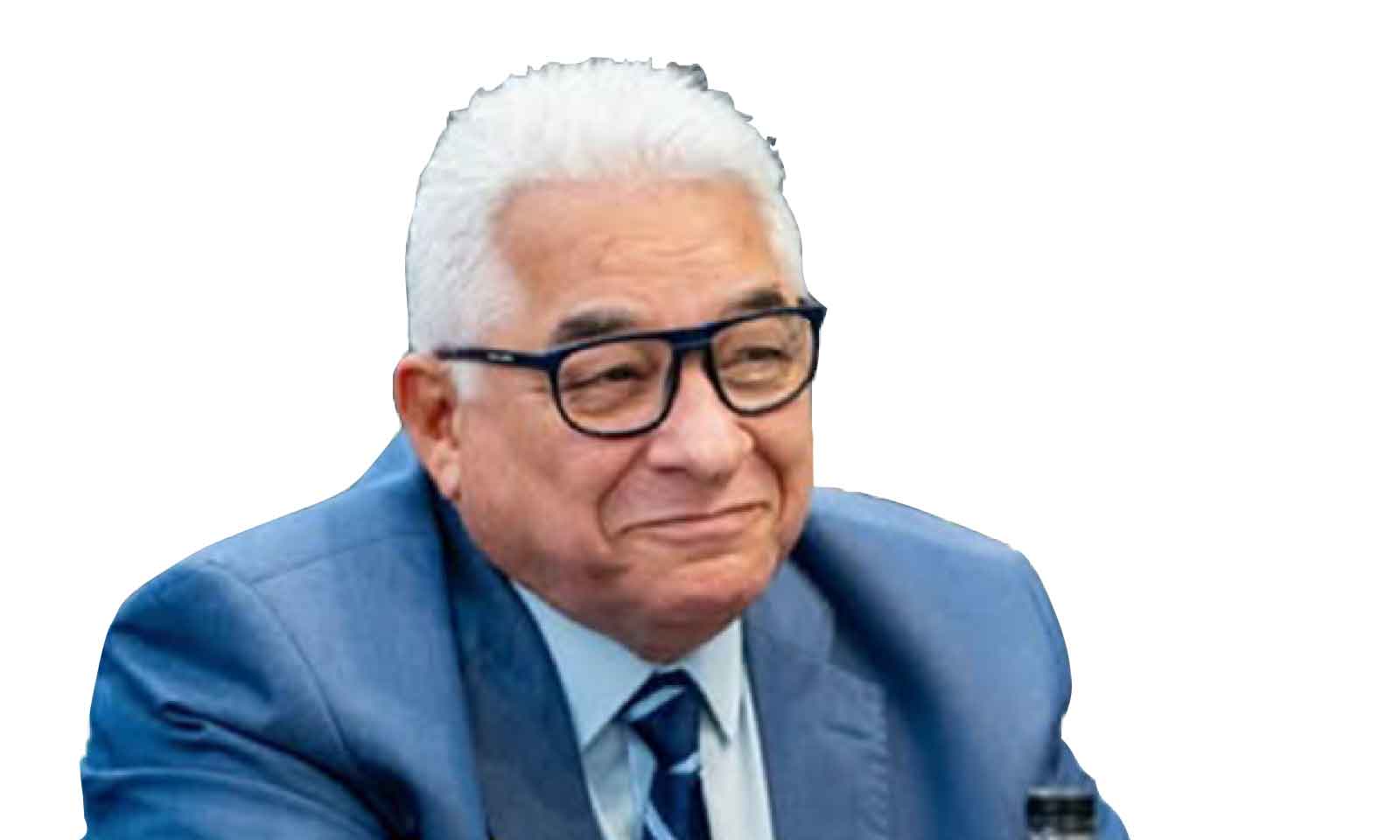
AN African Peer Review Mechanism (APRM) Targeted Review field mission to Zimbabwe, led by Ambassador Aly El-Hefny from Egypt, last week completed its assessment of the country’s progress in strengthening economic governance and aligning national reforms with Vision 2030 and the National Development Strategy 1 (NDS1). The APRM is a voluntary self-monitoring instrument adopted by African union (AU) member states to promote peer learning, good governance and accountability. It enables countries to evaluate their governance performance, share best practices and work collectively to address emerging challenges. The Sunday Mail’s NYORE MADZIANIKE spoke with AMBASSADOR EL-HEFNY after the conclusion of the mission, reflecting on his team’s observations, the country’s reform efforts and the broader significance of the review process.
*****************
Q: Can you begin by outlining the purpose of the African Peer Review Mechanism?
A: In the year 2002, our Heads of State and Government decided to create the African Peer Review Mechanism that we refer to as the APRM, meaning it has been there for over 20 years. In 2022, we celebrated its 20th anniversary, so it has now been 23 years since we have been in business through that mechanism.
It is one of many of the African mechanisms that deal with one of the most important issues that is of priority to Africans, which is development.
Development cannot be implemented or realised without giving special attention to governance.
When we talk of governance, we mean governance in all walks of life; in all the disciplines and all its aspects.
This encompasses performance of the state, the government, its departments, agencies, the private sector, the academia, think tanks, civil society organisations, the youth and women. It is structured as follows: We have, first, the summit, which is composed of Heads of State and Government of all members of the APRM.
Presently, we have 44 countries under the APRM. We still have 10 more countries to go.
It is a voluntary mechanism.
It is important to highlight that it is up to individual nations to subject themselves to the review exercise, with the objective of improving all aspects of governance in the country.
Q: What motivates countries to subject themselves to the mechanism?
A: Zimbabwe joined the APRM in 2020. And this is something that we appreciated very much.
In 2022, Zimbabwe’s national structure of governance was created, allowing for visits to the country under the APRM. In fact, this is the third visit of the APRM to Zimbabwe. I myself came here in 2023 and this is my second visit.
As I was saying, it is up to the individual governments to decide whether to undergo an overall assessment of governance in the country, or what we call targeted reviews.
Under the mechanism, you target a certain theme or sector that is of priority, which you would like to undergo review. This time we are coming to Zimbabwe to assess the situation as far as the economic governance and management is concerned. This is the objective of our mission here.
Q: How would you describe your interactions with the Government, its departments and other stakeholders?
A: For us, we came to learn more about Zimbabwe. Zimbabweans know about Zimbabwe much more than we do.
The whole team is African — from Egypt; one from Rwanda; two from Kenya; and another two from the DRC (Democratic Republic of Congo).
Within that delegation, we also have international consultants. It is the tradition to assign a national consultant from the visited country.
So, the mission was composed of seven persons.
We learned a lot; and we gathered a lot of data in order to have broad insights.
We provided stakeholders with questionnaires, interacted personally with them, asked them certain questions to understand and learn more about what is happening in Zimbabwe; what happened; where Zimbabwe is going; where it wishes to go.
It was a very inclusive exercise, bearing in mind the devolution policy proclaimed by the State.
It was very important to learn more about this decentralisation system here in Zimbabwe, and to see its implementation mechanisms, how it is going and how it could be done better.
So, after the exercise, it will be important to highlight what we have observed — the findings we would have collected — but, at the same time, we will provide recommendations as experts to be put to the attention of the Government later on.
Q: During your interactions, was the public aware or appreciative of your visit and the purpose of the targeted review?
A: The public was a bit perplexed when we told them that we represent the APRM.
It was their first time to know about the APRM …
So, we had an exercise of explaining our mission, objectives and what we aim to achieve during our stay here in Zimbabwe. But the response of the public was exemplary; it was fantastic. We had wonderful interactions — very frank and straightforward.
We found them engaged, willing to engage even further with our mission.
And this is how we learned a lot. But let me tell you something we have all observed as members of this mission, that there is a great account of consentient (agreement) and that the people are happy.
Since the inception of the Second Republic, they have sensed that there is a difference, and that there will even be a bigger difference going forward, and it will have a wonderful impact on the standard of living of Zimbabweans.
They appreciate very much the clear vision of His Excellency, the President, and they appreciate also the devolution agenda, because it provides them with the opportunity to be active players, principled players in the building up of the economy of the country.
We have interacted with everybody that you can imagine — traditional leaders, religious leaders, women, the youth, the private sector, small and medium enterprises, the chamber of commerce.
We didn’t leave anybody, even the Reserve Bank.
And we have collected a lot of data that we are going to highlight in a report that we will be drafting at the APRM.
It will be discussed between the APRM and the different departments here in the Government in such a way that at a later stage we are going to submit a report to His Excellency, President Mnangagwa, who will submit it to the summit in February next year in Addis Ababa — that is, the summit of governments of member countries of the APRM. And then it will go one level higher — the Assembly of the African Union.
Q: In what ways does your visit complement or relate to other peer member states within the APRM framework?
A: Wonderful! You have asked the right question because it gets to the heart of what “peer review” truly means.
The APRM is built on mutual learning among African nations.
When a country undergoes review, its report isn’t kept in isolation; it’s shared with fellow member states so that we can all learn from one another, both from successes and from challenges.
Zimbabwe’s experience in governance and public administration will, for the first time, be formally documented and shared with the continent through the APRM country review report, which we expect to finalise in February next year.
During our visits to Harare and all the 10 provinces, we engaged widely with citizens, civil society, private sector actors and Government officials.
We consistently reminded participants: Your voices matter.
If you see gaps or negative practices in how policies, especially economic and development policies, are implemented, speak up. No country is perfect. Every nation, without exception, faces shortcomings in its governance systems.
What sets leaders apart is their willingness to acknowledge those gaps and improve.
The Government subjected itself in full transparency to that exercise, because it knows that it is in the interest of Zimbabwe and in the interest of the Zimbabwean people.
Now, the idea of sharing the experience is very important in our work as APRM.
There will be always a need to reproduce such an exercise in other sectors, in such a way that bit by bit, the year after the other, you cover all areas you see as priorities.
Q: How do you relate your experiences in Zimbabwe with those in other countries that underwent the same assessment?
A: The case of Zimbabwe is unique. It’s not to be compared to the cases of other countries.
This mission is unique compared to the other missions.
I myself, I have been to four other countries; this is my fifth country.
But here in Zimbabwe, we are dealing with a case of a country that has been subjected and is still subjected to international sanctions.
So, everybody wants to know — How are you doing nowadays with those sanctions?
And how did you succeed?
What is the whole philosophy behind the success; your success in advancing the cause of development in the country in spite of those sanctions?
Bearing in mind that the Government of Zimbabwe counted on itself and wishes to become a more independent country, having an independent economy; a self-sufficient country that does not count on others that much.
Of course, we have partners; we all have partners.
You cannot do without the partners.
But I am saying Zimbabwe didn’t go to the IMF (International Monetary Fund) to ask for loans, or the World Bank.
It has decided to play its own way, along with the partners of the country.
It has succeeded in implanting industries in the country, in providing job opportunities, encouraging and creating good use of the environment for the small and medium enterprises, and incentives to all investors — local investors and foreign investors.
It has, through the devolution scheme, provided an environment which is much better for the youth, for women, for all sectors of the society.
And I was really very happy and proud when I heard some of the stakeholders saying the situation before the Second Republic was something, and nowadays it’s something else, because there is more focus on the economy and on development.
The State, particularly with the arrival of President Mnangagwa, decided not to keep on mourning about sanctions.
The sanctions are there, but one day they will be removed.
But it doesn’t mean you shouldn’t give the first, and second, and third priority to development.
You want to uplift the standard of living of Zimbabweans, to raise the salaries, to provide better education.
And talking about education, we were completely surprised when we visited some universities where there are innovation hubs — we saw what the country is capable of creating: new innovations. The universities are doing great.
The University of Zimbabwe is doing great.
Q: How do you rate your experience in Zimbabwe?
A: It has been a very successful experience.
When I arrived in Zimbabwe this time, I came with certain preconceptions, but those have completely changed after travelling to different regions and engaging with as many people as possible.
I have gained a much clearer understanding of the Government’s policies and the strong emphasis on encouraging both local and foreign investment.
I have also seen first-hand the many development projects underway, whether it’s road construction, efforts to empower communities or the strengthening of border control systems, particularly along the Zimbabwe-South Africa corridor.
The level of commitment to national transformation is evident, and it’s clear that Zimbabwe is actively building the foundations for sustainable growth and stability.
Zimbabweans have every right to feel proud and I am confident that this pride will only deepen in the years ahead, provided the State continues on its current path of inclusive governance.
What we have witnessed is a national effort that leaves no one behind, with transformative projects across every province, from the Midlands to the north, the south and beyond.
Indeed, we have seen remarkable initiatives already implemented, others underway and more in the pipeline — each one advancing the cause of sustainable development and improving lives.
These efforts benefit not only the people of Zimbabwe, but also serve as a valuable reference for other African nations.
Academics, policymakers and research institutions across the continent are keenly studying Zimbabwe’s experience.
Over the past eight years in particular, Zimbabwe has demonstrated extraordinary resilience and resolve.
Despite enduring unilateral sanctions for more than two decades, the country has refused to stand still.
Instead, it has shown unwavering political will, bold leadership and a spirit of innovation that is turning economic challenges into opportunities.
I do not come here to offer advice; Zimbabwe knows its priorities better than anyone else.
From the President and the Government to civil society and ordinary citizens, there is a clear understanding of what must be done.
What we have observed has not only deepened our understanding of Zimbabwe’s journey; it has filled us with genuine admiration.