Online Reporter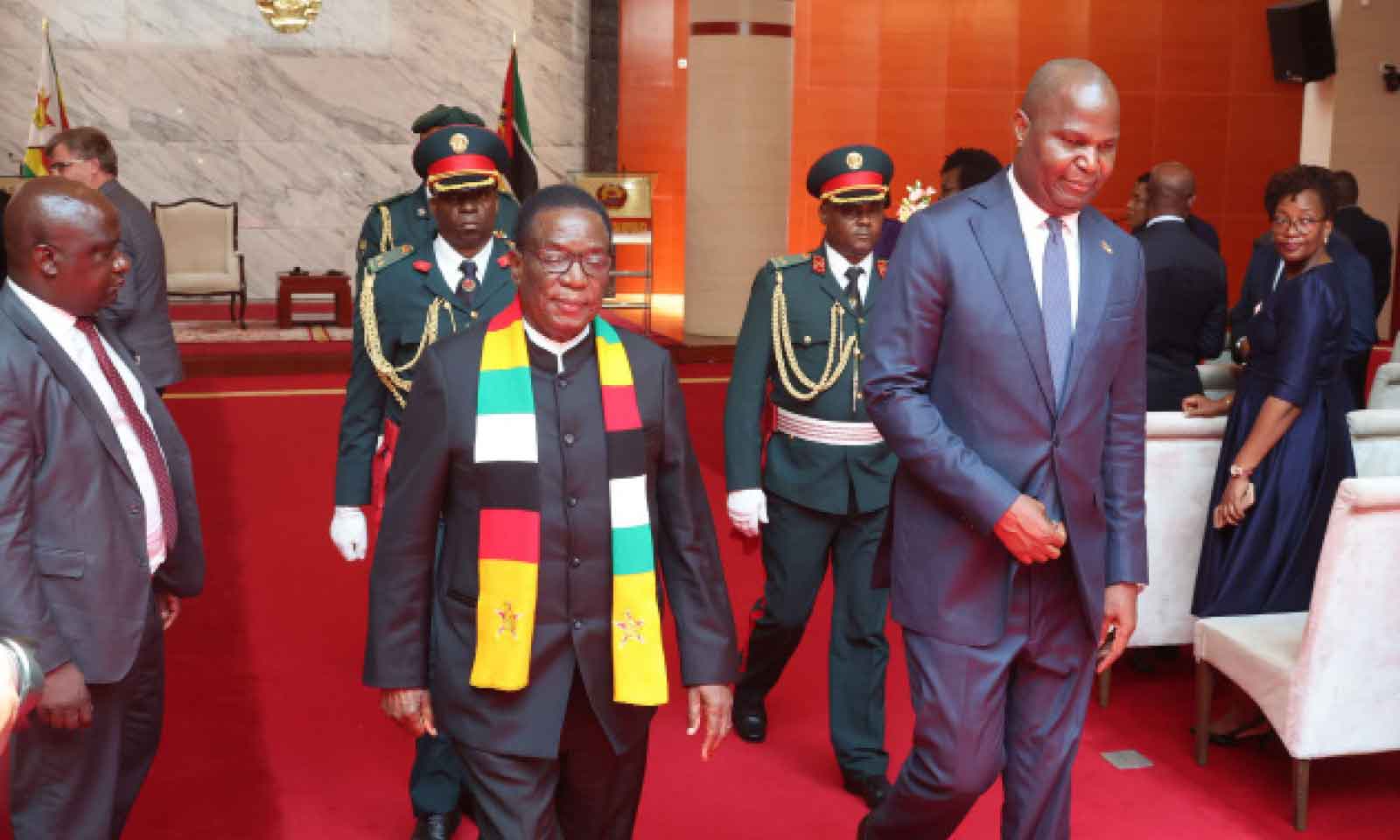
Gibson Mhaka
THE long-standing, cordial relations between Zimbabwe and Mozambique, rooted in the liberation struggle and centuries of exchange along vital corridors like Beira and Maputo, were yesterday enhanced and elevated to the Bi-National Commission (BNC) level, from the Joint Permanent Commission on Co-operation (JPCC).
This historic move, concluded in Maputo between President Mnangagwa and his Mozambican counterpart, President Daniel Chapo, marks a new chapter in a relationship already cemented by strong historical and economic ties.
Economic importance and growth trajectory
Mozambique stands as Zimbabwe’s fourth-largest trading partner, with bilateral trade between the two countries consistently on an upward trajectory.
Last year, trade volumes were significant, with Harare exporting goods worth approximately US$486,6 million (primarily fertilisers and mineral products) and Maputo exporting goods valued at about US$113,82 million (chiefly mineral fuels, oils and cereals).
Despite this substantial growth, both countries recognise there is ample scope to stimulate further growth in their bilateral trade relations.
This burgeoning relationship is driven by a combination of strategic geographical location, favourable trade policies and a growing demand for goods and services.
The elevation to the BNC level, which occurred on Friday, is described as a new dawn for Zimbabwe-Mozambique relations.
A BNC is the highest-level of formal agreement between two countries, aimed at strengthening and deepening bilateral relations through structured co-operation, often involving Heads of State.
The move, which comes shortly after Zimbabwe elevated its relations with Zambia to BNC status last week, signifies a commitment to enhancing cooperation in vital areas such as trade, infrastructure and regional development.
Key agreements and infrastructure focus
The event in Maputo yesterday saw the signing of several key agreements, including those focused on agriculture and food security.
To broaden trade, Zimbabwe put forward a proposal for the formalisation of several border posts, including Sango, Mount Selinda, Cashel and Chitompo, to become commercial exit and entry points within the next four months.
This measure aims to decongest the heavily used Forbes and Nyamapanda border posts.
Presidential vision for BNC-led co-operation
Speaking after his arrival, President Mnangagwa said he was in Mozambique to “strengthen co-operation” with the neighbouring country and was honoured to be undertaking his first State visit following President Chapo’s inauguration.
“These engagements, among other numerous high-level exchange visits, attest to the strong fraternal and intertwined nature of the relations between our two countries, in the quest to accelerate shared development and prosperity for our peoples,” said President Mnangagwa.
He appreciated the timely decision to convene the inaugural BNC session.
“I appreciate your timely decision to convene the inaugural Session of our Bi-National Commission (BNC), which reflects your commitment to strengthening and deepening the multi-pronged relations between Zimbabwe and Mozambique,” he said.
“Our co-operation framework under the BNC provides the opportunity for the two of us, Your Excellency, to lead from the front as we drive and supervise the implementation of our joint projects and programmes.”
President Chapo similarly remarked that there were numerous projects the two countries could undertake together, particularly in energy and infrastructure.
Zimbabwe’s Ambassador to Mozambique, Dr Victor Matemadanda, reinforced the crucial significance of the elevation.
“This has been my aim from the time that I came here. We are excited that we have been able, finally, to put this relationship at that level. It’s quite a milestone,” he said.
“It’s good to say for the first time, we are agreeing on almost everything, which has not been the way in the past years.”
The commitment to agriculture saw the two countries signing a memorandum of understanding (MoU) to enhance food production, utilising Mozambique’s extensive land and water resources.
Significance of the diplomatic shift
The elevation of relations with Mozambique to a BNC level, following the recent move with Zambia, is of paramount importance to both nations and represents a coherent foreign policy strategy by Zimbabwe to reinforce its bilateral mechanisms across the region. This move signifies a deepening of political trust and commitment at the highest level.
By placing the relationship under the direct purview of the two Heads of State, it allows for the alignment of long-term strategic interests, not just operational trade issues.
This high-level political buy-in is critical for fast-tracking major infrastructure projects that require shared commitment and significant capital, particularly concerning the vital transport and energy corridors (like the Beira corridor) that are essential for Zimbabwe’s imports and exports.
Furthermore, the BNC institutionalises a coordinated strategic approach to regional security and economic development within SADC.
Given Mozambique’s ongoing security challenges in its northern provinces, a high-level security framework is vital for regional stability, which directly impacts Zimbabwe’s supply chains and border management.
Economically, the BNC provides the optimal platform to implement trade formalisation proposals and MoUs, ensuring that the agreed-upon goals directly contribute to Zimbabwe’s Vision 2030 and Mozambique’s economic objectives, truly making the relationship a strategic pillar for both countries.
BNC: Translating goodwill into tangible benefits
President Mnangagwa previously emphasised that these high-level forums are crucial for unlocking regional prosperity and integrating economies, reflecting the Government’s foreign policy drive.
“The move is in line with my Government’s foreign policy thrust of re-engagement and engagement for the betterment of the lives of our people,” President Mnangagwa stated during the signing ceremony with his Zambian counterpart Mr Hakainde Hichilema in Harare.
He affirmed that the BNC would translate political goodwill into tangible economic benefits.
“The establishment of the Bi-National Commission will foster high-level political engagement which will culminate in the deepening of bilateral, trade and economic relations between our two countries and people,” said President Mnangagwa.
“I have no doubt that our two countries will use this mechanism to push for the implementation of outstanding agreements and co-operation instruments for mutual benefit.”
In Mozambique, Presidents Mnangagwa and Chapo reviewed progress on strategic energy cooperation, including the upgrade of the pipeline from Beira to Harare.
They also expressed the need for collaboration in improving the logistics of petroleum products movement in order to reduce demurrages that cost the economies of both countries, according to a communique.
“They called for cooperation in renewable energy, including other sources of energy.
“The Presidents expressed concern over the security challenges in the region, including extremist violence in the northern province of Cabo Delgado in Mozambique and other areas of instability on the continent and in the world. They reaffirmed the need for coordinated and solidarity-based responses to promote security and regional stabilisation within the context of SADC and the AU (African Union,” read the communique.
The leaders reaffirmed the importance of intensifying partnerships in political, defence and security sectors, and called for the regular convening of the Joint Permanent Commission on Defence and Security.
A call for the facilitation of special documentation for the inhabitants of border communities for ease of movement between both countries was also made.
In addition, Presidents Mnangagwa and Chapo emphasised the importance of cooperation in war veteran affairs and instructed the consolidation, rehabilitation and maintenance of liberation war shrines, museums and monuments for the preservation of history and heritage.
After the BNC, President Mnangagwa laid a wreath on the Tomb of the Unknown Soldier at Mozambique’s National Heroes Acre.
He also placed flowers on tombs of other heroes such as Samora Machel and Eduardo Mondlane.
In an interview afterwards, the President reminded the youth to always remember that their countries’ independence did not come on a silver platter.
After that, President Mnangagwa went to MozParks, which is the biggest industrial park and free-trade zone in Mozambique.
He had occasion to see how one of the companies, Falcon Steel, makes its products.
It is clear that the elevation of relations with Mozambique to the BNC level, following the recent move with Zambia, strongly reinforces Zimbabwe’s regional strategy by institutionalising strategic cooperation at the Presidential level.
It guarantees high-level political commitment to fast-track crucial economic and security agreements and cements Zimbabwe’s role in advancing SADC’s regional integration and economic prosperity, ultimately ensuring that the deep historical ties translate into tangible, accelerated benefits for both nations’ futures.