admin
admin
Daniel Nemukuyu Senior Court Reporter
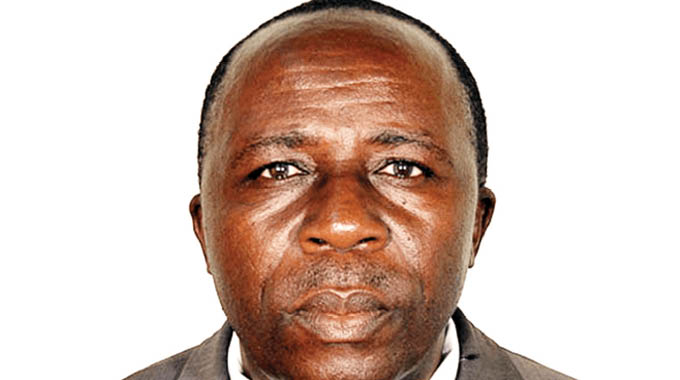
ATTORNEY-General Advocate Prince Machaya yesterday said there was no room for infiltration in his office and that his officers filed some affidavits at the High Court, including that of the first respondent, Chief Superintendent Newbert Saunyama, to back the Statutory Instrument 101A of 2016 banning street demonstrations in Harare’s central business district.
As such, Adv Machaya said his office would soon challenge the High Court’s decision provisionally invalidating the Statutory Instrument.
Justice Priscilla Chigumba on Wednesday declared unconstitutional the SI used to ban street demonstrations or processions from September 2 to 16 this year.
She, however, gave Government up to seven working days to rectify the defects inherrent in the publication of SI 101A.
Read more:
- Police ban axes, demonstrations
- Demo case: State scores own goal
- UPDATED: Demo ban provisionally suspended
Police chief spokesperson Senior Assistant Commissioner Charity Charamba, yesterday said the police supplied all the information that was requested by the AG.
“The Zimbabwe Republic Police through our legal services department compiled the relevant affidavits as follows, Regulatory Authority (Chief Superintendent Saunyama), Nhamo Mbeure, manager at Choppies Supermarket, which was looted, Alexio Mudzengere, chairman of Grassroots Flea Markets, where goods where burnt, Bhuabhai Ramabhai Bhagai, owner of Nargaji‘s shop, which was destroyed and goods worth $76 000 looted and a police officer who was driving a Ford Ranger that was burnt. All the mentioned affidavits were given to Mr Magadure representing the State on the 6th of September 2016, before the next court sitting,” she said.
Said Adv Machaya: “Chief Superintendent Newbert Saunyama (Officer Commanding Harare District)’s affidavit was filed at the High Court on September 7, as you can see. The other two affidavits were totally unhelpful and could not take our case any further. We exercised our discretion not to use them.”
Adv Machaya dispelled concerns that his office may have been infiltrated by fifth columnists throwing spanners into State cases saying there was no room for people with sinister agendas.
“The people we employ here are professionals who perform their duties in terms of the law. There is no room or possibility of infiltration by other forces,” he said.
Adv Machaya showed The Herald a stamped copy of an affidavit by Chief Sup Saunyama, putting to rest allegations that his office had not filed the crucial document at the High Court.
He said although the interim order of the court effectively confirmed the police’s two-week ban on demonstrations, his office intended to challenge the invalidation of the SI.
Between now and September 16 when the one-week grace period expires, no one is allowed to hold a demonstration in Harare Central Police District.
The one-week grace period coincidentally expires at the same time with the contested two-week police ban.
Adv Machaya said: “We are not happy with the finding that SI 101A of 2016 is invalid. We intend to appeal at an appropriate time.
“We are also not happy with the dismissal of our objections in the matter and we are considering to file an appeal soon.”
In an interview, Adv Machaya said the judge, in arriving at her decision, was misled into relying on a section of the Public Order and Security Act that was repealed a decade ago.
“Reference to Section 12 of Posa in the court order is incorrect because that section was repealed some 10 years (ago). Such reference as it appears on paragraphs 2 and 3 of the interim order is not helpful at all.
“In papers prepared by Mr Tendai Biti, Section 12 of Posa was cited several times and maybe the judge was misled into considering it as a valid law,” said Adv Machaya.
One of the four preliminary objections dismissed by the court was an argument that in terms of Section 27B of POSA, any challenges against legal instruments mooted by local police are heard by a magistrate and not a judge.
“In terms of Section 27B, the aggrieved party approaches the magistrates’ court and not the High Court. “We argued that the High Court had no jurisdiction to hear the case but that was dismissed,” he said.


 Online Reporter