admin
admin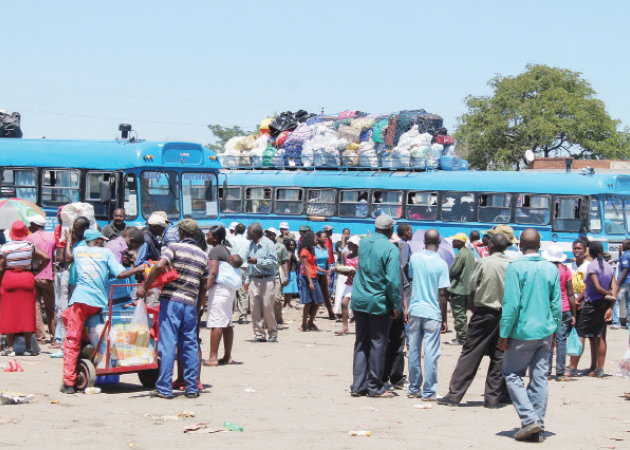

Martin Stobart
A few weeks ago, police issued a statement urging members of the public to report cases of overcharging of fares by public transport operators. This plea has become an annual refrain if not a ritual. It is a vain plea which, in the opinion of this writer, has become ad nauseum. Whose onus is it, actually, to report to the police cases of peak period overcharging?
The police details are strategically deployed on the roads not only at check points but also to mount roadblocks 365 days per year. They know, or they should know better than the travelling public what is happening on the roads. We know as the public, that they are only interested in “drivers’ licence baba” and “pakai apo.”
Almost without exception the driver and conductor come back to their vehicle displaying broad smiles stretching from ear-to-ear. All too often we observe the conductor frisking himself looking for goodness-knows-what!
As curious travellers we know what transpires between the police and the bus/kombi crews. The issue of overcharging is never an issue with police. The police never ask the passengers about the fares from departure point to destination.
The police should not pass the buck. For the public to assist, the police themselves should take the initiative so as to show they (police) are serious and mean business as indeed it is their business to protect the public from being the vulnerable victims of unscrupulous public transporters whose sole purpose is to profiteer using peak periods as a means to rob the travelling public.
This writer observes things as and when they happen. Let me explain. On 20 December 2013, we boarded a Victoria Falls-bound luxury coach. As is the company’s custom, just a few kilometres outside Bulawayo a member of the staff began to sermonise the passengers. He kept asking us to respond to his preaching by saying Hallelujah! Can someone please volunteer a prayer, Hallelujah! Quick as a wink someone prayed. After that the wily staffer let rip a shocker.
“God’s people as you well know that the festive season is upon us. It is peak period and many people are keen to travel to various places in the country to see their beloved ones. It is for this reason that the company has decided to increase its fares,” the staffer said.
He tried in vain to coax a response from the shocked passengers. He got none. You could hear a pin drop. This writer, ever sceptical about people who use the name of God to achieve their worldly goals, chuckled teasingly. The hallelujahs by the passengers and the volunteered prayer were clearly in vain.
Now, let me digress to a new tack and explain the purpose and the disadvantages of this “peak period” thing. The hiking of fares at peak periods has always been misapplied in Zimbabwe. It is an evil. It is a bad business ethic, if it is an ethic at all. It is an unfair business practice in that it is a means by which businesses pounce on the unsuspecting public. The hiking of rates at peak periods is cowardly and undemocratic in the strictest sense of the word. Essentially, this kind of fare increase was designed as punishment for unethical and speculative business practices.
In Zimbabwe perhaps as in many other developing countries of the so-called Third World, the Government has continued to allow some parastatals and private companies such as communications operators to impose peak period rates on their customers in an arbitrary manner. This is an unfair business practice. Now, let us be clear as to what we mean by the above.
There are terminologies we employ in many spheres and professions. In the case of Zimbabweans about 95 percent of their daily needs that are requisite to sustain their lives hinges on what is termed “force mode”’ as opposed to “choice mode.” This is to say that the things we do and/as engage in to sustain our lives on a daily basis are imposed on us by socio-economic circumstances or by the scale of economics as they say.
It has been said umpteen times by transport and communications companies that peak period rates are necessary as they are a means to decongest the lines and the trains, or, the system. This is a whole lot of nonsense. In fact what these companies are doing is to deny the public its inalienable right to travel and communicate. Some people (read workers) travel once a year or once a month to see families and their budget is tailored to meet this imperative.
The peak period high fares erode further their scanty budgets. We know that the peak period increases the volume of traffic or freight to be moved. This means that the company is making more money already and when it hikes rates during holidays or at prescribed hours of the day, it is profiteering. Not only that, the company is, by the imposition of peak period rates and tariffs, denying the public the right to communicate or travel.
Hence I have said above that 95 percent of Zimbabwe’s population lives a force-mode existence; what we eat; the means by which we travel; the time at which we commence work, and dismiss and the time we retire to bed, all these factors are force mode. They curtail our personal rights and divest us of all our freedoms and liberties.
What the police should do when they stop a vehicle, public or private, as long as there is a reasonable suspicion that there are fare paying persons in it, is to ask the passengers how much they have paid to their destination instead of asking the driver to accompany the officer to the table under the tree. This is not to suggest that private vehicles must not give lifts to travellers. These people help us the public a lot. We depend on them. However, they are into overcharging as well.
The point I am making here is simply that instead of increasing fares and rates at peak periods as a means of maximising profits, the transporters should increase vehicles on the roads. President Mugabe put in place a Government to serve the people of Zimbabwe without let or hindrance. These ministries are the arms, ears and eyes of the State and each one has a burden and sacrosanct duty to protect all Zimbabweans from unfair practices by corrupt businesses.



 Online Reporter