admin
admin
Herald Reporter
Policy measures recently put in place by the Government and the Reserve Bank of Zimbabwe (RBZ) to stabilise the economy and overcome the rapid rise in prices pushed by falling value of the Zimbabwe dollar have worked as month-on-month inflation, which peaked at 74,5 percent last month fell dramatically to minus 15,3 percent this month as prices started falling significantly.
This fall and the negative inflation that resulted, was led by huge falls in the prices of fresh foods and prices of fast moving items such as maize-meal, the items where the overhang of stocks bought when the US dollar was a lot more expensive, do not apply.
As most other categories saw prices remain roughly constant, monthly inflation is likely to remain negative for a while as these stocks are liquidated and replaced by cheaper one.
Annual inflation, which only records what happened and gives no indication of what is happening, fell from 175,8 percent last month to 101.3 percent this month, but spikes in the second quarter of last year and this year can keep this measurement on the high side while monthly inflation goes through several months of negative rates.
In an update after its meeting yesterday, the Monetary Policy Committee of the RBZ said a review of the effectiveness of the recent policy measures showed a very positive outcome with a significant drop in inflation.
“The MPC expressed satisfaction with the impact of the measures which have stabilised the exchange rate and domestic prices. It expects month-on-month inflation to continue to decline in the outlook period to December 2023.
“The MPC also noted that economic fundamentals are strong to sustain the current stability, as reflected by the robust economic growth of 5.3 percent expected this year, a favourable balance of payments position, that is more foreign currency flowing in than flowing out, and fiscal sustainability,” said the RBZ.
The strong economic fundamentals, coupled with stability in prices, would be critical in preserving the value of the domestic currency and enhancing confidence in the economy.
In view of the current positive inflation and exchange rate developments, the Monetary Police Committee resolved to stay the course with the current tight monetary policy and allow time for the current measures to take the full course of their impact on the dual currency economy.
“The MPC is strongly committed to remaining watchful of any potential shocks and putting in place appropriate safeguard measures to ensure that the economy remains on track to achieving price and exchange rate stability to support the strong economic fundamentals.”
“The MPC will continue to review monetary policy measures on a regular basis in line with month-on-month inflation developments and monetary conditions,” said the Reserve Bank.
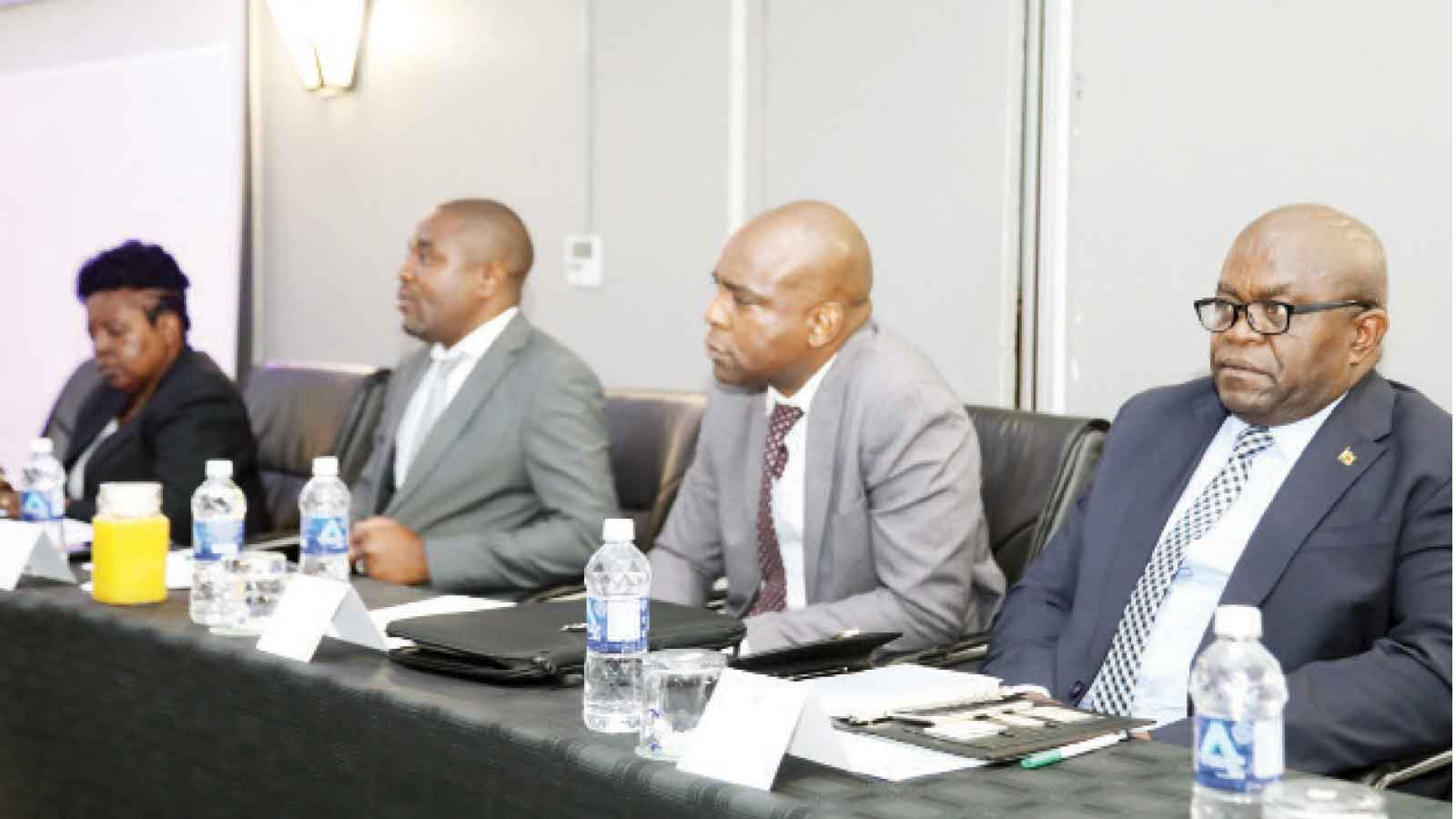
The eight-member committee is chaired by Reserve Bank Governor Dr John Mangudya and includes experts who are not in the employ of the bank.
Other members of the board are Dr Jesiman Chipika (Deputy Governor), Dr Innocent Matshe (Deputy Governor), Professor Albert Makochekanwa, Mr Persistence Gwanyanya, Professor Daniel Makina, Dr Charity Jinya and Mrs Mathilda Dzumbunu.
After the second quarter spike in monthly inflation last year, measures then put in place saw monthly inflation fall fast into lower single figures that continued into the first quarter of this year. The disinflationary trend saw month-on-month inflation declining from a peak of 30,7 percent in June last year to 2,4 percent in December last year, and then 1,1 percent in January this year.
The bank said it was however, important to note that local currency inflation was no longer a true representative of the cost of living in Zimbabwe as the country was in a dual currency system where prices and household incomes were also in both US dollars and local currency.
In this context, Zimbabwe’s inflation needed to be recalibrated to reflect the dual currency nature of incomes and prices in the economy to provide a true reflection of the cost of living in the country.


 Online Reporter