

 admin
admin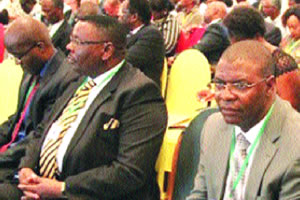
pora to actively participate in the mainstream economy by starting businesses.
Ms Norah Tapiwa, a Zimbabwean working in South Africa, said they once lobbied the Government for the formulation of the policy but nothing had happened. It is estimated that more than three million Zimbabweans are living abroad, with the majority of them in South Africa.
“Without a Diaspora policy, there is no need to engage us. We once lobbied for the policy but we did not get any response,” said Ms Tapiwa.
Musa Khumalo, an engineer with a South African mining company, who concurred with Ms Tapiwa, urged Government to move quickly in putting in place the framework.
“A policy will give us some confidence. Let them (Government) put it in place. There are many Zimbabweans prepared to establish businesses back home.”
Ms Khumalo has worked in SA for the past seven years.
She added: “Asking for a policy does not necessarily mean we are special or want to invest millions. But a policy for that sector of investors would certainly be a good idea.”
Economic Planning and Investment Promotion Minister Tapiwa Mashakada said the formulation of the Diaspora policy hit a snag after the ministries involved in formulating the document differed “on certain issues”.
But he urged Zimbabweans living abroad to set up businesses even in the absence of the policy.
“We will guarantee the safety of your investments. So you do not need to wait for the policy — because you can wait forever. Let the policy find you there. This is the time to invest in Zimbabwe.
“Let us start growing the cake by starting new businesses while the Diaspora and migration policy is being worked on.”
Minister Mashakada said the policy document was returned to the responsible ministries — including Economic Planning and Home Affairs — for revisions.
Apart from the policy, it also emerged that most of the Zimbabweans living abroad lacked information on developments back home. They challenged the embassies to continue updating the Diaspora community with social, economic and political developments, to stop them relying on media reports — some of which were distorted, they said.
Most of them generally supported the indigenisation policy but did not know how they could be involved.
“As Zimbabwe targets a US$100 billion economy by 2040, what will Zimbabweans own then?
“We appreciate the indigenisation and empowerment policy but how are we going to be involved?” said Mr Vengayi Chigudu.
National Indigenisation, Empowerment and Economic Board chairperson Mr David Chapfika told the seminar the Government was already working on a comprehensive programme to assist those willing to go into business to raise the capital.
Countries that have benefited from money repatriated by their foreign-based nationals include Ethiopia, Ghana, Philippines, India, Italy and Cape Verde.



 Online Reporter