admin
adminregard the drawing up of a Constitution as a game of power.
Not long ago, there was a report in the Press that some politicians were saying they were ready to govern.
Now in the USA or other countries, it is not about being ready to govern or assume power but to serve the people. At present, from what has been leaked to the Press, it is the ever obsession with power for this institution and that institution.
Even the debate over devolution, is being mishandled where some say they want to control resources in their province.
What if a province has no tangible resources?
What should be of concern to everybody is how to build a nation we shall all be proud of.
A nation cannot be built on parceling out of what others are calling power or autonomy.
Africa has gone through painful wars over devolution from Nigeria to Somalia.
Now In Libya, the old power games are being revived. During the recent parliamentary elections ballot papers were burnt out in one powerful province which has been demanding autonomy.
In Nigeria even the creation of about 36 states has not satisfied the demands of several ethnic groups.
Some of these groups are calling for the establishment of Sharia law throughout the country.
Whatever the constitution says about the freedom of religion is being ignored. There will be radicals in every country no matter how stable a country can be.
What is of importance is the delegation of responsibility to the local communities under central government. This has worked well with schools and local councils. Parents in government schools have assumed responsibility for the education of their children.
The missionaries have been doing a wonderful job of running their mission schools and hospitals without any hindrance from Government.
How can local government structures and cities and towns fail to do the same? Of importance are the traditions that we should reflect in our constitution. The constitutional provisions borrowed from other countries will not serve us well.
The major sticking point that I see is that of preserving our liberation legacy. It cannot be merely captured just in words but in a practical way.
Many have been saying that this should have been done a long time ago before the advent of this political impasse we are experiencing.
The danger is that some may do away with the liberation ethos once they are in power because it is meaningless to them.
In some countries, if one had not been to war, there was no chance they could assume the presidency of a country.
It may not have been written anywhere but the people believed that those that had been patriotic in defending the country were entitled to the highest office.
But things have changed now because of globalisation which has put modern economics as the yardstick for leadership. If the people can be satisfied with economic policies, who cares about anything else?
It is food on the table.
The politicians will fight it out through their election platforms. But as an emerging state trying to capture its beliefs in building a viable unitary state, only dialogue can serve us to produce a Constitution that will be acceptable to all the people.
If we continue in trying to score points against each other, no amount of goodwill will save us from disaster.
Take a simple provision of whether to opt for the executive Presidency or parliamentary system which puts a Prime Minister as a head of government.
How many people understand the difference between the two systems?
You cannot marry the two and achieve harmony.
The President with executive power cannot share his responsibilities with parliament.
Actually, what happens in South Africa, where their president can justify his decisions in parliament or even answer questions raised by parliamentarians, demeans his status, hence the ridicule he suffers everyday.
The major difference from other executive presidency is that the South African head of state is elected by parliament not directly by the electorate.
His party can remove him like what happened to the former president Thabo Mbeki.
No matter what happens, in the USA, a president may lose a congressional majority, but he will still complete his term of office.
Why the American president exercises real executive power is because he chooses his cabinet not from parliament but from competent people from any party or society. MPs’ duty is to their constituency not to run the government programmes with the president. Another sticking point is when a constitution impinges on the structures of political parties. A Constitution must not be subservient to the structures of political parties.
Let the political parties run their organisation as they wish but not put their structures into the nation’s Constitution. For example, let the president choose or appoint his or her deputy as they wish not be told that they shall be their running mates.
This may have developed over 200 years in the USA but it does not follow this will work in Zimbabwe.
Our own Constitution must be very explicit about separation of responsibilities by different institutions.


Online Reporter
- Herald
- September 30, 2026
- 3 views
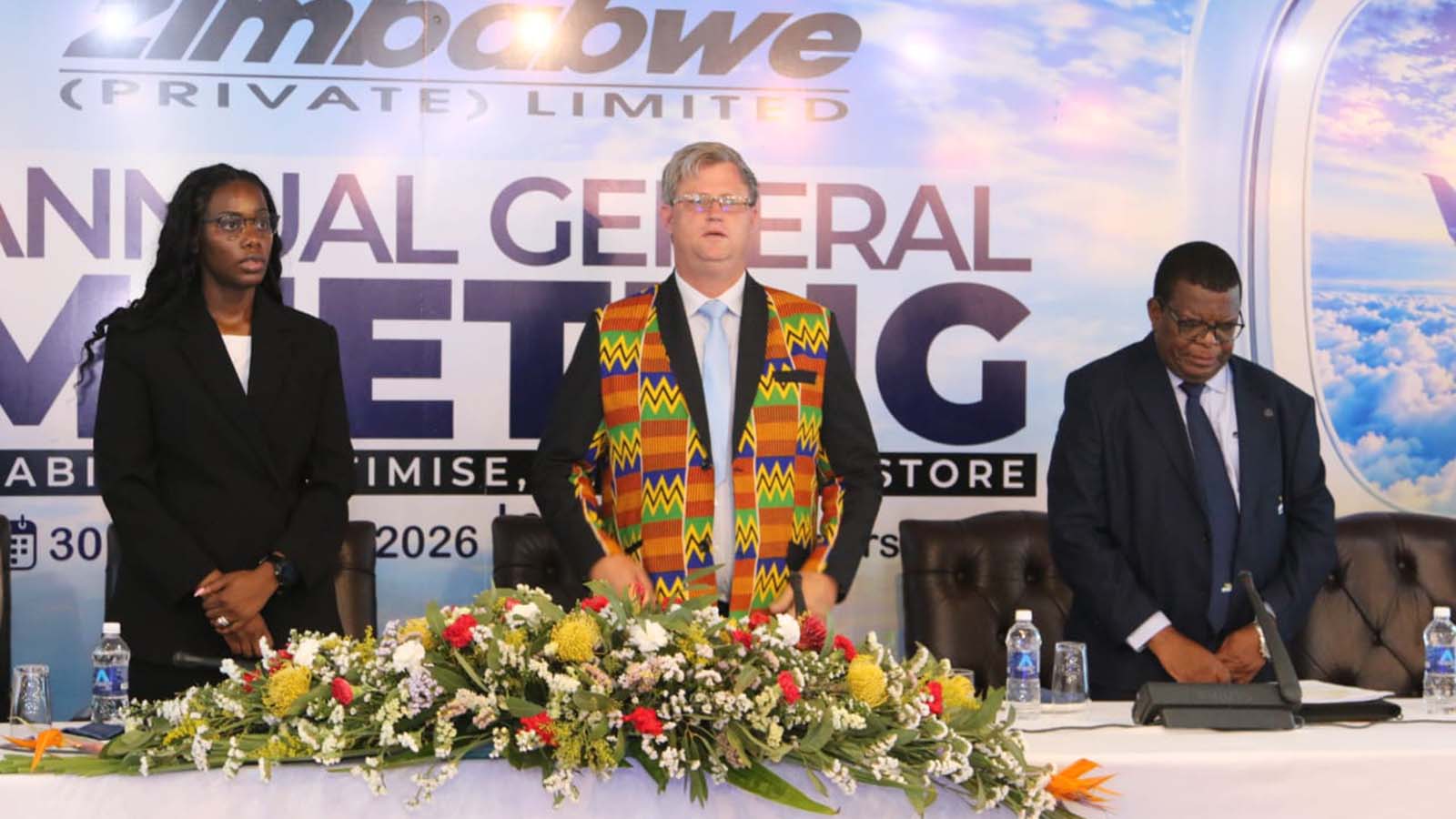
Air Zimbabwe holds 4th Annual General Meeting
Freeman Razemba Senior Reporter NATIONAL airline, Air Zimbabwe, is holding its fourth Annual General Meeting (AGM) in Harare, which is focusing on corporate governance, financial restructuring and an integrity-driven…