

 admin
admin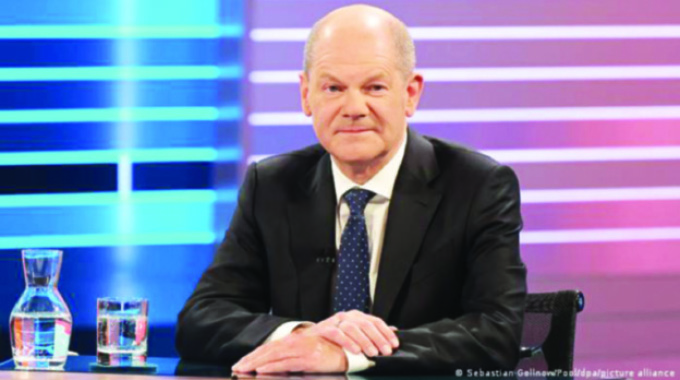
Gibson Nyikadzino-Correspondent
Imagine Zimbabwe going for elections, and as has become custom, the revolutionary party Zanu PF wins, but delays to set-up a government for two or three months.
It will be regarded as a “crisis”.
The terms “political crisis” and “constitutional crisis” have been hackneyed by some “all-knowing” academics and politicians in Zimbabwe.
They find solace in verbosity instead of factuality in their bid to project negativity of the motherland.
But somewhere, in western Europe, a post-millennium crisis is building that they do not want to talk about equally as they talk about regards Zimbabwe.
A political cataclysm is inflicting Europe at an incalculable rate that is eroding all perceived human and material progress.
Majority rule is under threat in Europe. Across that continent, coalition governments are today hurting political parties that join them and the people expecting them to drive political and government policy.
Most European countries are driven by coalition governments. They, too, are a common electoral outcome in many parts of the world.
In this governmental setting, both large and small, winning and losing parties are ushered an opportunity to participate in government and even hold important ministerial positions.
Unfortunately, not all coalition governments have lived to expectation.
The European Union (EU) has for years considered itself an important player in promoting democracy in African countries, but it is starting to drift to the deep-end.
If a government falls, practically nobody hears it. The way Americans start panicking for example when their government drifts towards a shutdown points to the importance of what governments should do to serve the people.
Similar trends of falling coalition governments are occurring in Europe and no one has been there to give them ultimatums and threats on the fierce urgency to serve people.
A 2011 survey in Britain when then conservative prime minister David Cameron and Liberal Democrats leader Nick Clegg was the former’s deputy proved that coalition governments are “weaker, less decisive and more confused.”
Put more precisely, coalition governments create instability and result in a “political crisis”.
History is replete with cases of government instability in western Europe in the twentieth century.
The post-first world war Weimar Republic in Germany comes to mind. In the post-second world war, the French’s fourth republic had government instability as a result of coalition governments.
Also in Italy, post-war governments until 1994 only lasted a maximum 40 percent of their expected time, low timeframe compared to a European average of about 60 percent.
In Poland, a right-wing coalition fell apart in August after prime minister Mateusz Morawiecki dismissed the head of a junior coalition party, putting the government’s future in doubt.
Similarly, early this year in Italy, a Giuseppe Conte-led administration collapsed after the former prime minister, Matteo Renzi, pulled his small Italia Viva party from the ruling coalition. These developments have been happening at the height of the global Covid-19 pandemic.
Among the most afflicted countries was Italy.
These patterns are historical and their continued recurrence implies that the system of coalition government creates anxiety in the citizen, businesses and other critical sectors of the economy.
In 2011, Belgium earned a Guinness World Record for going the longest time with no government – 589 days without a government.
In the Netherlands, the country has now gone for 205 days without a government. In the same country, in 2002, a government collapsed after just 12 weeks in office following a feud within the party of right-wing populist Pim Fortuyn.
The Germans are also waking up to political uncertainty after results from last month’s federal election indicated a gridlock between the two main political forces in that country, the Germany’s Social Democrats and the conservatives of outgoing Chancellor Angela Merkel, Christian Democrats.
Merkel’s party lost and the winner from the Germany’s Social Democrats party Olaf Scholz told supporters that the goal was only to send Merkel’s outgoing party to the opposition benches.
The irony of these elections and governments is that the largest party is not guaranteed to form a government and negotiations between various parties are expected to last months, with Merkel to remain as interim chancellor until a new government is formed.
It is, however, a resemblance of a great betrayal to the citizens.
These developments have contributed to a stunning democratic breakdown in Europe as the will of the people who vote is often subverted under colossal violations.
Closer home, when Zimbabwe’s Second Republic ushered the New Dispensation in November 2017, some political elements started to create narratives around an idea of a “coalition government in Zimbabwe”.
To some, it was an opportunity to be in power at the expense of an internal Zanu PF process that had been done following the resignation of the late former President Robert Mugabe.
But Zimbabwe has lived with experiences of coalitions as unsustainable and irrelevant to the country’s political development.
A case in point is the consistent and continued bickering among partners and a lack of ideological clarity of the state on what it represents. Zimbabwe’s coalition during the 2009-2013 Government of National Unity (GNU) presented classic problems.
At its inception, those who were getting their first experience in government had no knowledge of the parameters of their portfolios.
Then ICT minister in the GNU Nelson Chamisa once bickered with Information Minister Webster Shamu over duties the former had to do.
In other instances, the GNU create intolerance as some politicians failed to attend meetings in contempt of the spirit of national unity.
Other circumstances also saw then Prime Minister refusing to attend the burial of national hero Misheck Chando at the national shrine in clear rejection of the contribution of the hero’s contribution to the country’s independence.
Some of these experiences have clearly marked “coalitionism” an outsider to Zimbabwean political development.
Since the 2018 elections, some sections of local media have been creating narratives around “talks of a coalition government” at an advanced stage without putting deep thought into whether the country’s constitutional set-up warrants that.
Do circumstances currently obtaining in Zimbabwe warranting for a GNU? Are Zimbabweans that annoyed with a single party government system?
Developments in western Europe regards coalition governments provide an insight to their dangers.
As the 2011 poll in Britain revealed, “coalitionism” is a weakness of governance.
As Zimbabwe looks up to Vision 2030, the mandate of the people’s party should be continuously shown through people-centred development projects, economic reconfiguration and social progression.


 Online Reporter