admin
adminSo much ink has been spilt on how education systems in Africa remain colonial, and how knowledge itself was colonised to the extent that what is called quality knowledge in the world are white, Euro-American and predominantly male thoughts.
Not so much has been spoken or written on how the practice of scholarship as the art and science of seeking, finding and disseminating knowledge has itself been invaded by toxic and domineering power relations.
To start with, in inventing academic disciplines Euro-American education systems also appointed what are called fathers for each discipline, and these anointed parents of knowledge are supposed to be the ultimate founders and authorities of their disciplines as Sigmund Freud is to Psychoanalysis for instance.
Further, the syllabus and the curriculum were also invented as systems of carefully including and excluding some thoughts and some thinkers in mainstream education using the excuse of the myths of quality and standards. As things stand presently, the strength of an academic thesis, a dissertation or even a book relies heavily on the acceptability or credibility of the sources that one cites.
For a student in the university in Africa to have produced quality academic work, their work should have quoted as many dead white European and American thinkers as reliable and credible sources. This highly political and colonial habit in scholarship has created a fierce politics around citation and referencing. Few things are as discriminatory, selective, marginalising and as colonial as the strict reading list that a lecturer and professor brings to the class.
To name a reading list is at once to exclude, silence and even erase other ideas and thoughts that are contained in the unfortunate books of the unlucky thinkers that are not named in the list, the recommended texts as they are politely called.
As a result of this colonisation of scholarship by strict selection of reading materials and deselection and exclusion of some texts and thinkers, scholars have actually become narrow minded individuals, experts and specialists who are good in their understanding of few and limited ideas at the expense of wide knowledge that circulates out there in the world.
Put differently, to be a competent scholar in this colonial educational regime in Africa is to understand a few things in depth and to ignore the width of many other ideas out there that are systematically deselected and excluded from the syllabus, the curriculum and the tyrannical reading list.
The Invention of the Academic
While all intellectuals can by nature be academics not all academics are intellectuals. Academics are professionals and experts, strict creatures of the disciplines who reproduce the routine and rituals of the academy. These are police officers of the academy who mark up or mark down students depending on the set rules of the syllabus and the curriculum, and yes, the reading list.
Academics are the magistrates and judges, and also prosecutors in the game of scholarship, successful students pass through the court of academia as guilty or as innocent and successful depending on how they reproduce the reading list and stick to the laws and ethics of the disciplines. The best scholars and students in this colonised and colonial game are those who sing back to the magistrates and the judges what they have been fed through the syllabus, the curriculum and the reading list.
Presently, in the colonial and colonising education systems of the world, scholars are judged and rated on the number of their publications in peer reviewed and accredited journals and books. The peer reviewing and accrediting processes are further policing mechanisms where strict academics decide what is publishable and what is not, according to the rules of the disciplines. The rules and ethics of the disciplines are normally couched in the mantra of the myths of quality and standards.
Quality and standard of work almost always depend on how far the scholar pays tribute to and cites the fathers of the discipline and reproduces the permitted reading lists. Academics have become tired musicians who sing the same old song and sing it well in order to pass through the police posts and roadblocks of the academy. Academicism has become a complex game of name dropping and repetition where excellence is in how the academic uses style and language to say the same old thing in new ways. Sophistication is in complicating simple things and simplifying complicated issues to the extent of glorifying the simplistic. Academics are also thieves of thought, through what they call research, they collect thoughts from society and publish them as their invention, like the opportunistic singers who collect communal funeral songs from the villages and release them for profit as their new album.
The Crucifixion of the Intellectual
While the academic specialises in repetition and reproduction of the already known, the intellectual is a disobedient inventor. Edward Said, himself a formidable intellectual was partially understood when he said intellectuals “speak truth to power.”
The late Palestinian, by speaking truth to power was understood simply to mean the way intellectuals courageously confront governments and challenge authority. Not so many of us get it that speaking truth to power includes challenging academic authorities, confronting the disciplines and practicing decolonial intellectual banditry and dissidence.
What Michel Foucault described as an “insurrection of subjugated ideas” is what intellectuals do in bringing to the academy those ideas and those reading lists that are excluded and marginalised from the mainstream academy. Noam Chomsky, another terrific intellectual and a criminal of thought did a good job in observing that mainstream American academics long stopped producing truths and their careers were now made of using their expertise and authority to conceal and mask rather than reveal truths.
Intellectuals are gatecrashers, rude and undisciplined operatives who unmask and undress empire to reveal the unhygienic truths of power and knowledge. These few but powerful individuals, brave risk takers are almost always unrated and unaccredited in the academy, only their ideas and their power and relevance to society rate them.
Empire in its economic and political power does not suffer gladly these thinkers who ask inconvenient questions and make prophetic observations and descriptions of the world and how it operates.
When Beauty meets Power
To conceal their crimes of theft of knowledge and their complicity with coloniality, academics use embellishments. Few books are written with such beauty and style as Francis Fukuyama’s End of History and the Last Man.
Undressed of its languaging and stylisation, the Japanese/American academic was declaring that America and Europe should rule the world forever and ever and Amen. Cleverly, Fukuyama and others sell truth out to power and compose musical works to energise coloniality and imperialism. In the history and political science syllabi and curricular of the present education systems, academics like Fukuyama occupy pride of place in the recommended reading lists.
To the decolonial intellectuals, beauty alone is nothing until it is accompanied by the power of ideas. The power of ideas is in their relevance to life, their ability to give strong answers to the strong questions of the day.
When in 1955 Aime Cesaire resigned from his parliamentary position and from his membership of the French Communist Party he argued that Marxism was a beautiful idea but it lacked power in its failure to address the “colonial problem” and to attend to the problem of blacks in the world. For Marxism to say “workers of the world unite” was to say out a beautiful slogan, Cesaire reasoned, but that slogan was blind and misleading, it was even colonial in that workers of the world cannot be the same when there was racism, black workers were still slaves while white workers were treated as legitimate employees.
In questioning, unmasking and challenging Marxism thus, with all its beauty and attraction, Aime Cesaire was being a true intellectual. To decolonise scholarship in Africa today is to make schools, colleges and universities more and more intellectual and less and less academic. The quality and standard of an idea should be on how far it promotes life and liberation, not its sound and lyric, and its promotion to Empire.
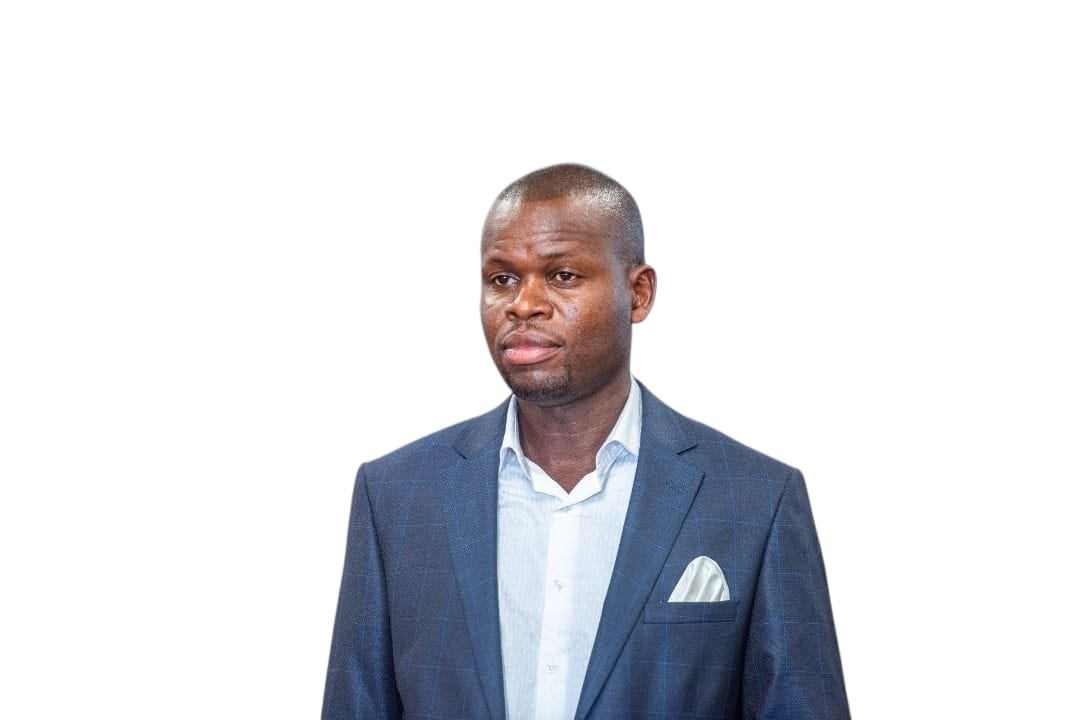
Cetshwayo Zindabazezwe Mabhena is a Zimbabwean scholar based in South Africa: [email protected].



 Online Reporter