Theseus Mauruki Shambare
Features Writer
THE fish disappeared long before the ponds arrived.
In Murehwa District, Mashonaland East Province, where fertile soils and favourable weather have for decades sustained tobacco barns and thriving horticulture fields, rivers once carried more than water.
They carried livelihoods, nutrition and memory. Children grew up eating fish caught from local dams and streams swollen by seasonal rains. Dinner tables once carried the taste of the river — simple, familiar, seasonal.
But the rivers began to change. They thinned first. Then shortened. Then stopped flowing altogether.
And with them, the fish disappeared. For years, no one spoke loudly about it. It simply became normal that fish had become a memory rather than a meal.
When memory becomes hunger
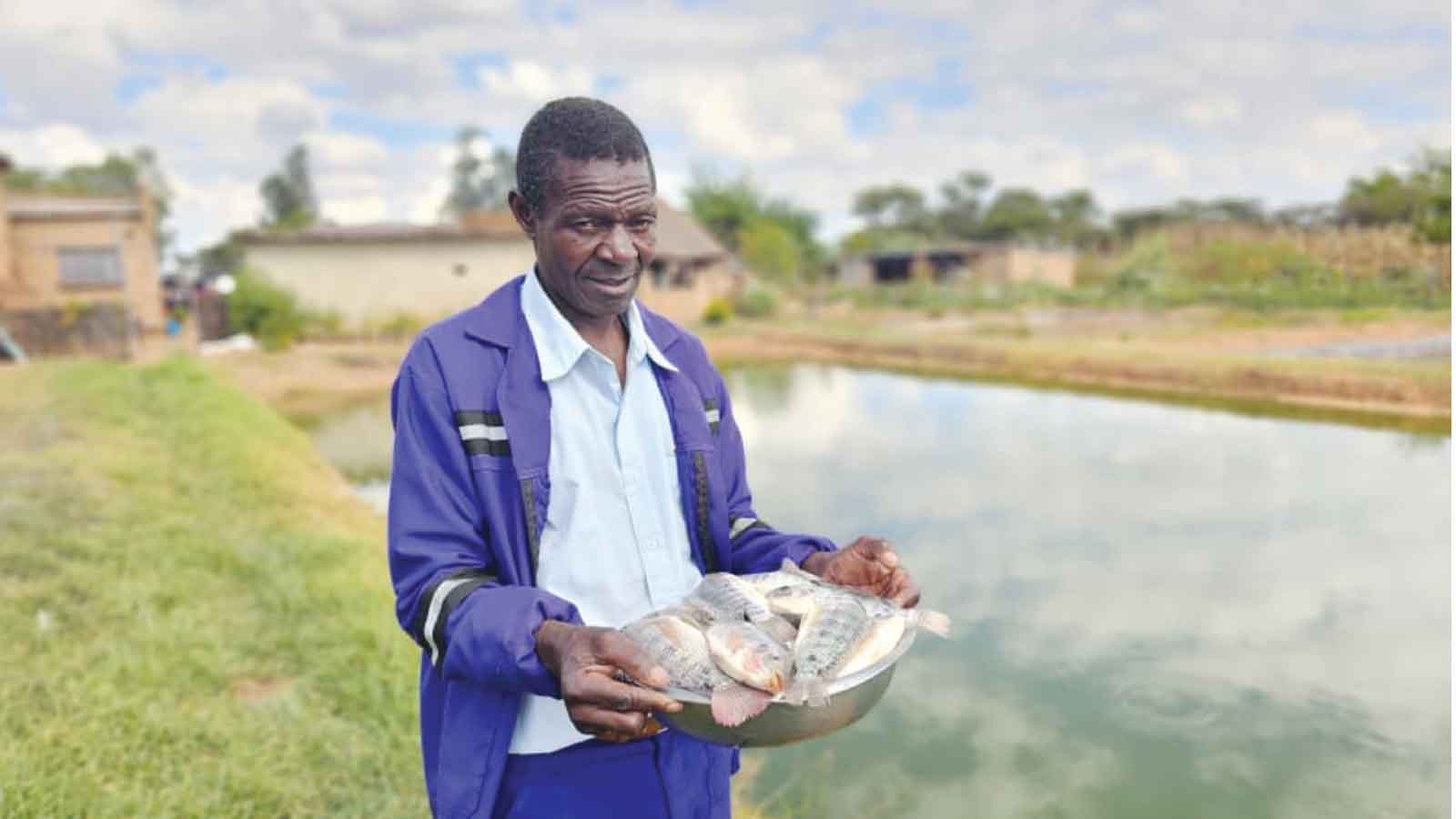
For YES Fish Farming Group chairperson, Mr Godfrey Kasimbe, the silence of the rivers is not an abstract climate discussion.
It is something lived.
“We last ate fish a long time ago, when the seasons were still good as we received good rains,” he said.
“We had gone for years without eating fish. It had become only a memory, as rivers dried up and dams no longer carried fish. It is only when we started harvesting from these fish ponds that fish returned to our tables.”
In that sentence lies the shift now unfolding across parts of rural Zimbabwe, where climate change is not only reducing rainfall, but quietly reshaping what communities eat, earn and remember.
Still fertile, but changing
Murehwa remains one of Zimbabwe’s productive agricultural districts — known for tobacco, maize and horticulture.
The soils are still rich. The farming knowledge is still strong. The seasons still come. But they no longer behave as they used to.
Rainfall is increasingly erratic. Rivers that once sustained abundant natural fish stocks, supporting generations of communities that relied on seasonal capture fishing, now dry up earlier each season, leaving once-reliable fishing grounds barren.
Dams are shrinking faster, and natural fish stocks have collapsed across many local water systems.
Yet amid this environmental shift, something unexpected is emerging: a new water-based production system engineered by farmers themselves. Fish ponds.
From tobacco roots to water ponds
Under the Presidential Community Fisheries Scheme, communities in Murehwa are now integrating aquaculture into traditional farming systems; not replacing crops, but diversifying against risk.
At a recent fish harvesting event, Director of Livestock and Fisheries Production, Milton Makumbe, described the shift as part of a broader agricultural transformation.
“This district, Murehwa, is already well known for crop production, particularly maize, tomatoes and groundnuts. The integration of fish farming into these existing systems is commendable,” he said.
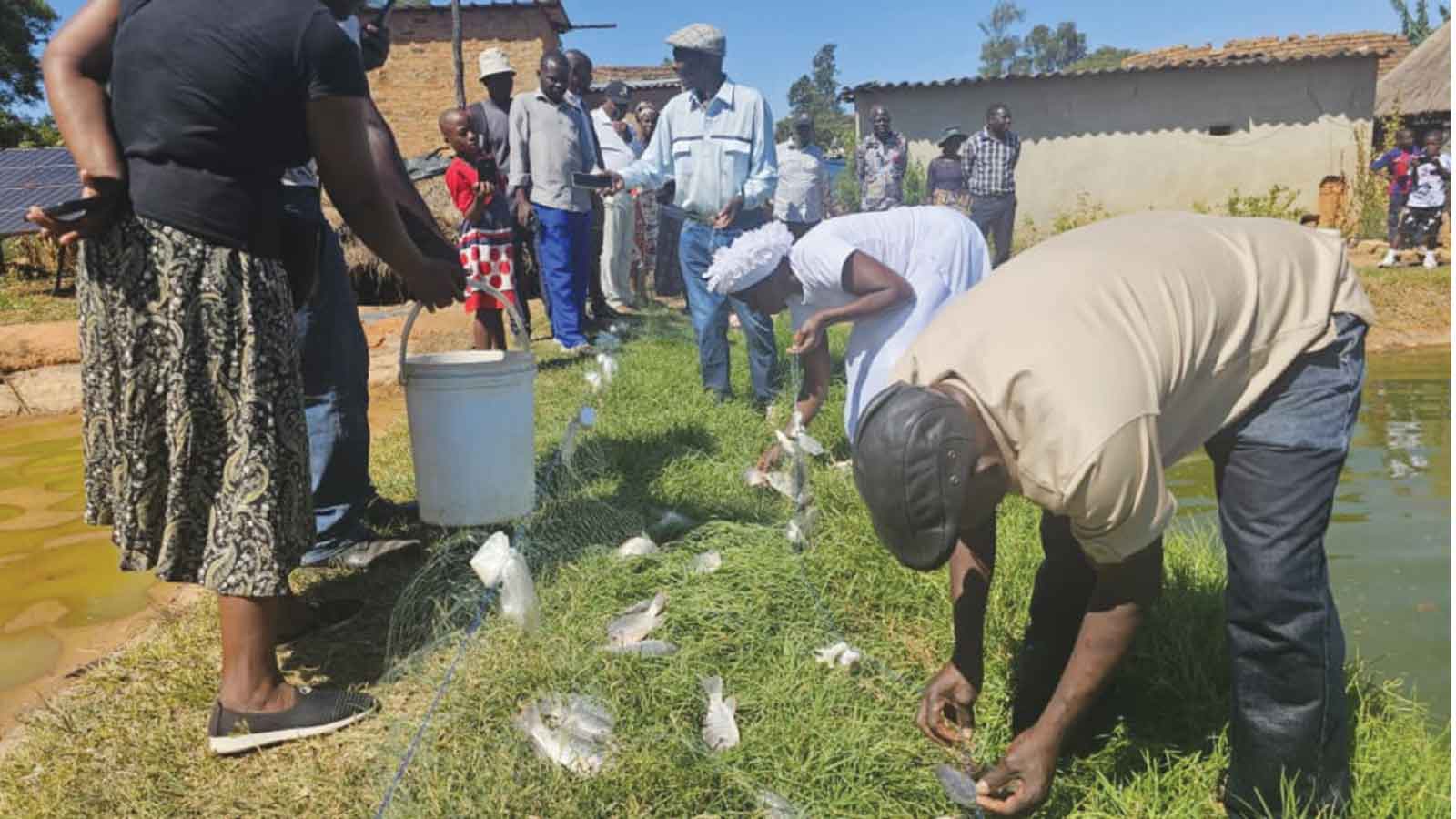
In Macheke alone, 22 ponds stocked with 32 000 sex-reversed Nile tilapia fingerlings are now being harvested by a diverse group of farmers, including women, youths, war veterans, elderly farmers and persons with disabilities.
For Gogo Perfennia Kahuni, the shift into fish farming was not ideological — it was economic survival.
“I was once a tobacco farmer,” she said. “When I do my calculations, it shows that I now make better and significant money and profits with less labour when doing fish farming.”
“I make double or triple the money with fish than I made with tobacco.”
In a district where tobacco has long been a backbone of rural income, her statement reflects a deeper economic transition, from single-crop dependence to diversified, climate-aware farming systems.
Fish farming is proving particularly attractive because it allows multiple harvest cycles per year.
Under controlled conditions, Nile tilapia can reach a market size of 300-400 grammes in about four to six months, depending on feed quality, stocking density and water management.
That means predictable income cycles in an increasingly unpredictable climate.
Science behind the shift
Aquaculture science helps explain why fish farming is gaining ground in warming climates.
According to United Nations Food and Agriculture Organisation (FAO) technical guidelines on tilapia production, growth is optimal between 26°C and 30°C – a range where feeding activity and metabolism are most efficient.
Peer-reviewed research in “Aquaculture Research and Reviews in Aquaculture” shows that within this temperature range, fish exhibit faster growth rates and improved feed conversion efficiency.
Studies by El-Sayed (2006) further demonstrate that warm-water pond systems can significantly shorten production cycles when properly managed.
But researchers also caution that beyond optimal temperatures, heat stress and oxygen depletion can reduce productivity, making water quality management essential. In other words, climate change is not simply destroying agriculture. It is also reshaping what systems become viable.
A shock absorber for farmers
In Murehwa, fish farming is increasingly being described by extension officers as a “shock absorber” — a fallback system when crops fail or prices fall.
Murehwa West Ward 9 agriculture business advisory officer (ABAO) Getrude Masuku said the innovation extends beyond fish alone.
“Water discharged from fish ponds is mineral-rich and can be used in horticulture production like vegetables, creating sustainable linkages at field level and creating unending cash flows,” she said.
The ponds are no longer isolated production units. They are becoming integrated agricultural ecosystems.
District livestock specialist Getrude Ndege said fish farming’s biggest strength is accessibility.
“Fish farming is inclusive in nature, with all age groups and genders able to do it since it is easy to practice,” she said.
That inclusivity is visible in Murehwa, where smallholder farmers, women groups and elderly households are now active participants in aquaculture production.
The national picture
Zimbabwe’s aquaculture sector is now being positioned as a key response to national food deficits.
The country produces about 35 151 tonnes of fish annually, but aquaculture contributes only 8 211 tonnes. With national demand at 60 000 tonnes, the gap remains significant.
To close it, the Government launched the Tilapia Value Chain Market Strategy (2026-2030), aimed at scaling production, improving value addition, and reducing reliance on imports.
At provincial level, Mashonaland East now has 524 fish farmers operating 667 ponds, while nationally, active fish farmers increased from 7 445 in 2024 to 8 101 in 2025.
International support
International partners are also helping accelerate this transition.
Through the FISH4ACP programme implemented by FAO, Zimbabwe is receiving technical support to strengthen its aquaculture value chain, improve feed systems and expand climate-smart fish production.
Programme coordinator Paul Mwera said the focus is on building a sustainable and competitive sector.
“By supporting local feed production and ensuring access to quality fingerlings, we can unlock the full potential of aquaculture in Zimbabwe,” he said.
The programme is also promoting innovations such as alternative protein-based fish feeds to reduce production costs and strengthen local supply chains.
In Manicaland, FISH4ACP has helped establish women-led fingerling hubs and supported local feed production systems to strengthen supply chains closer to farming communities.
The same model is being rolled out in Masvingo through partnerships between FAO and Government, with each decentralised hub capable of holding up to 480 000 fingerlings.
The hubs are improving access to quality fingerlings, cutting transport costs and reducing high mortality rates linked to long-distance movement from production centres such as Kariba, while strengthening the efficiency and sustainability of smallholder aquaculture systems.
Water returns in a different form
Back in Murehwa, the transformation is not loud. It does not come with speeches or declarations. It comes in nets rising from ponds and in children eating fish again.
It arrives in farmers calculating profits that no longer depend on rainfall alone. And in the quiet recognition that while rivers may be less reliable, water has not disappeared — it has simply been redirected.
And where rivers once failed to carry fish, ponds now do.
For Kasimbe, the change is simple but profound: “It became our first time to start eating fish again.”
In that return lies the essence of adaptation, not the restoration of the past, but the construction of something new from its absence.