admin
admin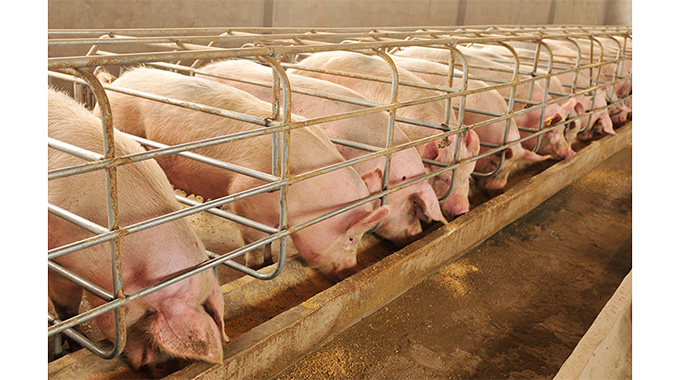
Lovemore Kadzura
Rusape Correspondent
PORK production is on the rise, with new players taking up the lucrative farming venture as demand for white meat increases.
This was revealed during a field day at Shangwe Hills Piggeries and Abattoir on the outskirts of Rusape last week as market players met to discuss ways of developing the sector.
The field day, organised by the Pork Producers Association of Zimbabwe, saw farmers discussing pressing challenges such as access to affordable feeds and declining breed quality.
These were cited as big threats to the industry.
Shangwe Hills, which was established in 2019, is one of the leading pig producers in the province.
At the moment, Shangwe Hills has over 650 pigs and slaughters an average of 20 pigs every week.
Mr Patrick Majiri, the farm’s operations manager, said the market for pork is very big in Zimbabwe, adding that farmers should not hesitate to get into pig production, even on a small scale.
“We embarked on this project in 2019 and so far everything has been smooth sailing. At the moment, we have 650 pigs on various stages. We employ 16 full-time farm workers. We have our own abattoir and we slaughter an average of 20 pigs per week.
“We supply mainly Manicaland and Harare markets, with butcheries and supermarkets being our main customers. Our aim is to value add and make products such as polony and sausages,” said Mr Majiri.
Chairman of Pork Producers Association of Zimbabwe, Mr Vimbiso Nhumwa applauded Shangwe Hills for allowing other farmers to visit their farm to learn and share ideas.
He said the Association is working on importing new breeds from South Africa to improve pork production.
“We are working on improving pig breeds and one of the projects is to adopt artificial insemination. Plans are underway to import new breeds, especially from South Africa. The breeds we have currently in the country are now of poor quality,” said Mr Nhumwa.
“Accessing feeds and other raw materials at competitive prices is the major challenge being faced by pork producers across the country.
“Soya bean and maize are rather expensive, thereby making it difficult for farmers to break even when they sell the final product.
“We have organised farmers into groups so that they can purchase soya bean and maize as consortiums at discounted prices from the Grain Marketing Board and other suppliers,” he said.
“Accessibility of vaccines by farmers is also proving to be a challenge as some medicine requires to be kept in freezing temperatures. As an association, we are now distributing vaccines for free to farmers,” said Mr Nhumwa.


 Online Reporter