Vusumuzi Dube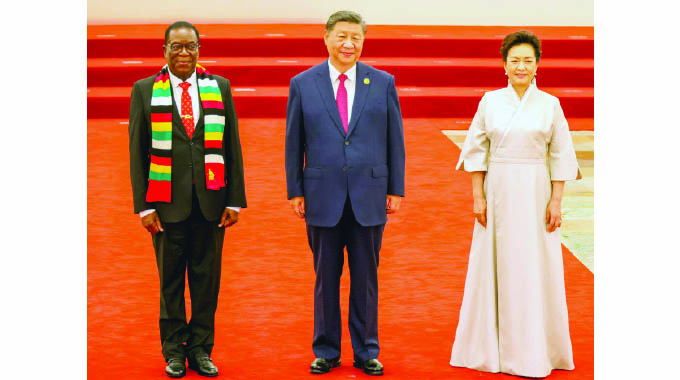
Tichaona Zindoga
The just-ended 2024 Focac Summit proved once again that Zimbabwe occupies a strategic position in China-Africa relations, built on solid bilateral relations with deep historical roots.
And, perhaps, with a touch of the personal, too. That is when you consider President Mnangagwa’s attachment to China because that is where he received military training in Nanjing, formerly Nanking. He immersed back into history as he retraced his footsteps ahead of the summit, visiting the town and the eponymous military college that was all too happy to receive its former student.
But what will define China-Zimbabwe relations in the next few years going into the future, following the 2024 Focac Summit, which ran under the theme, “Joining Hands to Advance Modernization and Build a High-Level China-Africa Community with a Shared Future”?
Arguably the most important highlight of President Mnangagwa’s visit was his bilateral meeting with his Chinese counterpart, President Xi Jinping. The two leaders exchanged views on a number of issues and came up with commitments in five key areas or “pillars” namely, political, economic and trade, security, people-to-people, and international affairs cooperation. A joint statement released after the meeting said these pillars would help “advance modernization of the two countries through joint efforts and contribute to the building of a community with a shared future for mankind”. It described this as a “five-star ironclad” cooperation framework.
Political capital
The two sides have always banked on “political understanding and friendship” as the solid basis for everything. It is like a communion and mantra that gives life to all. The joint statement following the meeting of the two leaders clearly stated that, “The two sides emphasized that a high level of political mutual trust is a distinctive feature of the China-Zimbabwe relationship.”
Among key features, China expressed support for the Zanu-PF Government led by President Mnangagwa in continuing to advance national development and rejuvenation, and highly commended the good momentum of economic growth and social stability that Zimbabwe has achieved in recent years.
The two countries have “consistently and firmly” supported each other on issues of core interests and major concerns.
China reaffirmed its “firm support” for Zimbabwe’s efforts to safeguard its national sovereignty, security and development interests, and calls on the United States and other Western countries to remove all the illegal sanctions imposed on Zimbabwe as soon as possible while Zimbabwe underscored that unconditional support for the one-China principle remains a hallmark of its foreign policy, and recognizes that there is but one China in the world, Taiwan is an inalienable part of China’s territory and the Government of the People’s Republic of China is the sole legal Government representing the whole of China.
Zimbabwe firmly expressed opposition to any form of “Taiwan independence” and reiterated the position that it will not engage in any form of official interaction with Taiwan and will support all efforts made by the Chinese Government to realize national reunification. Further, Zimbabwe opposes any action that undermines the sovereignty and territorial integrity of China, and reaffirms its support for China’s positions on issues related to Hong Kong, Xinjiang and Xizang.
Other key global political questions that Zimbabwe and China agree on include supporting the upholding of the international system and multilateralism under the United Nations and support for the Palestinian “people’s just cause”.
The political base, common ideology and brotherhood are as ubiquitous as it is deep, making the two countries natural allies – a situation that will likely endure for many years to come.
Dynamism
The future is exciting and holds lots of opportunities. China is behind the changes that are occurring in the global system today, but there is dynamism that will see the two countries moving lock in step in spite of new developments and changes. China’s enunciation of various initiatives under President Xi, such as the Belt and Road Initiative, the Global Development Initiative, the Global Security Initiative and latterly, the Global Civilisation Initiative, has left the world in the cusp of the so-called new world order.
The meeting between Presidents Xi and Mnangagwa confirmed that the two countries are working together and are partners in the changing global dynamics. Zimbabwe “fully welcomed and firmly supported” all the initiatives and their commitments.
Pragmatism
A number of practical, era-changing plans and commitments were made by the two leaders, and these are important because they have implications and direct benefits for ordinary people of Zimbabwe, including export of avocado fruits to China by Zimbabwean farmers as part of a range of quality Zimbabwean agricultural products permitted to enter the Chinese market. China pledged to provide Government scholarships and training opportunities for Zimbabweans.
Other key programmes that China will embark on for the benefit of the Zimbabwean people include supporting the building of Zimbabwe’s public health system, continuing to dispatch medical teams to Zimbabwe, strengthening cooperation between the paired hospitals, and undertaking the “Bright Journey Programme” which is a free cataract treatment in Zimbabwe.
The two sides also discussed rolling out cooperation projects such as Rural Community Solar e-Facility programme, and Upgrading of Irrigation Facilities.
On top of that, China pledged to assist in climate response, food security, disaster prevention and mitigation as part of combating emerging security threats.
From a broad policy perspective, Zimbabwe stands to benefit from three new initiatives on cooperation with Africa proposed by President Xi Jinping, namely the Initiative on Supporting Africa’s Industrialization, the Plan for China Supporting Africa’s Agricultural Modernization, and the Plan for China-Africa Cooperation on Talent Development, and is prepared to work actively with China to promote the implementation of these initiatives, according to the joint statement. Still, more and more opportunities are contained in the Beijing Action Plan which has holistic and expansive areas of cooperation that will be almost daunting to exhaust in the three-year window.
What’s next?
There is no question as to where Zimbabwe’s political allegiance and friendship lie, come rain or fair weather. However, the most important question is whether Zimbabwe can fully harness its solid political friendship with China. One cannot escape the reality that there are some African countries that enjoy far less storied historical connection to China that, in modern times have tended to reap bigger and better rewards in infrastructure and trade.
The challenge for Zimbabwe is to convert political capital into tangible benefits that will put the country at the top table when it comes to enjoying the fruits of China-Africa relations.
A lot of planning and craft competence is required to implement programmes and projects that will see the two countries cooperate pragmatically, with timely interventions that will result in Zimbabwe achieving results. Nothing is to be taken for granted. China always acts on the invitation and permission of the host country and will not force itself on its partners.
The challenge is on the Zimbabwean side to craft bankable projects, putting the right people in the right places, as well as having policies that enable China to commit to implementing commitments and frameworks.
This is true of any African nation. The next few months and years will determine whether Zimbabwe will fully harness its potential and political capital with China or not.
For the sake of clarity and completeness, the task is not just for Government alone: the private sector, non-state actors, academia, think tanks, scholars and ordinary people have a role to play.
A united front of Zimbabweans, fully aware of what is at stake, will likely achieve great things and move the country towards attaining modernisation following the example of, and capitalising on China’s goodwill and friendship.
*The writer is the Director of Ruzivo Media and Resource Centre a Zimbabwean think tank that analyses local and global issues.


 Online Reporter