Online Reporter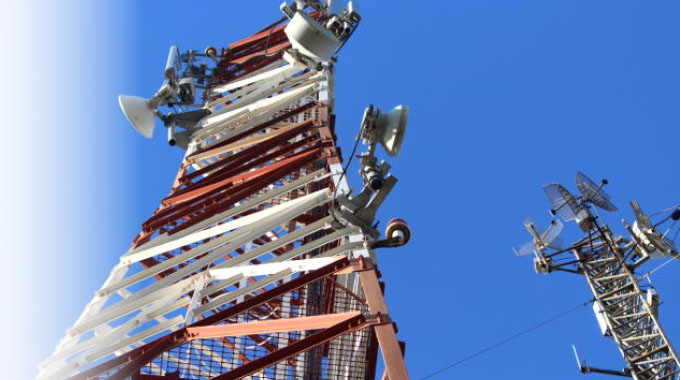
Nelson Gahadza
THE Postal and Telecommunications Regulatory Authority of Zimbabwe (Potraz) has announced that the country’s telecommunications industry is positioned for strong growth, driven by the deployment of Fifth Generation (5G) technology and the entry of global low-earth-orbit satellite service giant, Starlink.
The sector is projected to experience accelerated growth due to the increasing adoption of emerging technologies such as artificial intelligence (AI) and machine learning (ML).
According to the Potraz first-quarter 2025 sector performance report, Very Small Aperture Terminal (VSAT) subscriptions registered a 32,02 percent increase in the first three months of this year. “This is attributed to the continued increase in Starlink subscriptions,” the report states.

Starlink, which falls under the VSAT umbrella, saw subscriptions surge to 30,907 in the first quarter, up from 23 410 in the same period last year. Starlink officially launched in Zimbabwe in September 2024 and has quickly gained popularity due to its low-cost satellite Internet service. The US-headquartered Internet service provider has significantly impacted the Zimbabwean Internet market, with initial reports indicating 20 000 new subscribers registered in the first four months of the year.
During the quarter under review, active fibre subscriptions recorded a 2,36 percent growth, reaching 81,287 compared to 2024. Fixed LTE subscriptions grew by 7,25 percent to 109 504 in the review period, up from 102 105 in the same quarter last year.
Mobile Internet subscriptions, which represent the largest Internet/data technology, registered a marginal 0,32 percent growth to 11 604 414 in the first quarter, from 11 569 253 in the same period last year.
Overall, the total number of active Internet/data subscriptions for the quarter increased by 0,45 per cent on 2024 levels, reaching 11 942 857 in the first quarter of 2025. However, the Internet penetration rate declined by 1,37 percentage points to 76,19 percent in the first quarter of this year. This was due to a higher change in the population figure (1,6 percent) compared to the increase in Internet/data subscriptions (0,45 percent).

“Broadband penetration rate also went down by 1,15 percentage points from 75,52 percent to 74,37 percent, due to the same reason,” the report notes.
According to the report, revenue for Mobile Network Operators (MNOs) declined by 4,20 percent, from ZiG 6,42 billion to ZiG 6,15 billion, in the first three months. “Higher revenues in the previous quarter might have been driven by increased consumer spending due to the festive season, while back-to-school demands could have affected consumers’ spending power in the quarter under review,” Potraz stated.
It noted that, conversely, aggregate operating costs for MNOs increased by 33,46 percent, from ZiG 2,8 billion recorded in the fourth quarter of 2024 to ZiG 3,68 billion in the first quarter of 2025.
“Meanwhile, MNO total capital expenditure decreased by 50 percent from ZiG 842,20 million to ZiG 423,81 million in the quarter under review.”
Potraz highlighted that Internet/data services have become the largest revenue contributor for MNOs, increasing from a 48.91 per cent contribution in the previous quarter to 50,28 percent in the quarter under review.
“This is attributed to the growing demand for data services and enhanced Internet connectivity, as well as a continued shift in consumer preference from consumption of voice-centric services to data-centric services,” the report reads.
Potraz also noted that as MNOs strive to enhance connectivity, quality of service, and network speeds, efforts are being made towards the deployment of 5G base stations across the country. This was evidenced by a 53,33 percent increase in 5G deployments in the quarter under review.
The sector recorded a 1,38 percent increase in active mobile subscriptions, rising from 15 677 094 in the fourth quarter of 2024 to 15 893 626 in the quarter under review. However, despite this increase in subscribers, the mobile penetration rate declined by 0,87 percentage points to 101,39 percent, owing to a corresponding increase in estimated population figures.
In the quarter under review, Econet and NetOne increased their subscribers by 2,17 percent and 0,38 percent, respectively, while Telecel experienced an 11,69 percent loss of subscribers.
Mobile Internet/data traffic increased significantly by 17,31 percent, from 97,19 Petabytes (PB) recorded in the fourth quarter of 2024 to 114,02 PB in the quarter under review. All mobile operators, except for Telecel, recorded Internet/data traffic growth.
“The proliferation of smartphones and the popularity of social media platforms have continuously driven Internet/data traffic in the country. Econet recorded a significant increase of 20,68 percent in traffic, followed by NetOne with 5,23 percent; meanwhile, Telecel recorded a significant decline of 18,26 per cent,” Potraz stated.
During the period under review, the total number of active fixed telephone subscriptions increased marginally by 0,91 percent, from 298 047 in the fourth quarter of 2024, reaching 300 748 in the quarter under review. Fixed tele density, however, declined by a marginal 0,02 percentage points, from 1,94 percent to 1,92 percent, in the first quarter of 2025. This was due to the 1,6 percent growth in the population figure (based on estimates by ZimStat) compared to the 0,91 percent growth in fixed subscriptions.
According to the report, postal and courier volumes declined by 3,88 per cent to 316 298 in the first quarter of 2025. The total number of operational postal and courier outlets increased from 511 to 516 outlets recorded in the first quarter of 2025. Consequently, postal and courier revenues, operating costs, and capital expenditure declined by 15 percent, 21 percent, and 68 percent, respectively.